
The Swiss education system, long regarded as a pillar of national stability and social mobility, is currently navigating a complex landscape of performance and equity. Recent educational assessments have highlighted a nuanced reality: while a clear majority of primary school students are successfully reaching core learning objectives, persistent gaps in achievement remain a subject of intense debate among policy makers and academic experts. Understanding the Swiss educational performance landscape requires a look at how regional variations and socio-economic factors influence student outcomes in the classroom.
In Switzerland, the responsibility for education rests primarily with the 26 cantons, which maintain significant autonomy over their school systems. This decentralized structure often results in varying pedagogical approaches and testing standards. As reported by the Swiss Conference of Cantonal Ministers of Education (EDK), which coordinates national standards, the goal remains to ensure that all students, regardless of their canton of residence, acquire the fundamental competencies necessary for their future academic and professional careers. However, recent data suggests that the path to these objectives is not uniform across the country.
Regional Performance and the Impact of Decentralization
Recent academic discourse has focused on the disparities between cantons, particularly concerning proficiency in core subjects like mathematics and the national languages. Studies examining the inequality of educational opportunity in Switzerland indicate that the amount of instructional time in primary school is a critical factor in student performance. When regions invest more heavily in core instruction, there is a measurable trend toward reduced inequality and improved outcomes for students from diverse backgrounds.
The variation in performance is often linked to the specific curriculum and teaching methods adopted at the cantonal level. For instance, discussions regarding student proficiency in French—both oral and written—have highlighted that students in some regions outperform their peers in neighboring cantons. These differences are not necessarily indicative of a failing system but rather reflect the diverse pedagogical strategies employed across the multilingual nation. According to the Swiss Federal Statistical Office (FSO), which tracks educational indicators, such data points are essential for cantons to refine their teaching strategies and allocate resources more effectively to address specific learning deficits.
Socio-Economic Factors and Educational Equity
Beyond regional differences, socio-economic status remains a significant predictor of academic success. The “achievement gap” is a phenomenon observed in many developed nations and Switzerland is no exception. Research consistently demonstrates that students from families with higher socio-economic status tend to perform better in standardized testing environments. This represents often attributed to a combination of home-learning environments, access to private tutoring, and the availability of extracurricular resources that supplement the compulsory curriculum.
Addressing these disparities is a central focus for the Swiss Federal Department of Economic Affairs, Education and Research (EAER). The government has prioritized initiatives aimed at early childhood education and support systems for students who struggle to meet the minimum standards. By focusing on early intervention, officials aim to mitigate the impact of social background before it becomes an entrenched barrier to academic advancement. The objective is to ensure that the “majority of students reaching objectives” becomes a universal standard rather than a statistical average that masks the struggles of marginalized groups.
What Lies Ahead for the Swiss Classroom
The current conversation in Swiss education is less about a system-wide crisis and more about the ongoing refinement of a complex, federalist model. As the country looks toward future academic cycles, the focus remains on harmonizing standards without stifling the regional innovation that defines the Swiss approach. Policy makers are increasingly utilizing data-driven insights to tailor interventions, moving away from “one-size-fits-all” solutions.
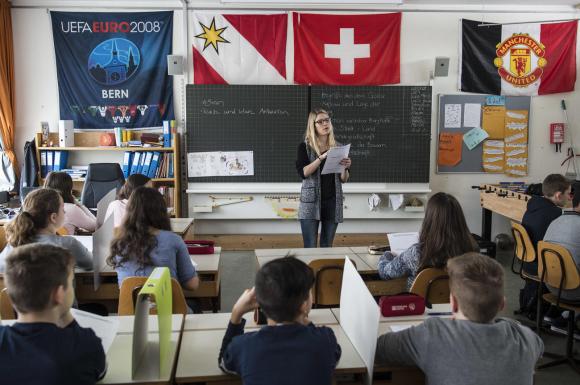
For parents, educators, and policy observers, the next major checkpoint will be the release of updated performance reports expected in the coming academic year. These reports, which provide a granular view of student progress, will be instrumental in determining the success of current remedial programs and the effectiveness of new pedagogical reforms. As the EDK continues to monitor these trends, the emphasis will remain on transparency, equity, and the continued professional development of the teaching workforce.
Educational equity is not a static goal but a continuous process of evaluation and adjustment. By acknowledging the persistence of these inequalities, Switzerland is positioning itself to better serve its future generations, ensuring that every student has the opportunity to succeed within the classroom and beyond. We invite our readers to share their thoughts on the evolution of the Swiss education system in the comments section below, as we continue to track these developments in the months ahead.