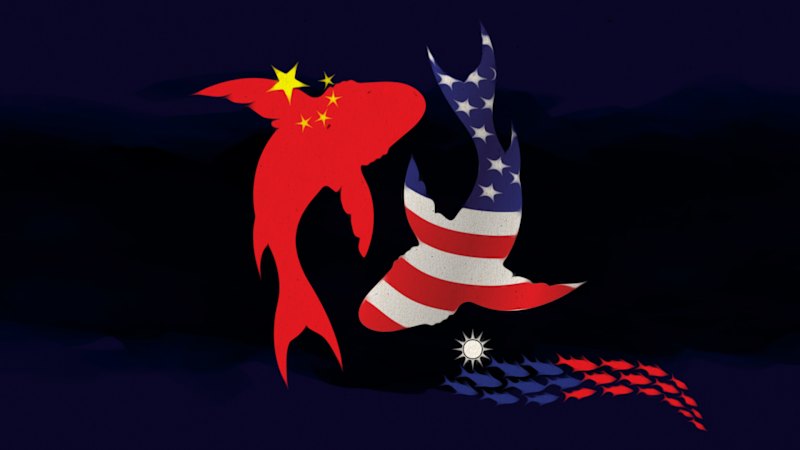
Taiwan faces heightened geopolitical uncertainty as the potential return of Donald Trump to the U.S. presidency introduces questions about the stability of American security guarantees. Analysts and officials monitor how a more transactional U.S. foreign policy might interact with Xi Jinping’s long-term goal of eventual reunification with the island, a dynamic that could fundamentally alter the balance of power in the Taiwan Strait.
The geopolitical landscape surrounding Taiwan is currently defined by a dual pressure: the shifting political trajectory in Washington and the intensifying military posture of Beijing. For Taipei, the central concern involves the reliability of the United States as a security partner. As the U.S. approaches its upcoming presidential election, the prospect of a second Trump administration has sparked debate among regional experts regarding the future of the Taiwan Relations Act and the consistency of American defense commitments.
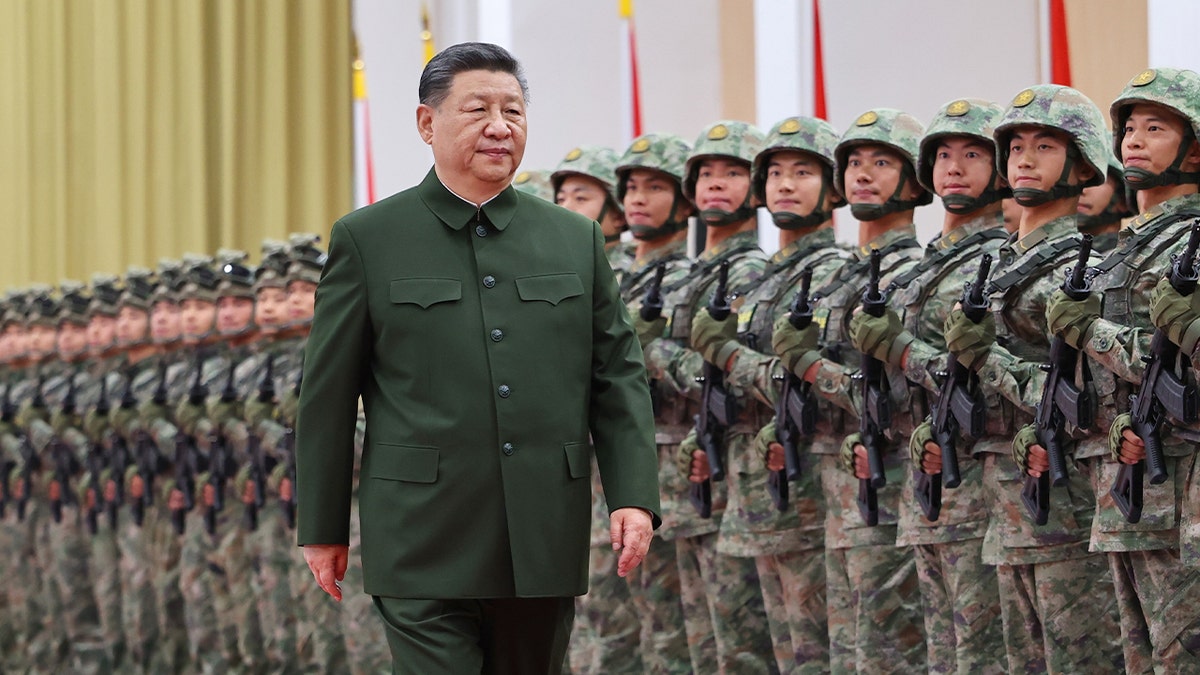
Simultaneously, Chinese President Xi Jinping has maintained a steady trajectory of increasing military pressure on the island. Beijing has frequently conducted large-scale combat exercises near the island and increased its presence in the Taiwan Strait, signaling a commitment to its “reunification” mandate. This convergence of uncertain American leadership and assertive Chinese military expansion has placed Taiwan in a state of heightened strategic vigilance.
How could a second Trump term alter U.S. security commitments to Taiwan?
The potential return of Donald Trump to the White House introduces a “transactional” element to U.S.-Taiwan relations that differs significantly from the current administration’s approach. During his previous term and subsequent campaign rhetoric, Trump has frequently characterized the U.S. role in the region through a lens of economic and security costs. According to reporting from Reuters, Trump has suggested that Taiwan should pay for the military protection it receives from the United States, occasionally referring to the island’s relationship with Washington in terms of “protection money.”
This perspective challenges the long-standing, though unofficial, policy of “strategic ambiguity.” While the U.S. does not formally recognize Taiwan as a sovereign state, the Taiwan Relations Act of 1979 mandates that the U.S. provide Taiwan with the means to defend itself. A Trump administration might prioritize bilateral trade balances and direct defense spending contributions from Taipei over the broader, multilateral strategic frameworks currently favored by the Biden administration. This shift could lead to a more segmented approach to security, where defense support is explicitly tied to economic concessions or increased semiconductor manufacturing investments on U.S. soil.
Furthermore, Trump has previously made comments suggesting that Taiwan’s dominance in the semiconductor industry is an economic disadvantage for the United States. In various interviews, he has claimed that Taiwan “stole” the semiconductor industry from the U.S. This rhetoric suggests that a second term could see U.S. policy attempting to aggressively redistribute high-tech manufacturing capabilities from the island to the American mainland. While such moves might align with certain domestic industrial policies, they could inadvertently weaken the “silicon shield”—the economic interdependence that currently discourages a military conflict.
What is China’s strategic response to shifting U.S.-Taiwan dynamics?
Beijing views any potential fluctuation in U.S. commitment to Taiwan as an opportunity to advance its long-term objectives. President Xi Jinping has repeatedly stated that the “reunification” of Taiwan with the mainland is an inevitable historical requirement for the Chinese nation. Under Xi’s leadership, the People’s Liberation Army (PLA) has transitioned from a coastal defense force to a blue-water navy capable of projecting power far beyond China’s immediate shores.
According to the Associated Press, China has increasingly utilized “grey zone” tactics—actions that fall below the threshold of open warfare but are designed to erode Taiwan’s sovereignty. These tactics include frequent incursions into Taiwan’s Air Defense Identification Zone (ADIZ), large-scale naval drills that simulate blockades, and cyberattacks targeting Taiwanese infrastructure. By maintaining a constant level of military tension, Beijing seeks to exhaust Taiwan’s military readiness and psychological resilience while testing the limits of U.S. and regional responses.
The strategic calculus in Beijing is not merely about military might; it is also about timing. Analysts suggest that China is closely monitoring the political stability of the United States. If Washington appears distracted by domestic political volatility or shifts toward isolationism, Beijing may perceive a window of opportunity to increase pressure or accelerate its timeline for reunification. The goal is to create a scenario where the cost of defending Taiwan becomes prohibitively high for a U.S. administration focused on inward-looking priorities.
Why does the semiconductor industry act as Taiwan’s “silicon shield”?
The global economy’s dependence on Taiwan’s technological output serves as a critical component of the island’s national security. Taiwan is the epicenter of the world’s advanced semiconductor manufacturing, a sector that is essential for everything from smartphones and medical devices to advanced military hardware and artificial intelligence. The Taiwan Semiconductor Manufacturing Company (TSMC) is the central entity in this ecosystem, producing the vast majority of the world’s most sophisticated logic chips.
The concept of the “silicon shield” posits that the global community, including both the United States and China, has a massive economic incentive to prevent any conflict that would disrupt these supply chains. If a conflict were to occur in the Taiwan Strait, the resulting disruption to semiconductor production could trigger a global economic depression. This interdependence acts as a deterrent, as the cost of a military strike against Taiwan would be felt immediately by the tech giants and economies of the world’s most powerful nations.
However, this shield is currently under pressure from two directions. First, the U.S. is actively pursuing a policy of “de-risking,” which involves incentivizing companies like TSMC to build fabrication plants (fabs) in states like Arizona to ensure supply chain security. Second, China is investing hundreds of billions of dollars into its own domestic semiconductor industry to achieve self-sufficiency and reduce its vulnerability to U.S.-led export controls. This technological arms race means that while the “silicon shield” remains a potent deterrent, its effectiveness may diminish if the world becomes less dependent on a single geographic point of failure.
How is the Taiwanese government preparing for potential shifts in regional stability?
The administration of President Lai Ching-te has focused on enhancing Taiwan’s “resilience” across multiple domains: military, economic, and social. Recognizing that traditional large-scale conventional warfare may be difficult to sustain against the PLA, Taiwan has moved toward a strategy of asymmetric warfare. This involves investing in smaller, more mobile, and harder-to-detect assets, such as sea mines, anti-ship missiles, and drone technology, designed to make an invasion attempt prohibitingly costly for an aggressor.
Military spending in Taiwan has seen consistent increases as the government seeks to modernize its capabilities. Beyond hardware, the government is also focusing on civil defense and infrastructure protection. This includes hardening the power grid, ensuring water security, and conducting regular drills to prepare the population for potential blockades or kinetic strikes. The objective is to demonstrate to both Beijing and Washington that Taiwan is a capable and determined actor that can defend its own territory.
Diplomatically, Taiwan continues to seek increased international visibility. Despite pressure from China to isolate the island, Taipei has strengthened its informal ties with major democratic powers. The government’s strategy involves framing Taiwan not just as a regional security issue, but as a vital node in the global democratic and technological order. By emphasizing its role in maintaining the stability of the global economy and the integrity of democratic values, Taiwan aims to ensure that its security remains a priority for the international community, regardless of which political party holds power in Washington.
Comparison of U.S. Strategic Approaches to Taiwan
| Feature | Biden Administration Approach | Potential Trump Administration Approach |
|---|---|---|
| Core Philosophy | Multilateralism and strengthening alliances (NATO, AUKUS). | Transactionalism and bilateral “America First” negotiations. |
| Security Guarantees | Consistent adherence to the Taiwan Relations Act and strategic ambiguity. | Potential demand for direct defense contributions from Taipei. |
| Economic Focus | De-risking supply chains through allied cooperation. | Aggressive repatriation of semiconductor manufacturing to the U.S. |
| China Engagement | Managed competition and strengthening regional deterrents. | Unpredictable, high-stakes negotiation and leverage-based diplomacy. |
The next critical checkpoint in this geopolitical tension will be the U.S. presidential election in November, which will serve as the primary indicator of potential shifts in American foreign policy. Additionally, observers will monitor upcoming PLA military exercises in the Taiwan Strait for signs of increased intensity or new tactical patterns.
What are your thoughts on the shifting dynamics in the Taiwan Strait? Do you believe economic interdependence is enough to prevent conflict? Share your views in the comments below and share this article with your network.
Worth a look