
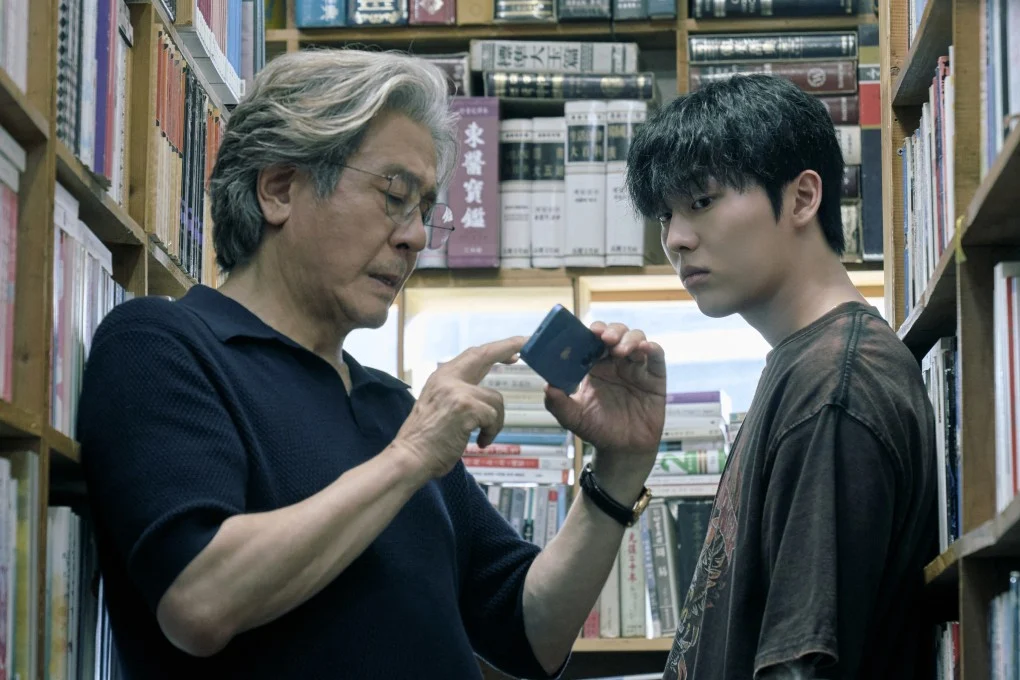
Netflix has expanded its international catalog with the release of The Boy at the Back Row, a psychological thriller series that adapts the award-winning Spanish play El chico de la última fila by Juan Mayorga. The six-episode production, which features South Korean actors Choi Min-sik and Choi Hyun-wook, centers on the complex and increasingly blurred boundaries between a literature teacher and a student whose creative writing assignments take a disturbing turn.
The Narrative Premise: Fiction Meets Reality
The series follows a disillusioned literature professor who discovers that one of his students, a quiet boy sitting in the back of the classroom, possesses a unique talent for observational writing. As the student begins to document the private life of a classmate’s family, the teacher becomes obsessed with the unfolding narrative. According to official Netflix production notes, the show explores themes of voyeurism, the ethics of storytelling, and the psychological manipulation inherent in the teacher-student dynamic.

The original stage play, written by Spanish playwright Juan Mayorga in 2006, previously gained international acclaim and was adapted into the 2012 French film In the House (Dans la maison) directed by François Ozon, which earned the Golden Shell at the San Sebastián International Film Festival as reported by the San Sebastián International Film Festival archives.
Cast and Character Dynamics
The South Korean adaptation places a significant focus on the chemistry between its two leads. Choi Min-sik, a veteran of Korean cinema known for his role in Oldboy, portrays the teacher struggling with his own creative stagnation. Opposite him, Choi Hyun-wook plays the enigmatic student whose writing serves as the series’ primary catalyst. The supporting cast includes actors tasked with embodying the suburban family that becomes the unwitting subjects of the student’s prose.
The series structure relies on the juxtaposition of the classroom setting and the reality being described in the student’s essays. By filming in a six-episode format, the production allows for a deeper exploration of the teacher’s complicity in the student’s actions, a departure from the shorter runtime of the film adaptation.
Why the Psychological Thriller Format Resonates
Adaptations of the source material consistently highlight the “meta” nature of the story. The audience is positioned as a secondary voyeur, watching the teacher watch the student, who is in turn watching a family. This recursive structure has been a staple of the story’s success across various media formats since its debut in Madrid nearly two decades ago. The transition to a streaming series format allows for a pacing that mirrors the slow-burn tension of a literary thriller, emphasizing the psychological toll on the characters involved.

Production Context and Availability
The series is currently available for streaming on Netflix in multiple territories. As of the latest update from the Netflix Media Center, the platform has positioned this title as part of its ongoing commitment to global content, leveraging established intellectual property from European theater to reach a wider, international audience.
Viewers interested in the nuances of the adaptation can compare the series’ pacing against the established narrative beats of Juan Mayorga’s original text. While the setting has shifted to a contemporary South Korean context, the core conflict regarding the ownership of truth and the consequences of artistic intrusion remains consistent with the playwright’s original vision.
For those seeking official updates on potential future seasons or additional behind-the-scenes content, the Netflix official platform remains the primary source for verified information regarding the series’ performance and ongoing availability. Readers are encouraged to share their thoughts on the adaptation and its faithfulness to the source material in the comments section below.