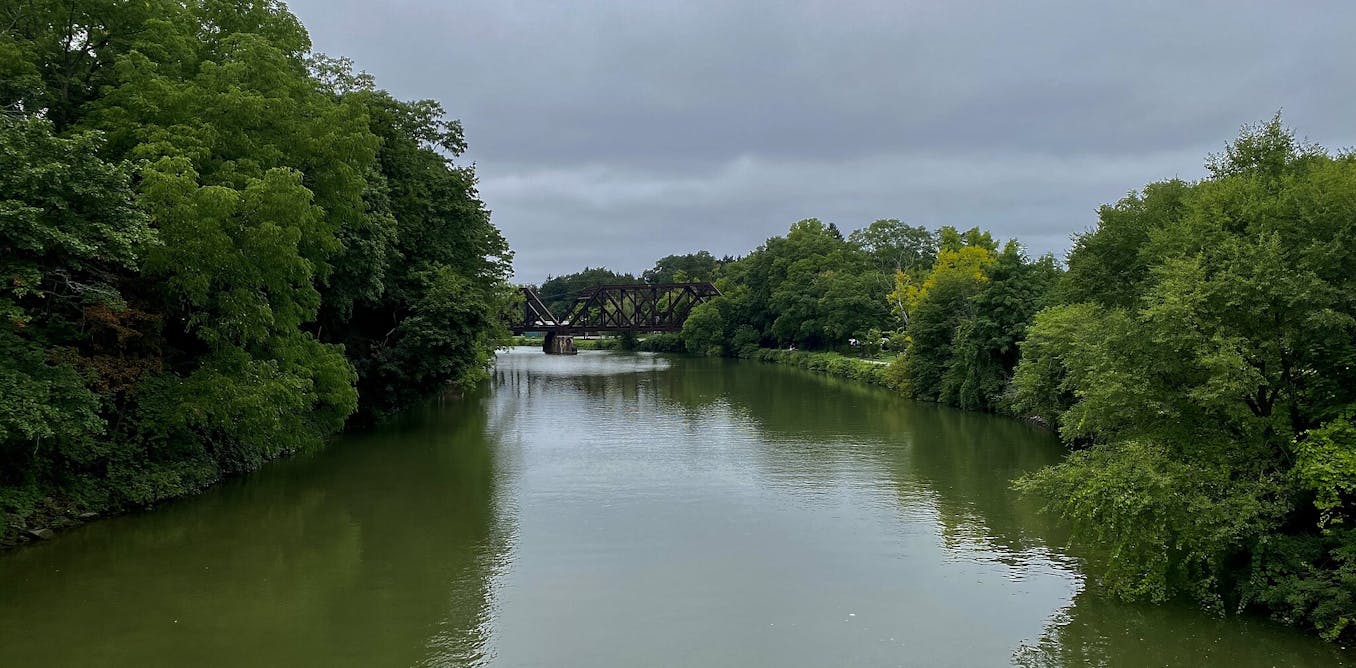
The Erie Canal: A Foundation of american Progress and a Reminder of Past Costs
the Erie Canal stands as a monumental achievement in American history, far more than just a waterway. It represents a pivotal moment in the nation’s development,shaping its economic landscape,fostering unity,and illustrating the enduring need for robust infrastructure. As the United States approaches its 250th birthday in 2026, reflecting on the canal’s legacy offers valuable lessons for navigating present challenges and building a stronger future.
A Nation Connected: The Canal’s Early Impact
Completed in 1825, the Erie Canal dramatically altered the course of American commerce. prior to its construction, transporting goods across the Appalachian Mountains was a slow, expensive undertaking. The canal provided a direct route between the Great Lakes and the Atlantic Ocean, instantly lowering shipping costs and opening up vast new markets.
This transformative project created “a bond of union” between the Atlantic and Western States, effectively linking upstate New York with the burgeoning agricultural regions of the Midwest and the established urban centers of the East Coast. You can envision it as a critical circulatory system for a growing nation.
The impact wasn’t limited to New York. Other states quickly recognized the benefits of canal construction. Ohio Governor Ethan Allen Brown eloquently described America’s canals as “veins and arteries to the body politic.” He later commissioned two canals of his own,connecting the Ohio River to the Erie Canal and the Miami River,further expanding the network of trade and transportation.
Canal Towns and Shifting Fortunes
Just as the Erie Canal spurred growth in New York, it fostered the development of canal towns across the country. Middletown, Ohio, for exmaple, embodies this history. It’s the birthplace of Vice President JD Vance and a compelling example of America’s evolving industrial landscape.
these towns thrived as hubs of commerce, witnessing firsthand the economic shifts driven by the canal system. Though, the prosperity generated by these projects wasn’t universally shared.
Acknowledging the Costs: The impact on Indigenous Communities
The construction and expansion of canals, while beneficial to many, came at a significant cost to Indigenous communities. This is a crucial aspect of the story that is only now receiving the attention it deserves. The Haudenosaunee Confederacy, also known as the Iroquois, bore a particularly heavy burden.
They were pressured into ceding their lands to the state of New York to facilitate the canal’s construction. Subsequent frontier settlement further displaced these communities, disrupting their way of life and eroding their sovereignty. Recognizing and addressing this past injustice is paramount as we celebrate the canal’s bicentennial and beyond.
Infrastructure: A Continuing Need
The Erie canal’s story underscores a basic truth: a nation’s progress is inextricably linked to its infrastructure. While technology evolves, the need for well-maintained and expanded infrastructure remains constant.
Consider these ongoing challenges:
* Rebuilding Roads and Bridges: America’s transportation network requires significant investment to ensure safety and efficiency.
* Expanding Broadband Access: Closing the digital divide is essential for equitable access to education, healthcare, and economic opportunities.
* Developing Sustainable Energy Networks: Transitioning to a clean energy future demands substantial investment in renewable energy infrastructure.
Overcoming political gridlock and achieving bipartisan consensus on these critical issues is essential. The recent federal government shutdown serves as a stark reminder of the challenges facing the American political system.
Looking Ahead: Building on a Concrete Foundation
As the U.S. prepares to commemorate its 250th anniversary, the official commemoration website encourages reflection on the nation’s past and a vision for the future.The Erie Canal serves as a powerful symbol of what can be achieved thru bold vision, strategic investment, and a commitment to progress.
Ultimately, American democracy has always been built upon concrete foundations – both literally and figuratively. By learning from the past, addressing present challenges, and investing in the future, you can ensure that the next chapter of American history is as transformative and impactful as the era of the Erie Canal.