
The history of Los Angeles is often told through the lens of Hollywood glamour and sun-drenched beaches, but a much darker, more complex narrative has been written in the asphalt of South Central. To understand the modern social fabric of Southern California, one must confront the history of the Crips—one of the most enduring and influential street gangs in American history. What began as a localized group in the late 1960s would eventually evolve into a decentralized, global phenomenon that reshaped urban life, law enforcement strategies, and even the global music industry.
The emergence of the Crips was not an isolated incident of criminality; rather, it was a symptom of deep-seated socio-economic tensions and the systemic challenges facing Black communities in Los Angeles during that era. As the city expanded, certain neighborhoods were left to grapple with disinvestment, heavy-handed policing, and a lack of institutional support. In this vacuum, the structures of gang life began to take root, providing a sense of identity and protection for many young men, albeit through a cycle of violence that would haunt the city for decades.
Tracing the origins of the Crips requires looking back to 1969, a year of immense social upheaval in the United States. While the group’s influence would eventually span the entire globe, its foundation was laid in the specific, high-tension environment of Los Angeles. This deep dive explores the architects of the movement, the evolution of its structure, and the profound impact the Crips have had on the cultural and legal landscape of the United States.
The Architects: Raymond Washington and Stanley “Tookie” Williams
The genesis of the Crips is inextricably linked to two primary figures: Raymond Washington and Stanley “Tookie” Williams. Most historical accounts and law enforcement records identify Washington as the central figure who began organizing small groups of young men in the South Central area during the late 1960s. Washington is often described as a charismatic leader who sought to create a sense of brotherhood and territorial dominance among the youth in his neighborhood.
Stanley “Tookie” Williams, a name that would later become synonymous with both gang leadership and a high-profile journey toward redemption, was a key contemporary in these early years. While the exact nature of the partnership between Washington and Williams has been subject to various historical interpretations, both are widely recognized as foundational to the group’s early identity. The organization, which would eventually adopt the name “Crips,” was initially a much smaller, more cohesive entity than the sprawling network of “sets” that exists today.
The rise of these figures was fueled by the unique social pressures of the time. As noted in historical studies of urban development, the racial segregation and economic disparities in Los Angeles created environments where traditional avenues for social mobility were often blocked. For many in the streets of South Central, the gang offered a surrogate family and a means of asserting power in a world that often rendered them invisible. However, this assertion of power quickly spiraled into the violent territorial disputes that would become a hallmark of the gang’s history.
The Evolution of the “Set” System
One of the most significant developments in the history of the Crips was the transition from a single, unified organization to a decentralized collection of independent subgroups, commonly referred to as “sets.” This structural shift changed the nature of gang activity in Los Angeles and made the group significantly more difficult for law enforcement to dismantle.
Unlike traditional hierarchical organizations like the Mafia, which operate under a strict chain of command, the Crips evolved into a loose confederation. Each set—such as the Rollin 60s, the West Side Crips, or the Eight Tray Gangster Crips—operates with a high degree of autonomy. While they may share a common name, a similar color scheme (typically blue), and a shared history, these sets often have their own leaders, their own territories, and, most critically, their own rivalries.
This decentralization had several profound effects:

- Increased Volatility: Because sets are independent, conflicts often arise not just between different gangs, but between different Crips sets competing for territory or resources.
- Difficulty in Policing: Law enforcement agencies found that arresting a leader of one set did not necessarily weaken the overall influence of the Crips, as other sets remained unaffected and often filled the vacuum.
- Rapid Expansion: The “set” model allowed the gang’s influence to spread rapidly across different neighborhoods and even different cities, as new groups could adopt the Crips identity without needing approval from a central authority.
This evolution turned the Crips from a neighborhood group into a fragmented but omnipresent force in the urban landscape. The complexity of this structure is one of the primary reasons why gang management remains one of the most significant challenges for the Los Angeles Police Department (LAPD) and federal investigators alike.
The Great Rivalry: The Emergence of the Bloods
This proves impossible to discuss the history of the Crips without addressing the emergence of their most famous rivals: the Bloods. The rivalry between the Crips and the Bloods is perhaps the most well-known gang conflict in American history, and its origins are rooted in the very expansion and fragmentation of the Crips themselves.
In the early 1970s, as Crips sets began to dominate various territories in Los Angeles, smaller groups of individuals—often those who felt marginalized even within the Crips’ growing influence—began to organize for self-defense and territorial independence. This led to the formation of what would become known as the Bloods. The conflict was characterized by intense, often violent, territorial disputes that escalated throughout the decade.
The rivalry became a defining feature of Los Angeles street culture. The distinction between “Crip blue” and “Blood red” became more than just a color preference; it became a marker of identity and a signal of allegiance. This binary conflict significantly contributed to the escalation of gang violence in the city, as every neighborhood became a potential battleground between the two factions. The rivalry also deeply influenced the visual and linguistic markers of gang culture, which would eventually be exported globally through media and music.
Cultural Echoes: Hip Hop and the Global Image
While the Crips are primarily associated with crime and violence, their influence has extended far beyond the streets of Los Angeles, permeating global popular culture. The most significant vehicle for this influence has been the rise of West Coast hip hop. In the late 1980s and early 1990s, artists from Los Angeles began to bring the realities of gang life, street politics, and the struggles of South Central to a mainstream audience.
Groups like N.W.A. And individual artists provided a raw, often controversial, look at the environment that produced the Crips and the Bloods. While this music was often criticized for glorifying gang culture, it also served as a powerful form of social commentary, highlighting the systemic issues of poverty, police brutality, and urban neglect. For many listeners, the music provided a window into a world that had previously been misunderstood or ignored by the mainstream media.
This cultural intersection created a complex paradox. On one hand, the music provided a platform for voices that were otherwise silenced; on the other, it contributed to the romanticization of gang life, which some argue fueled the recruitment of young people into these organizations. The aesthetic of the Crips—the clothing, the slang, and the color associations—became part of a global “gangsta” archetype that has been adopted by youth cultures far removed from the streets of Los Angeles.
Law Enforcement and the War on Gangs
In response to the escalating violence associated with the Crips and other gangs, law enforcement agencies have employed a variety of strategies over the decades. These range from traditional street-level policing to large-scale federal investigations using the Racketeer Influenced and Corrupt Organizations (RICO) Act.
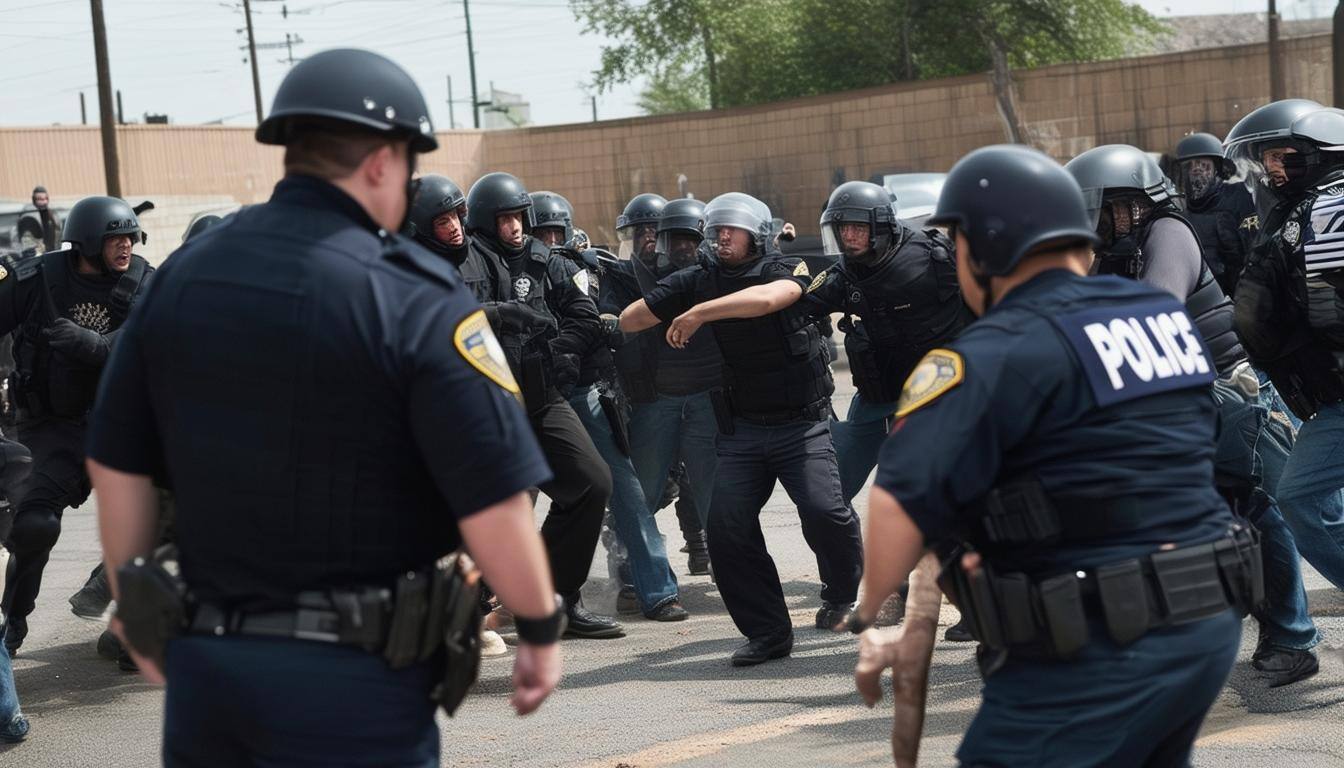
One of the most controversial tools in the law enforcement arsenal has been the “gang injunction.” These are civil court orders that can restrict the activities of alleged gang members within a specific geographic area. Proponents argue that injunctions are necessary to curb gang-related nuisance crimes and reclaim neighborhoods for law-abiding citizens. Critics, however, contend that these measures often infringe upon constitutional rights, target individuals based on association rather than specific criminal acts, and disproportionately affect minority communities.
The battle against gang violence has also seen significant shifts in strategy. In recent years, there has been an increased focus on intelligence-led policing and community-based intervention programs. These programs aim to address the root causes of gang involvement—such as lack of education, unemployment, and mental health issues—rather than relying solely on incarceration. However, the effectiveness of these various approaches remains a subject of intense debate among policymakers, sociologists, and community leaders.
Frequently Asked Questions
Q: Are all Crips members part of the same organization?
A: No. The Crips are a decentralized collection of various “sets.” While they share a name and certain cultural markers, individual sets often operate independently and may even be in conflict with one another.
Q: When were the Crips founded?
A: The Crips are generally recognized to have been founded in Los Angeles around 1969.
Q: Who were the founders of the Crips?
A: Raymond Washington and Stanley “Tookie” Williams are widely identified as the primary founders of the group in its early stages.
Q: What is the main difference between Crips and Bloods?
A: Historically, the Bloods emerged as a rival group to the Crips. They are distinguished by their colors (traditionally red for Bloods and blue for Crips) and their long-standing territorial rivalry.
As the landscape of Los Angeles continues to change, the legacy of the Crips remains a central, if controversial, part of the city’s history. The ongoing struggle to balance public safety with social justice, and the effort to address the systemic issues that allow gang culture to persist, continues to shape the future of Southern California.
Next Official Update: Monitor local Los Angeles municipal reports and law enforcement briefings for updates regarding ongoing gang injunction proceedings and community intervention program results.
What are your thoughts on the evolution of urban gang culture and its impact on society? Share your perspective in the comments below and share this article with your network.