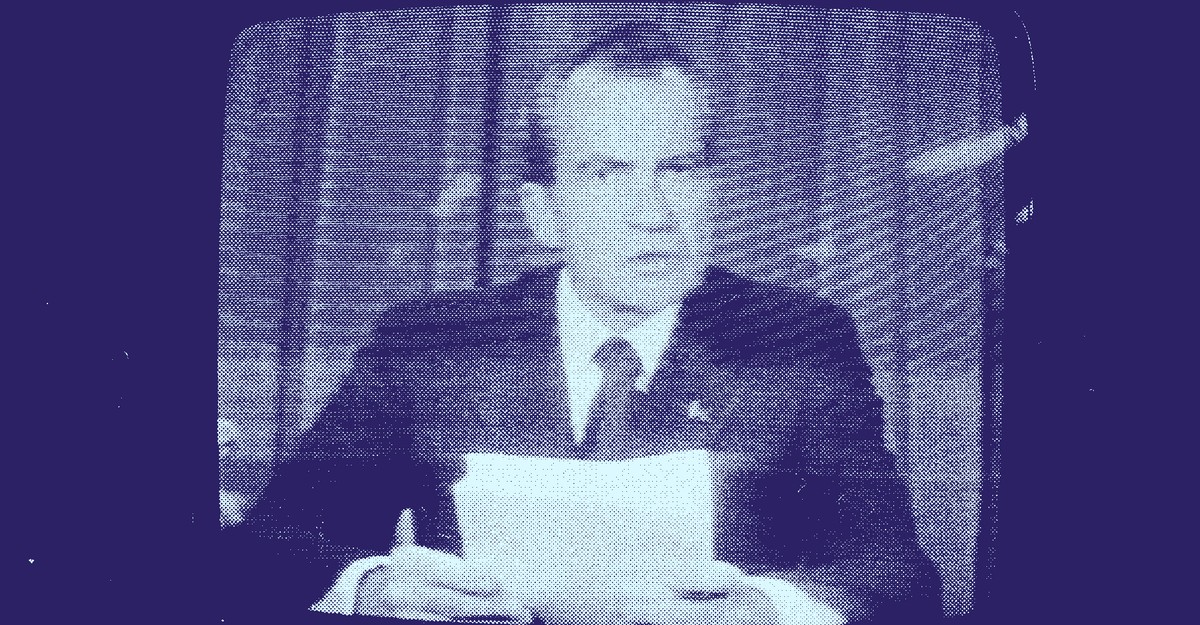
Fifty-two years after the resignation of Richard Nixon, historians and political analysts continue to examine the structural resilience of executive power and the evolving nature of political scandals in modern governance. The era following Watergate was widely predicted by contemporary observers to usher in a permanent era of institutional restraint, yet the landscape of modern American politics reveals a vastly different reality. According to historical analyses and archived political commentary, the mechanisms intended to check executive overreach have instead adapted to an accelerated media ecosystem where monumental disclosures frequently register as fleeting news items.
When Arthur M. Schlesinger Jr. published his seminal work The Imperial Presidency in 1973 and penned his essay “The Runaway Presidency” for The Atlantic, he argued that Nixon’s administration represented a dangerous culmination of historical trends that had systematically expanded executive authority, particularly in foreign policy and war powers. Schlesinger expressed optimism that the trauma of Watergate would serve as a severe corrective, suggesting that many years would pass before another White House staff dared challenge constitutional boundaries with similar impunity. Subsequent decades, however, demonstrated that the mystique and spectacle of the presidency were paradoxically heightened by crisis rather than diminished.
Legislative reforms enacted between 1973 and 1978 sought to curtail executive power regarding war powers, budget impoundment, elections, secrecy, and surveillance. Despite these statutory safeguards, institutional dynamics shifted significantly over the ensuing decades. Observers note that while public fascination with executive drama intensified, the media cycle transformed into an attention economy that processes high-stakes revelations at an unprecedented velocity. Consequently, political controversies that once dominated public discourse for months now cycle through the public consciousness in a fraction of that time.
The Evolution of Executive Power and Accountability
The expansion of the American presidency traces its roots far beyond the mid-20th century, but the acceleration of executive dominance sharpened during World War II and the Cold War. Schlesinger’s research tracked how successive administrations accumulated unilateral authorities, which Nixon ultimately tested through domestic abuses of power. According to historical records, the concentration of authority at the center of the American political system placed immense pressure on constitutional checks and balances, requiring active resistance from both the legislative branch and an engaged citizenry.
In contemporary political discourse, the durability of these constitutional checks faces ongoing scrutiny. Critics and scholars frequently debate whether modern institutions—including Congress and the judiciary—effectively restrain executive actions or inadvertently accommodate expansive interpretations of presidential authority. Public statements from contemporary figures, such as remarks made by J.D. Vance regarding the compressed timeline of modern scandal reception, underscore a widespread recognition that the political impact of presidential controversies has fundamentally changed.
Historical Cycles of White House Scandals
Schlesinger famously theorized at the conclusion of his 1973 essay that major administrative corruption and executive overreach in the United States appear to operate in roughly fifty-year cycles. Tracing this historical arc connects the Nixon abuses of the early 1970s backward to the Harding administration scandals of the early 1920s, and further back to the scandals of Ulysses S. Grant’s presidency in the 1870s, as well as the contested election of 1824. Whether viewed as deterministic cycles or recurring patterns of institutional strain, these historical markers illustrate persistent vulnerabilities in the separation of powers.
As legal scholars and historians continue to assess the balance between executive authority and legislative oversight, public interest in the mechanics of government accountability remains high. Official legislative documents, judicial rulings, and congressional committee records continue to serve as primary resources for understanding the ongoing evolution of the United States constitutional order.
Frequently Asked Questions
What was The Imperial Presidency?
Published in 1973 by historian Arthur M. Schlesinger Jr., The Imperial Presidency is a comprehensive examination of the growth of executive power in the United States from the founding era through the Nixon administration.
What legislative reforms followed the Watergate scandal?
Between 1973 and 1978, the U.S. Congress passed several laws designed to check presidential authority, addressing areas such as war powers, executive impoundment of funds, elections, secrecy, and surveillance.
How have modern media cycles affected political scandals?
According to media analysts and political commentators, the modern information economy accelerates the news cycle, causing major political controversies to transition through public awareness much faster than they did during the Watergate era.