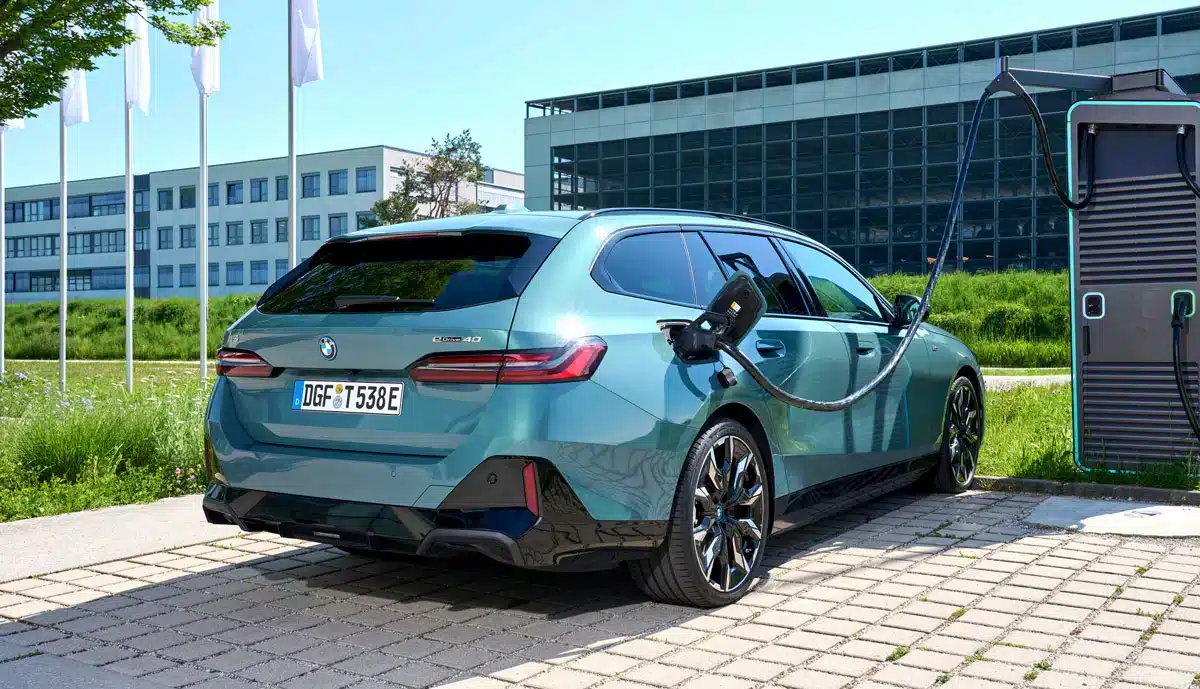
BMW and MINI have expanded their electric vehicle charging services in Germany by enabling contract-free Plug & Charge technology for eligible models. This development allows drivers to charge their vehicles at public stations without needing a separate subscription or account with a charging provider, streamlining the process for users across the country.
The system works by linking the vehicle directly to a payment method, typically a credit card stored in the car’s profile, so that charging sessions are automatically billed when the car is plugged into a compatible station. This approach eliminates the need for RFID cards, apps, or multiple contracts, positioning the vehicle itself as a secure payment tool for public charging infrastructure.
According to verified announcements from BMW Group, the contract-free Plug & Charge service is now available to all Plug & Charge-capable BMW and MINI electric vehicles in Germany. The feature builds on the company’s broader strategy to simplify EV ownership by reducing barriers to charging access, particularly for drivers who prefer not to manage multiple charging network accounts.
The technology relies on the ISO 15118 standard, which enables secure communication between the vehicle and charging station to authenticate the user and authorize payment without manual intervention. BMW and MINI vehicles equipped with the necessary hardware and software can initiate charging simply by plugging in, with the system handling identification and billing in the background.
This move aligns with industry efforts to improve the user experience in public charging, a factor often cited as critical to accelerating EV adoption. By removing contractual requirements, BMW and MINI aim to build spontaneous charging more accessible, especially for urban drivers or those traveling across regions where they may not have existing charging provider relationships.
The service is supported through partnerships with charging network operators that have implemented Plug & Charge functionality at their stations. While the rollout began in Germany, the framework is designed to be scalable to other markets where the necessary infrastructure and regulatory conditions are in place.
BMW has emphasized that data security and user privacy are central to the system’s design. Payment information is tokenized and stored securely within the vehicle, and no personal data is shared with charging stations beyond what is necessary to process the transaction. Users retain control over their payment methods and can update or remove them through the vehicle’s settings or associated mobile applications.
Industry analysts note that contract-free Plug & Charge represents a step toward interoperability in EV charging, where drivers can use any compatible station regardless of their vehicle brand or charging provider. However, widespread adoption depends on continued investment in infrastructure and standardization across manufacturers and network operators.
As of the latest verified updates, BMW and MINI customers in Germany can activate the feature through their vehicle’s infotainment system or the My BMW / My MINI app, provided their model supports Plug & Charge and they have a valid payment method on file. The company advises users to check compatibility based on their vehicle’s production date and specifications.
Looking ahead, BMW Group has indicated that it will continue to evaluate user feedback and charging behavior to refine the service. No official timeline has been released for expansion to additional countries, but the company has stated that future rollouts will depend on local market readiness and partnerships with charging providers.
For drivers interested in using contract-free Plug & Charge, BMW recommends ensuring their vehicle’s software is up to date and confirming that their preferred charging stations support the ISO 15118 standard. Official updates and compatibility lists are available through BMW and MINI customer portals.
As the EV market matures, innovations like contract-free Plug & Charge highlight how automakers are integrating financial and digital services into the vehicle experience. By treating the car as a secure, connected device for transactions, manufacturers aim to reduce friction in everyday use while building long-term customer engagement.
With charging convenience remaining a key consideration for prospective EV buyers, services that simplify access without compromising security or flexibility are likely to play an significant role in shaping consumer preferences. BMW and MINI’s approach reflects a broader trend toward seamless, user-centric solutions in sustainable mobility.
To stay informed about future updates to BMW and MINI’s charging services, including potential expansions or new features, customers are encouraged to monitor official communications from BMW Group or consult their local dealership.
We welcome your thoughts on this development. Have you used contract-free Plug & Charge, or are you considering an electric vehicle that offers this functionality? Share your experiences and questions in the comments below, and feel free to pass this article along to others interested in the evolving world of electric vehicles.
Keep reading