
For five millennia, a narrow strip of water has served as the primary artery connecting the East and the West. The Strait of Hormuz, the critical choke point separating the Persian Gulf from the Gulf of Oman, is more than a modern transit route for global energy; It’s a hinge of history where the fates of empires have been decided for 5,000 years.
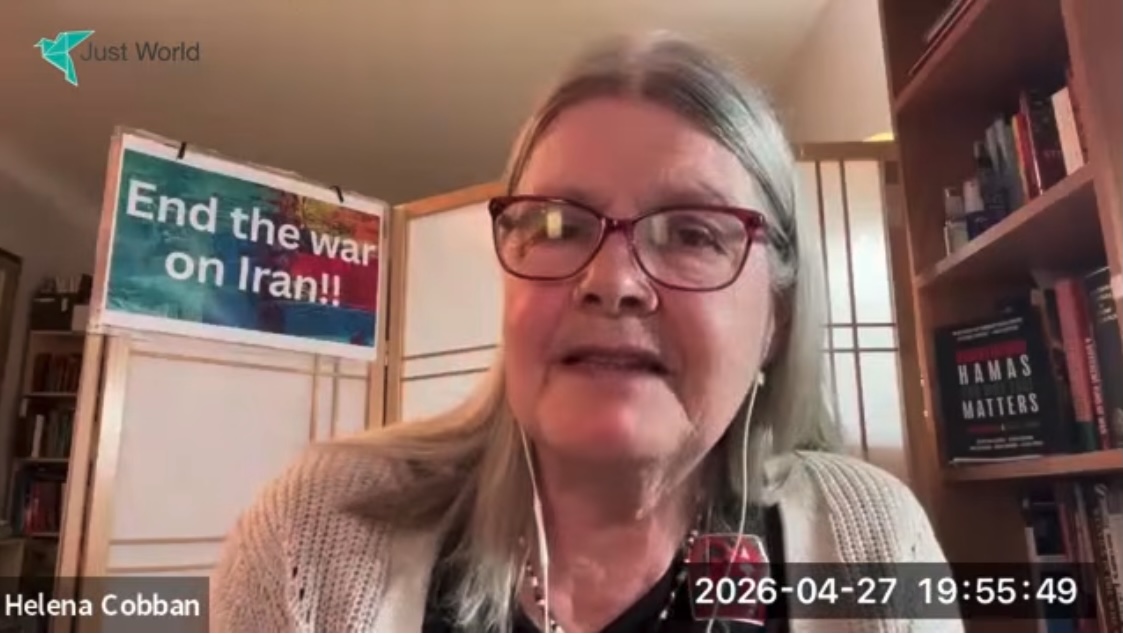
In a recent presentation delivered to the Mount Diablo Peace and Justice Center in Northern California, international relations researcher and author Helena Cobban argued that the current volatility surrounding the region cannot be understood without looking at this “long view.” Cobban posited that the strategic struggles playing out today are echoes of a deep historical pattern of colonial penetration and resistance in the Indian Ocean trading zone.
Speaking on the strategic power of the region, Cobban situated her analysis within the context of the ongoing US-Israeli military campaign against Iran, which began on February 28. She suggested that the current conflict is not an isolated event but the latest chapter in a centuries-old struggle for control over one of the world’s most vital maritime corridors.
A 5,000-Year Strategic Pivot
The Strait of Hormuz has functioned as a key connecting point since the dawn of civilization. Approximately 5,000 years ago, it served as the essential link between the seminal ancient civilizations of the Indus Valley and Mesopotamia in present-day Iraq. This early connectivity established the region as a permanent node of global trade, long before the concept of the “modern state” existed.
From these ancient origins, the Strait evolved into a significant artery for a vast Indian Ocean trading zone that eventually stretched from the coasts of East Africa to the shores of China. This network was not merely a series of trade routes but a sophisticated system of cultural and economic exchange that shaped the development of multiple continents.
The Pre-Colonial Indian Ocean World
A central theme of Cobban’s analysis was the nature of the world before European arrival. Referencing the scholarship of historian Janet Abu-Lughod, who detailed the world system in her work on pre-modern trade networks, Cobban described a thriving, self-governed commercial network.

This pre-European world operated under its own well-developed technologies and norms of engagement. It was a decentralized system where trade was conducted through mutual interest and established maritime customs rather than the imposition of external imperial will. This era of “self-governance” stood in stark contrast to the era of forced monopolies that would follow.
The Era of European Penetration
The stability of the Indian Ocean zone was disrupted by the entry of five European imperial powers: Portugal, Spain, England, the Netherlands, and France. Cobban characterized this era as the “White Supremacist International,” a succession of empire-building ventures driven by the rise of finance capitalism, looting, and the pursuit of profit.
The shift toward violent control was marked by key military seizures. In 1507, Portugal, under the leadership of Afonso de Albuquerque, violently seized Hormuz to secure a monopoly over the spice trade to control the route to India. This established a precedent of using naval force to dictate the terms of regional commerce.
The control of the port shifted again in 1622, when the London-based East India Company, in alliance with Persian forces, took over the port from the Portuguese as part of its expanding commercial empire. Cobban drew direct parallels between these early colonial methods of seizure and control and the current military actions in Palestine and Lebanon.
To provide a more detailed exploration of these historical parallels and the strategic evolution of the region, the following presentation offers a comprehensive overview:
Contemporary Resilience and Naval Strategy
Turning to the present day, Cobban assessed Iran’s strategic position as one of considerable resilience. She argued that the likelihood of Iranian capitulation is low, citing specific geographic and military advantages that make a conventional victory over the nation difficult.
The mountainous topography of Iran’s southern coastline provides a natural defensive shield. Cobban highlighted the use of fast naval vessels hidden within coastal caves, a tactic that allows for asymmetrical warfare and rapid response against larger naval forces. When combined with Iran’s missile capabilities, these factors create a high-risk environment for any invading force attempting to secure the Strait.
The Path Toward Diplomatic Restraint
As the military campaign continues, the role of international mediation has grow critical. Cobban noted a stark contrast in the effectiveness of different diplomatic actors. She described the United Nations as being almost entirely sidelined in the current crisis, although the United States remains a primary belligerent.
In contrast, Cobban pointed to Pakistan as playing a significant role as a mediator in the conflict. She emphasized the need for “diplomatic restraint,” referencing her discussions with Trita Parsi of the Quincy Institute for Responsible Statecraft. Parsi has long advocated for a realistic approach to Iran that prioritizes diplomacy over regime change and military escalation.
The core of the argument presented is that the Strait of Hormuz is not just a tactical objective in a modern war, but a symbol of the tension between imperial imposition and regional sovereignty—a tension that has existed for five millennia.
Key Strategic Factors of the Strait of Hormuz
| Era | Primary Driver | Key Characteristic |
|---|---|---|
| Ancient (5,000 BP) | Civilizational Link | Connecting Indus Valley and Mesopotamia |
| Pre-Colonial | Commercial Exchange | Self-governed networks and shared norms |
| Imperial (1507–1800s) | Monopolistic Control | Violent seizure by Portugal and East India Co. |
| Modern (2026) | Geopolitical Hegemony | Asymmetrical naval warfare and missile deterrence |
The resolution of the current conflict will likely depend on whether the international community returns to the norms of diplomatic mediation or continues the pattern of imperial penetration that has characterized the region since the 16th century.
The international community now looks toward upcoming diplomatic channels and potential mediation efforts led by regional partners to prevent further escalation in the Gulf. We will continue to monitor official statements from the Quincy Institute and regional mediators for updates on ceasefire negotiations.
What are your thoughts on the role of historical context in understanding today’s geopolitics? Share your perspective in the comments below.