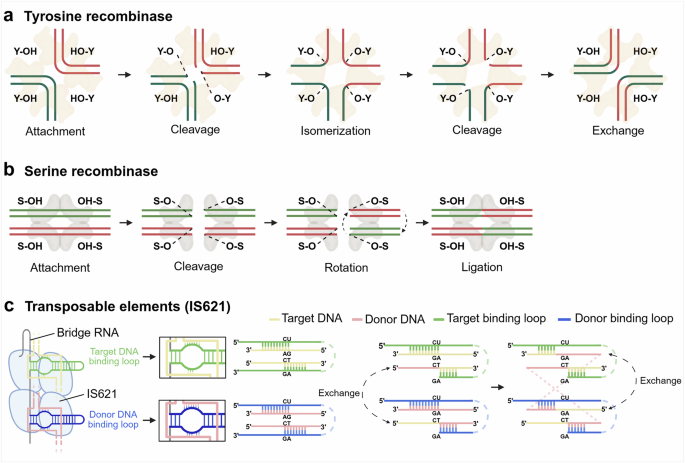
Researchers have identified a new class of ancient, RNA-guided gene editing systems called TIGR, which are remarkably compact and modular.
TIGR Systems: A New Frontier in Gene Editing
A vast search of natural diversity led by researchers at MIT’s McGovern Institute for Brain Research and the Broad Institute of MIT and Harvard has uncovered ancient systems with the potential to expand the genome editing toolbox. These systems, which the researchers call TIGR (Tandem Interspaced Guide RNA) systems, use RNA to guide them to specific sites on DNA. These findings were reported online Feb. 27 in the journal Science.
This is a very versatile RNA-guided system with a lot of diverse functionalities,
says Feng Zhang, the James and Patricia Poitras Professor of Neuroscience at MIT, who led the research. Zhang is also an investigator at the McGovern Institute and the Howard Hughes Medical Institute, a core member of the Broad Institute, a professor of brain and cognitive sciences and biological engineering at MIT, and co-director of the K. Lisa Yang and Hock E. Tan Center for Molecular Therapeutics at MIT.
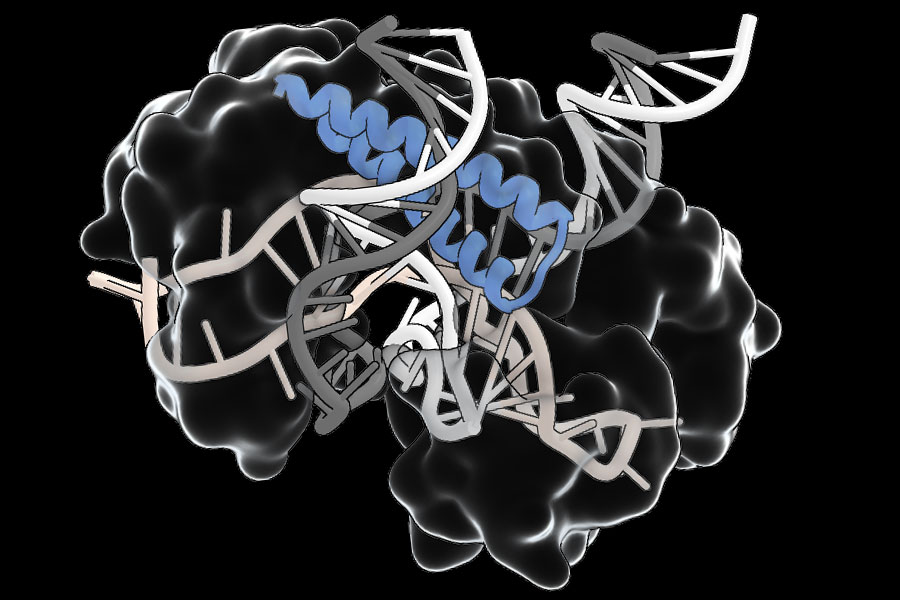
TIGR systems can be reprogrammed to target any DNA sequence of interest, and they have distinct functional modules that can act on the targeted DNA. In addition to its modularity, TIGR is very compact compared to other RNA-guided systems, like CRISPR, which is a major advantage for delivering it in a therapeutic context. The TIGR-associated (Tas) proteins that Zhang’s team found share a characteristic RNA-binding component that interacts with an RNA guide that directs it to a specific site in the genome. Some cut the DNA at that site, using an adjacent DNA-cutting segment of the protein. That modularity could facilitate tool development, allowing researchers to swap useful new features into natural Tas proteins.
Nature is pretty incredible,
says Zhang. It’s got a tremendous amount of diversity, and we have been exploring that natural diversity to find new biological mechanisms and harnessing them for different applications to manipulate biological processes.
Previously, Zhang’s team adapted bacterial CRISPR systems into gene editing tools.
Broader Context of Genome Engineering
The field of genome engineering continues to evolve through various research initiatives. Recent studies have included the generation of chimeric mice with spermatozoa fully derived from embryonic stem cells using a triple-target CRISPR method for Nanos3, as well as the application of CRISPR/Cas9 systems in establishing large animal models. Other research has focused on extensive germline genome engineering in pigs and the CRISPR-mediated direct mutation of cancer genes in the mouse liver.
Furthermore, researchers are exploring high-performance inducible expression in mammalian systems and reconstructing gene regulatory networks, such as those involved in the sonic hedgehog pathway, which has a potential role in the early development of the mouse brain. Other work includes amplification editing, which enables efficient and precise duplication of DNA from short sequences to megabase and chromosomal scales, and the study of how the deletion of CTCF sites in the SHH locus alters enhancer-promoter interactions.
Keep reading