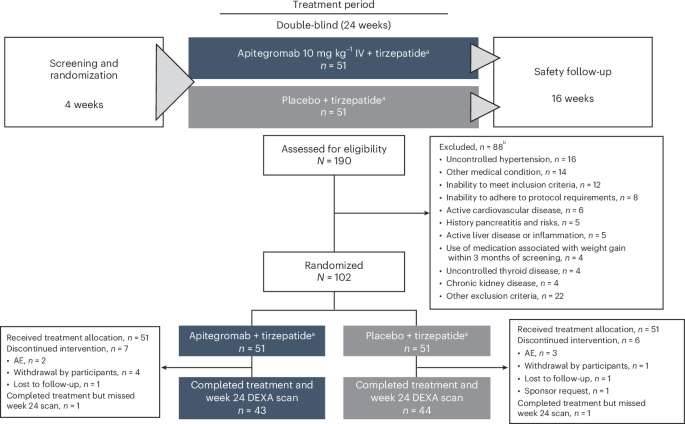
In a recent clinical advancement for weight management, the phase 2 EMBRAZE study has provided new data on preserving lean muscle mass during treatment with tirzepatide. According to findings released on June 8, 2026, participants who received a combination of the investigational agent apitegromab and the weight-loss medication tirzepatide demonstrated a statistically significant reduction in lean mass loss compared to those administered tirzepatide alongside a placebo.
As a physician, I have closely monitored the evolving landscape of incretin-based therapies. While medications like tirzepatide—widely known by brand names such as Zepbound and Mounjaro—have proven highly effective for weight reduction and the management of type 2 diabetes, a common clinical concern has been the concurrent loss of lean body mass. The EMBRAZE trial results offer a potential pharmacological strategy to address this specific component of body composition change, which is essential for maintaining metabolic health and physical function during significant weight loss.
Understanding the EMBRAZE Trial Findings
The randomized, double-blind, placebo-controlled study focused on adult participants undergoing treatment with tirzepatide. The primary objective was to evaluate whether the addition of apitegromab could mitigate the decline in lean mass often observed when patients lose fat mass rapidly. The study design ensured that the comparison between the treatment group—receiving both apitegromab and tirzepatide—and the control group—receiving tirzepatide plus a placebo—was robust, minimizing bias in the reported outcomes.
Data from the trial, published online in Nature Medicine on June 8, 2026 (doi:10.1038/s41591-026-04440-4), confirm that the apitegromab group experienced better preservation of lean mass. This finding is particularly relevant for clinicians and patients who are concerned about the quality of weight loss, as preserving muscle is vital for long-term health and the prevention of sarcopenia, a condition characterized by the loss of muscle mass and strength.
The Clinical Context of Lean Mass Preservation
Weight loss interventions that rely solely on caloric restriction or pharmacotherapy often trigger a reduction in both adipose tissue and lean muscle. When weight loss is rapid, the body may break down muscle protein for energy, which can negatively impact basal metabolic rate and physical performance. The clinical interest in apitegromab lies in its mechanism, which aims to protect muscle integrity while the patient continues to benefit from the weight-lowering effects of tirzepatide.
For patients currently utilizing tirzepatide, the conversation with their healthcare provider regarding body composition is becoming increasingly nuanced. While current clinical guidelines for tirzepatide, such as those maintained by the U.S. National Library of Medicine, emphasize its role in glycemic control and weight management, the integration of muscle-preserving agents like apitegromab represents a sophisticated shift toward “precision” weight management, where the goal is to optimize the health profile of the patient rather than focusing exclusively on the number on the scale.
What This Means for Future Treatment Pathways
The results of the EMBRAZE study provide a foundation for further research into combination therapies. By addressing the trade-offs of existing weight-loss medications, researchers are moving closer to protocols that offer more sustainable health outcomes. However, it is important to note that apitegromab remains an investigational agent, and its use outside of clinical trials is not currently part of standardized medical practice.
Patients and providers should continue to monitor official updates from regulatory bodies and peer-reviewed journals for information regarding the next phases of development for this combination. Future clinical trials will likely focus on long-term safety, the durability of muscle preservation, and whether these benefits translate into improved physical function and quality of life for a broader demographic of patients.
As we look ahead, the medical community awaits further data on the optimal dosing schedules and the potential for wider therapeutic applications. The next steps for this research will involve larger-scale confirmatory trials to validate these phase 2 findings and to determine how these findings might influence future clinical guidelines for obesity and metabolic syndrome management.
If you have questions about how these findings might relate to your personal health journey, I encourage you to discuss them with your primary care physician or an endocrinologist who stays updated on the latest developments in metabolic therapies. Please feel free to share your thoughts or questions in the comments section below, and stay tuned to World Today Journal for continued coverage of clinical innovations in internal medicine.
Related reading