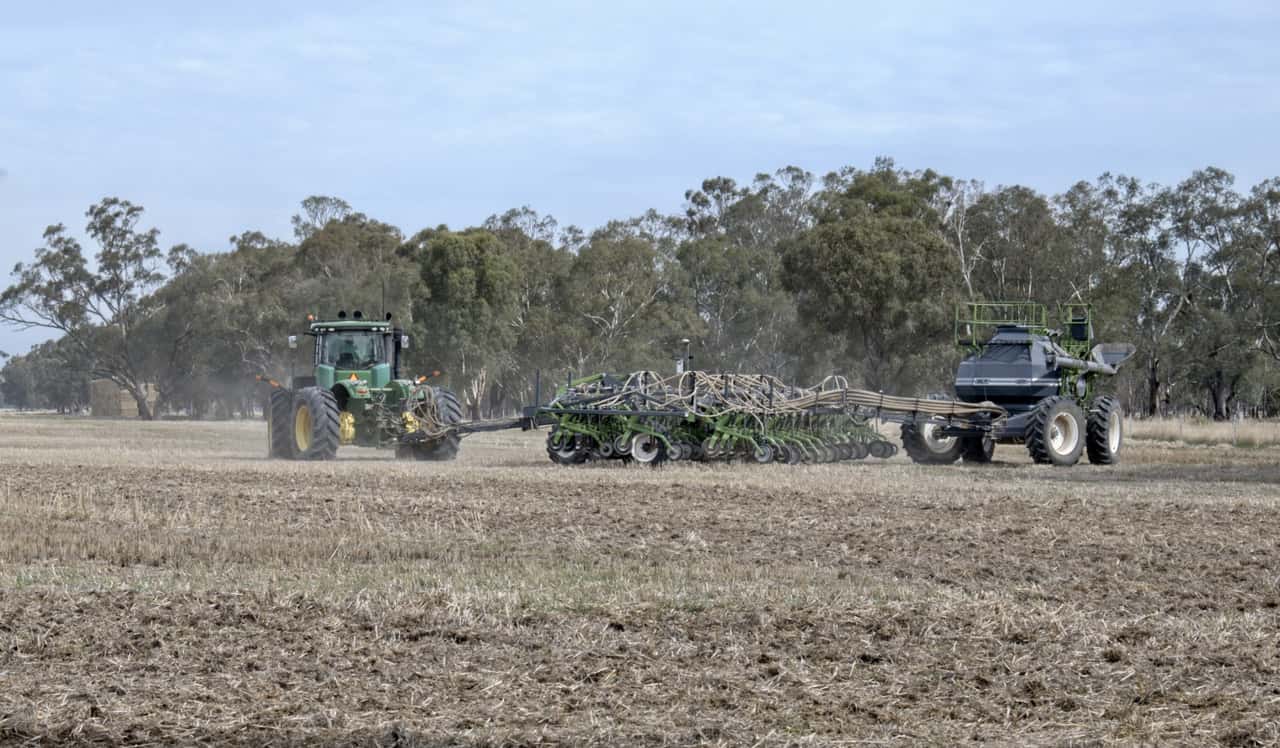
An Australian farmer faces a projected loss of 600,000 AUD as escalating tensions in the Middle East, specifically involving Iran, drive up the cost of nitrogen-based fertilizers. This financial volatility highlights a growing vulnerability in the global agricultural supply chain, where geopolitical instability in energy-producing regions directly correlates with the cost of food production.
The threat to Australian agricultural margins stems from the inextricable link between natural gas prices and the production of nitrogen fertilizers. As conflicts in the Middle East threaten to disrupt energy markets, the cost of the raw materials required for the Haber-Bosch process—the industrial method used to produce ammonia—is expected to rise. For large-scale grain and crop producers in Australia, these surging input costs can quickly erode annual profits, in some cases by hundreds of thousands of dollars per season.
Agricultural analysts note that the risk is not merely theoretical. The volatility in the natural gas market, often triggered by regional conflicts, creates a ripple effect that reaches from energy hubs in the Middle East to the wheat and barley fields of Western Australia. Because nitrogen fertilizer is one of the most significant variable costs for modern farming, even minor fluctuations in energy prices can result in massive shifts in farm-gate profitability.
Why do Middle East tensions drive up nitrogen fertilizer prices?
The connection between Middle Eastern geopolitics and Australian farming lies in the chemistry of fertilizer production. Most nitrogen fertilizers are produced using natural gas as both a fuel source and a primary feedstock. In the industrial Haber-Bosch process, natural gas provides the hydrogen necessary to combine with atmospheric nitrogen to create ammonia, the foundation of most nitrogenous fertilizers.
When conflict arises in the Middle East, particularly in regions that influence global oil and gas benchmarks, energy markets react with immediate price spikes. According to reports on global commodity volatility, any perceived threat to the transit of energy through key maritime corridors can lead to increased “risk premiums” in gas pricing. Because natural gas accounts for a substantial portion of the total production cost of ammonia, these energy surges are passed directly down the supply chain to the end user: the farmer.
This dependency creates a “double hit” for many producers. Not only do they face higher costs for the fertilizer itself, but they also face higher costs for the fuel required to transport these heavy materials to remote agricultural regions. This intersection of energy security and food security means that a conflict thousands of miles away can dictate the economic viability of a harvest in the Southern Hemisphere.
The specific financial risk to Australian agriculture
The reported potential loss of 600,000 AUD for a single Australian producer serves as a stark illustration of the scale of the risk. While such figures vary depending on the scale of the operation and the specific crop being grown, the trend of margin compression is becoming a systemic issue for the Australian agricultural sector.
Australian farmers often operate on thin margins, where the profitability of a season is highly sensitive to the timing of input purchases. When fertilizer prices spike mid-season or during the critical planting window, farmers are often forced to choose between absorbing the loss or reducing fertilizer application rates, which can lead to lower crop yields and decreased quality. This creates a “lose-lose” scenario: either the farmer loses capital through high costs or loses potential revenue through diminished production.
The reliance on imported fertilizers also leaves Australian producers exposed to global shipping disruptions. Beyond the price of the gas, the cost of freight and the availability of shipping containers are subject to the same geopolitical pressures affecting energy. If Middle Eastern instability leads to rerouting of vessels or increased insurance premiums for maritime transit, the landed cost of fertilizer in Australia will rise even further.
How natural gas volatility affects global food security
The instability in the Middle East does more than threaten individual farm incomes; it poses a broader risk to global food security. As nitrogen fertilizer is the primary driver of global crop yields, any significant reduction in its availability or an unsustainable increase in its price can lead to a contraction in global food supplies. This, in turn, contributes to food price inflation, affecting consumers worldwide.
The relationship between energy and food is a primary concern for international organizations. The World Bank and other global economic bodies have frequently highlighted how commodity price volatility, driven by geopolitical shocks, can exacerbate hunger in vulnerable regions. In this context, the conflict involving Iran and its neighbors is not just a regional security issue but a global economic one that impacts the stability of the entire food system.
When fertilizer prices rise, the cost of staples such as wheat, corn, and rice follows. This creates a cycle of inflation that hits developing nations the hardest, as a larger percentage of their household income is spent on food. Consequently, the stability of the Middle East is increasingly viewed by economists as a prerequisite for stable global food prices.
Potential solutions and innovations in fertilizer production
To mitigate these risks, the agricultural industry is looking toward new methods of fertilizer production that decouple nitrogen synthesis from volatile natural gas markets. One area of significant research involves “green ammonia,” which uses renewable energy—such as wind or solar—to power the electrolysis of water, providing the hydrogen needed for the Haber-Bosch process without the need for fossil fuels.

While green ammonia is currently more expensive to produce than traditional methods, the falling costs of renewable energy and improvements in electrolysis technology are making it a more viable long-term alternative. If scaled, these technologies could provide a “buffer” against geopolitical shocks, allowing nations to produce fertilizer using domestic renewable resources rather than relying on the volatile global gas market.
Additionally, advancements in precision agriculture are helping farmers use less fertilizer more effectively. By using satellite imagery, soil sensors, and variable-rate application technology, farmers can apply nitrogen only where and when it is most needed. This reduction in total volume required can partially offset the financial impact of rising unit prices, though it does not eliminate the underlying risk of energy-driven inflation.
| Factor | Traditional Nitrogen Production | Green Ammonia Production |
|---|---|---|
| Primary Feedstock | Natural Gas (Methane) | Water (via Electrolysis) |
| Energy Source | Fossil Fuels | Renewable Electricity (Wind/Solar) |
| Geopolitical Risk | High (Dependency on Gas Markets) | Low (Dependency on Local Renewables) |
| Current Scalability | Very High (Established) | Emerging (Scaling) |
As the agricultural sector continues to navigate these uncertainties, the focus remains on diversifying supply chains and investing in technological efficiencies. The goal is to create a more resilient system that can withstand the inevitable periodic shocks of global geopolitics.
The next critical period for monitoring will be the upcoming quarterly energy market assessments and official reports on Middle Eastern diplomatic developments, which will provide clarity on the immediate trajectory of natural gas prices. We will continue to monitor these developments and their direct impact on global agricultural economics.
What do you think about the impact of global politics on your local food prices? Share your thoughts in the comments below and share this article with your network to keep the conversation going.
Keep reading