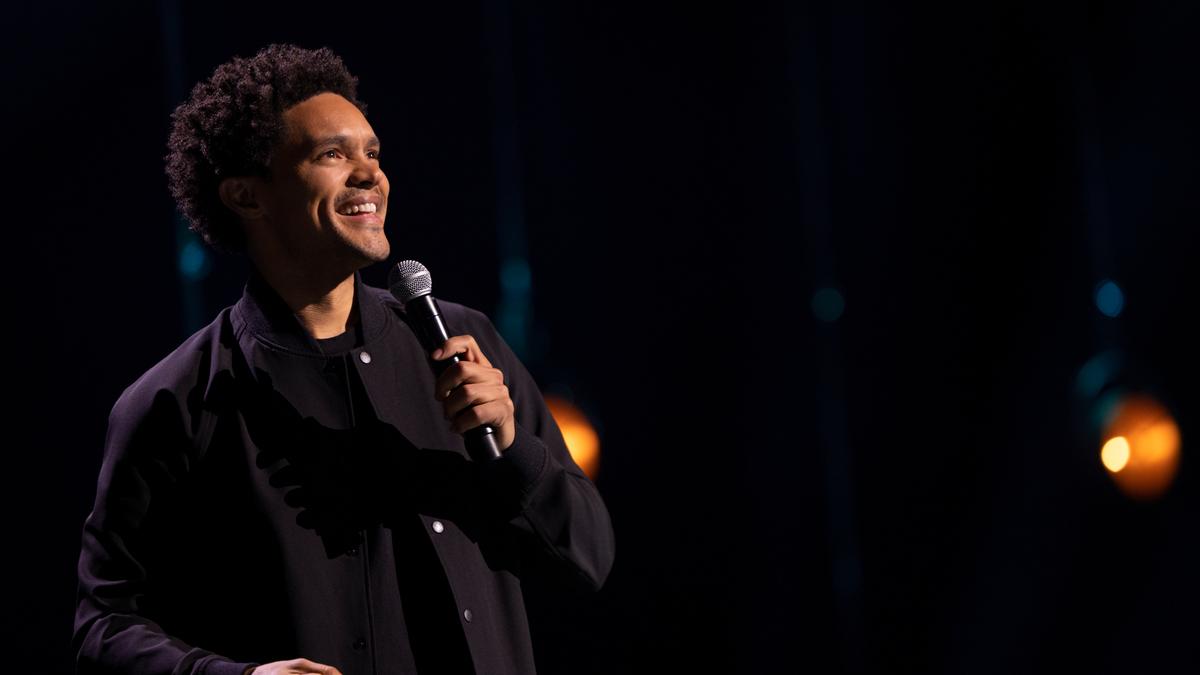
Trevor Noah’s latest Netflix special, Joy in the Trenches, arrives at a moment when global audiences are seeking both solace and substance from their comedy. Released in late 2023, the special continues Noah’s tradition of blending sharp social commentary with personal storytelling, using humor as a lens to examine war, displacement, identity, and the quiet resilience of everyday people. Rather than avoiding heavy topics, Noah leans into them — finding laughter not in spite of pain, but alongside it.
The special opens with Noah reflecting on his upbringing in Johannesburg during apartheid’s final years, drawing parallels between systemic oppression then and the fragmented, polarized world of today. He moves fluidly between anecdotes about his mother’s fierce protectiveness, the absurdities of modern media consumption, and the emotional toll of constant news cycles. What emerges is not a routine stand-up set, but a meditation on how humor functions as both shield and suture in times of collective stress.
Critics have noted that Joy in the Trenches represents a maturation in Noah’s comedic voice — less reliant on observational punchlines and more invested in narrative depth. According to The New York Times, the special “balances outrage with optimism,” allowing Noah to confront difficult truths without surrendering to cynicism. His ability to pivot from a joke about airline snacks to a reflection on refugee camps feels less like a tonal shift and more like an expression of emotional intelligence honed over years of global observation.
One of the most discussed segments involves Noah recounting a visit to a Ukrainian refugee center in Poland, where he performed an impromptu set for displaced families. He describes how laughter, even brief and hesitant, created a temporary space of normalcy amid trauma. This moment underscores a central thesis of the special: joy is not the absence of sorrow, but a choice made within it. As Noah puts it midway through the performance, “We don’t laugh because everything’s fine. We laugh because we’re still here.”
The special also touches on Noah’s evolution since leaving The Daily Show in 2022. After seven seasons as host, he has pursued stand-up tours, authored books, and developed documentary projects — all while maintaining a global platform through Netflix. His post-show work has been characterized by a desire to engage with audiences beyond the satire of American politics, focusing instead on universal human experiences. In Joy in the Trenches, this shift is evident in the reduced focus on U.S.-centric humor and the increased emphasis on cross-cultural storytelling.
Comedy as Emotional Labor
What distinguishes Noah’s approach in this special is his framing of comedy not just as entertainment, but as a form of emotional labor — work that requires empathy, timing, and an acute awareness of audience vulnerability. He speaks openly about testing jokes in different countries, noting that what lands in Lagos might fall flat in Lisbon, not due to language barriers alone, but because of differing historical relationships to authority, suffering, and resilience.
This attention to context reflects a broader trend in contemporary comedy, where performers are increasingly expected to navigate complex social terrains with nuance. Scholars have pointed to comedians like Hannah Gadsby, Hasan Minhaj, and Michelle Wolf as part of a movement that treats stand-up as a platform for moral inquiry. Noah aligns with this tradition, using his platform not to preach, but to provoke reflection through shared laughter.
In one particularly poignant moment, Noah discusses the concept of “trench joy” — a term he borrows from soldiers’ slang during World War I, referring to fleeting moments of levity found in the mud and misery of frontline life. He applies it metaphorically to modern existence: the joke shared during a layoff, the meme sent during a health scare, the silly dance at a funeral. These are not distractions from pain, he argues, but affirmations of life’s persistence.
The special’s production values support its reflective tone. Directed by Noah’s frequent collaborator, the staging is minimal — a single spotlight, minimal props, and a focus on facial expression and vocal nuance. This simplicity allows the audience to attend closely to the rhythm of his delivery, the pauses where laughter builds, and the quieter moments when the humor gives way to sincerity.
Audience Reception and Cultural Impact
Since its release, Joy in the Trenches has sparked conversation across social media and criticism alike. On platforms like X and Reddit, viewers have praised the special for its emotional honesty, with many noting that it felt less like a performance and more like a conversation. Clips from the Ukrainian refugee center segment have been widely shared, often accompanied by captions emphasizing the power of humor in humanitarian contexts.
Review aggregator Rotten Tomatoes reports an audience score of 89%, with critics highlighting Noah’s ability to “find light without denying darkness.” The Guardian described the special as “a masterclass in tonal control,” noting that Noah avoids both flippancy and solemnity, instead occupying a “radical middle ground” where truth and humor coexist.
The special has also prompted discussions about the role of comedians in times of crisis. Unlike satirists who aim to dismantle power through irony, Noah’s approach here is more reconciliatory — seeking not to indict, but to connect. This distinction has been noted by media analysts as indicative of a evolving role for public figures in entertainment: not just commentators, but facilitators of collective processing.
Noah himself has remained relatively quiet in promotional interviews, opting instead to let the special speak for itself. In a rare conversation with BBC News, he said, “I don’t want to tell people how to perceive. I just want to create a space where they feel allowed to feel it — all of it.” That ethos permeates Joy in the Trenches, making it not just a stand-up special, but an invitation to embrace complexity without losing hope.
As audiences continue to grapple with uncertainty — from climate anxiety to geopolitical instability — works like Noah’s offer a reminder that resilience is not always loud. Sometimes, it’s quiet. Sometimes, it’s a laugh in the dark. And sometimes, it’s found not by escaping the trenches, but by learning how to sing in them.
For those interested in watching Joy in the Trenches, the special is available exclusively on Netflix. No official announcements have been made regarding a follow-up special or tour, but Noah continues to perform select stand-up dates internationally, with updates typically shared through his verified social media channels.
What did you think of Trevor Noah’s balance of humor and heart in Joy in the Trenches? Share your thoughts in the comments below, and don’t forget to share this article if it resonated with you.
Keep reading