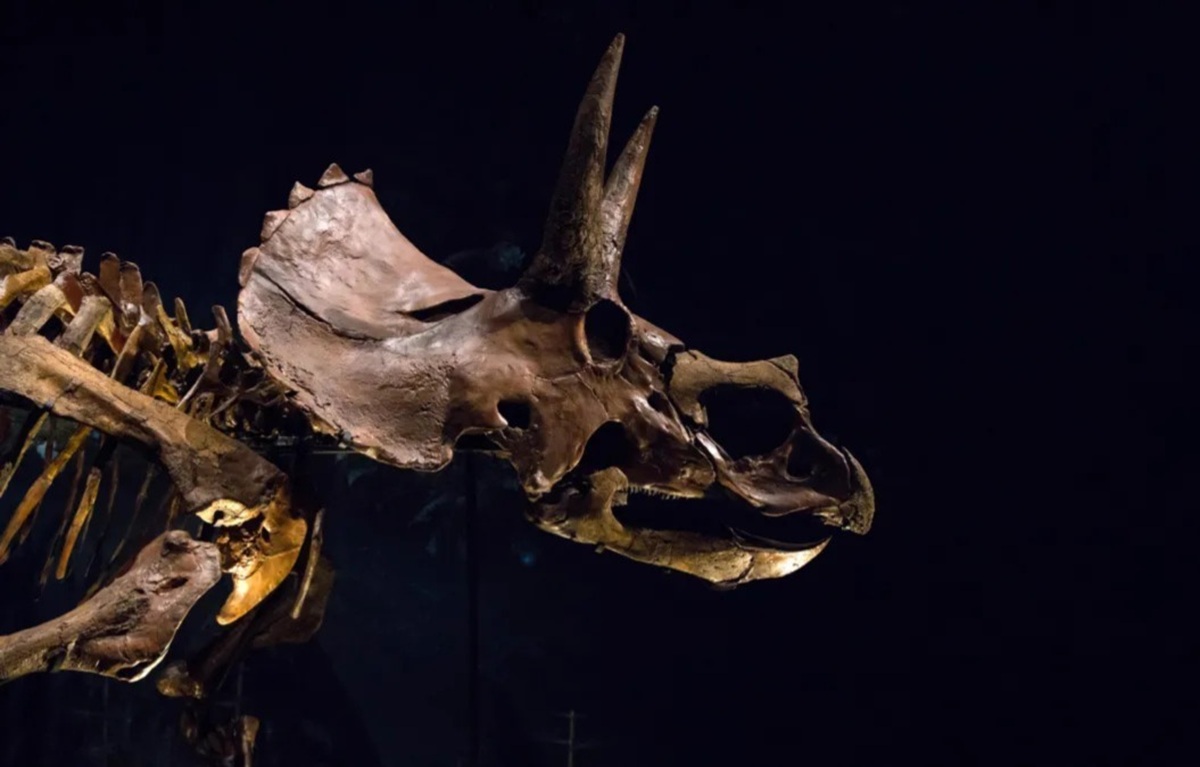
The iconic Triceratops, a herbivorous dinosaur instantly recognizable by its three horns and massive bony frill, possessed a surprisingly sophisticated nasal cavity that went far beyond simply smelling its surroundings. New research, published in the journal The Anatomical Record, reveals that the dinosaur’s large nose functioned as a complex thermoregulatory system, essentially acting as a natural air conditioner. This discovery sheds new light on how these massive creatures maintained a stable body temperature in the warm climate of the Late Cretaceous period.
For decades, paleontologists have been piecing together the lives of dinosaurs through fossilized remains. However, understanding the intricacies of their internal systems has remained a significant challenge. To unlock the secrets of the Triceratops nose, Seishiro Tada of the University of Tokyo Museum and an international team of researchers from the United States, Canada, Japan, and China employed cutting-edge X-ray computed tomography (CT) scanning technology. This allowed them to create detailed 3D models of the internal structures of fossilized skulls, revealing previously hidden complexities. The team then compared these anatomical features to those found in modern animals, such as birds and crocodiles, to understand their functional significance.
The scans revealed that the nasal cavity of Triceratops wasn’t an empty space, but rather a network of intricate nerves and blood vessels. A particularly noteworthy finding concerned the largest cranial nerve, the trigeminal nerve, which provides sensory input to the face. In most reptiles, this nerve reaches the nasal cavity through a pathway in the jaw. However, the massive and dense skull of Triceratops blocked this traditional route. The nerve and associated blood vessels were forced to accept an alternative path through the nasal branches, creating a unique anatomical arrangement.
A Natural Radiator: Respiratory Turbinates
Perhaps the most significant discovery was evidence of respiratory turbinates – complex, scroll-like bony structures within the nasal passages. These turbinates are commonly found in mammals and birds, where they play a crucial role in warming and humidifying inhaled air. Although relatively rare in dinosaurs, their presence in Triceratops suggests a surprisingly efficient system for regulating temperature, and moisture. ScienceDaily reported on February 24, 2026, that these structures acted like a natural radiator.
While Triceratops wasn’t likely fully warm-blooded like modern mammals and birds, the presence of turbinates indicates a sophisticated level of thermoregulation. Maintaining a stable body temperature is vital for large animals, as their internal organs – including the heart, lungs, and brain – function optimally within a narrow temperature range. Extreme temperatures can disrupt these biological processes, potentially leading to organ failure.
The Challenge of Size and Heat
Living in the warm climate of the Late Cretaceous period, approximately 66 million years ago, Triceratops faced a significant challenge: overheating. Its massive size meant it had a relatively minor surface area compared to its volume, making it difficult to dissipate heat effectively. This is a common problem for large animals, as their metabolic processes generate substantial internal heat.
The nasal cavity, with its intricate network of blood vessels and turbinates, served as a central cooling system. By cooling incoming air and releasing excess heat through the complex vascular network, Triceratops could prevent heat stress, a potentially fatal condition. Controlling humidity was equally important. By retaining moisture during respiration, the dinosaur could avoid dehydration, particularly in drier environments.
The Triceratops was a herbivore, meaning its diet consisted entirely of plants. Fossil evidence suggests they consumed a variety of vegetation, including ferns, cycads, and conifers. Instagram’s Daily Dino Guy highlights the iconic nature of this ceratopsian dinosaur, emphasizing its three horns and bony frill.
Implications for Understanding Dinosaur Physiology
This discovery has broader implications for our understanding of dinosaur physiology. For a long time, scientists debated whether dinosaurs were primarily ectothermic (cold-blooded), endothermic (warm-blooded), or somewhere in between. The presence of respiratory turbinates in Triceratops, along with similar findings in other dinosaur species, suggests that at least some dinosaurs possessed physiological mechanisms for regulating their body temperature, indicating a level of metabolic activity higher than previously thought.
The research team’s innovative use of CT scanning and 3D modeling has opened new avenues for paleontological research. This technology allows scientists to virtually dissect fossilized remains, revealing internal structures that would otherwise remain hidden. This approach is proving invaluable in unraveling the mysteries of dinosaur anatomy and physiology, providing insights into how these magnificent creatures lived and thrived millions of years ago.
The study also highlights the importance of comparative anatomy – examining the similarities and differences between the anatomy of extinct and living animals. By comparing the nasal structure of Triceratops to that of modern birds and crocodiles, researchers were able to infer its function and understand its evolutionary significance. This interdisciplinary approach, combining paleontology, anatomy, and engineering, is driving a new era of dinosaur research.
Key Takeaways
- Nasal Complexity: The Triceratops nasal cavity was far more complex than previously understood, functioning as more than just a sensory organ.
- Thermoregulation: The presence of respiratory turbinates suggests an efficient system for regulating body temperature, preventing overheating in a warm climate.
- Advanced Physiology: This discovery supports the idea that some dinosaurs possessed a level of physiological sophistication previously underestimated.
- Technological Innovation: CT scanning and 3D modeling are revolutionizing paleontological research, allowing for detailed analysis of fossilized remains.
The ongoing research into dinosaur physiology promises to continue reshaping our understanding of these prehistoric giants. As new technologies emerge and more fossils are discovered, we can expect even more surprising revelations about the lives of the dinosaurs. The next step for Tada and his team is to investigate the nasal cavities of other ceratopsian dinosaurs to determine if this thermoregulatory system was widespread within the group. Further research will also focus on analyzing the blood vessel density within the turbinates to quantify their cooling efficiency.
What are your thoughts on this fascinating discovery? Share your comments below, and don’t forget to share this article with your fellow dinosaur enthusiasts!
Keep reading