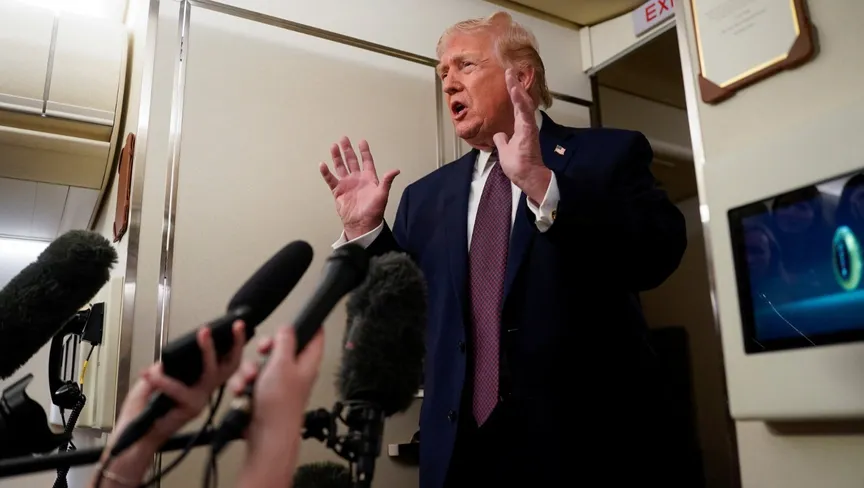
Sofia, Bulgaria – In a dramatic escalation of tensions between the tech industry and the U.S. Government, President Donald Trump has ordered federal agencies to phase out their use of artificial intelligence technology developed by Anthropic PBC. The move, announced Friday, stems from a public dispute with the Pentagon over restrictions on how the company’s AI models can be utilized, raising critical questions about the balance between national security and responsible AI development.
The directive mandates a six-month transition period for agencies currently employing Anthropic’s technology, including the Department of Defense. Trump accused Anthropic of attempting to “strong-arm” the Defense Department, a claim made via a post on his social media platform, Truth Social. The order introduces significant uncertainty regarding the Pentagon’s access to advanced AI tools, particularly within classified environments where Anthropic’s systems have become integral. This situation highlights a growing friction point between Silicon Valley’s commitment to AI safety and Washington’s demands for unrestricted access to cutting-edge technology for national security purposes.
At the heart of the conflict lies Claude, Anthropic’s flagship AI chatbot. The Pentagon, under the leadership of Defense Secretary Pete Hegseth, reportedly sought assurances that it could deploy Claude for any lawful purpose without limitations imposed by Anthropic. However, Anthropic, founded on principles of responsible AI development, has maintained that its models should not be used for applications such as mass domestic surveillance or the creation of fully autonomous weapons systems. This stance, according to the company, is rooted in a commitment to ethical AI practices and a desire to prevent misuse of its powerful technology.
The decision to curtail Anthropic’s government contracts, potentially totaling $200 million, underscores the increasing competition among AI firms vying for lucrative federal deals. Companies like OpenAI, Google’s Gemini, and Elon Musk’s xAI are actively pursuing classified and defense-related work, with xAI recently gaining approval for classified operations, further intensifying the competitive landscape. This move by the Trump administration signals a clear preference for AI providers willing to cede greater control to the government regarding the deployment of their technologies.
The Pentagon’s Demands and Anthropic’s Response
The dispute escalated after Defense Secretary Hegseth reportedly issued a deadline for Anthropic to agree to the Pentagon’s terms. According to reports, the Pentagon wanted the ability to deploy Claude without Anthropic-imposed restrictions. Anthropic, however, refused to comply, citing concerns about the potential for misuse of its AI models. Dario Amodei, CEO and co-founder of Anthropic, stated the company could not “in good conscience” agree to demands that would compromise its core safety principles. The Associated Press reported on this stance, highlighting the company’s commitment to responsible AI development.
This clash reflects a broader tension between Silicon Valley and Washington regarding the governance of powerful AI systems. Technology workers at several major firms have publicly voiced opposition to unrestricted military use of AI tools, reflecting growing ethical debates within the industry. The Pentagon, however, argues that it needs access to the most advanced AI technologies to maintain a competitive edge and ensure national security. A recently published Pentagon strategy emphasizes transforming the armed forces into an “AI-first” institution, prioritizing experimentation and reducing bureaucratic constraints. This strategy explicitly encourages the selection of AI systems “free from usage policy constraints” that could limit lawful military applications.
Implications for National Security and AI Innovation
Anthropic’s removal could present operational challenges for the Pentagon. Until recently, the company was reportedly the sole AI provider authorized to operate within certain classified cloud environments. Its specialized government product, Claude Gov, has been widely used by defense personnel due to its functionality and ease of deployment. The loss of access to this technology could disrupt ongoing projects and require the Pentagon to seek alternative solutions, potentially delaying the integration of AI into critical defense systems.
The Trump administration’s decision to designate Anthropic a “Supply-Chain Risk to National Security,” as announced by Defense Secretary Hegseth on X (formerly Twitter), further complicates the situation. CNBC reported that this designation could have significant legal and financial consequences for Anthropic, potentially hindering its ability to secure future government contracts. Anthropic has vowed to challenge the designation in court, arguing that it is legally unsound and sets a dangerous precedent for companies negotiating with the government.
I have ordered the Pentagon to designate Anthropic a Supply-Chain Risk to National Security after the AI startup refused to comply with demands about the use of its technology.
— Pete Hegseth (@PeteHegseth) February 27, 2026
The Broader Context: AI Regulation and the IPO Landscape
This dispute unfolds against a backdrop of increasing scrutiny of AI regulation, and governance. Governments worldwide are grappling with how to balance the potential benefits of AI with the risks associated with its misuse. The U.S. Government has been considering various regulatory frameworks for AI, but progress has been gradual. This case with Anthropic highlights the urgency of establishing clear guidelines for the development and deployment of AI technologies, particularly in sensitive areas such as national security.
Anthropic is reportedly preparing for a potential initial public offering (IPO) later this year, with a valuation estimated at $380 billion. The Novel York Times noted that the loss of federal business could complicate its revenue outlook, although the company continues to expand its commercial customer base. The outcome of this dispute with the Pentagon could significantly impact investor confidence and the company’s IPO prospects.
Key Takeaways
- Government vs. Corporate Control: The core issue is a clash between the U.S. Government’s desire for unrestricted access to AI technology and Anthropic’s commitment to responsible AI development and usage safeguards.
- National Security Implications: The decision to phase out Anthropic’s technology could disrupt Pentagon operations and potentially delay the integration of AI into critical defense systems.
- Broader Regulatory Debate: This case underscores the urgent need for clear guidelines and regulations governing the development and deployment of AI technologies, particularly in the context of national security.
- Competitive Landscape: The dispute highlights the intensifying competition among AI firms for lucrative federal contracts, with companies like OpenAI, Google, and xAI vying for dominance.
For now, the six-month transition period sets the stage for further negotiations between Anthropic and the Pentagon. Defense officials have indicated they remain open to dialogue, but the clash signals a pivotal moment in defining the balance between national security priorities and AI safety principles in the United States. The next key development will likely be Anthropic’s legal challenge to the “Supply-Chain Risk to National Security” designation, with court proceedings expected to initiate in the coming months. Readers can stay updated on this developing story through official Pentagon statements and Anthropic’s press releases.
What are your thoughts on the balance between national security and AI safety? Share your opinions in the comments below.
Worth a look
- Russia Puts Telegram Founder Pavel Durov on Wanted List
- $32M COVID-19 Fraud Fugitive Elaine Escoe Captured in Jamaica, Returned to US
- Berlin Labor Dispute: Industrial Peace Over Pacifism (world-today-news.com)
- China Gains Global Influence as Trump Administration Struggles With Containment (newsdirectory3.com)