Iron-Based Catalyst Revolutionizes Chemical Synthesis, Offering Sustainable Alternative to Rare Metals
The field of organic chemistry is witnessing a significant breakthrough with the development of a highly efficient iron-based photocatalyst. Researchers at Nagoya University in Japan have engineered a system that dramatically reduces the reliance on scarce and expensive metals like ruthenium and iridium, traditionally used in photocatalysis. This innovation not only promises more sustainable chemical processes but also opens doors to the more accessible synthesis of complex molecules, including potential pharmaceutical precursors. The new catalyst design, detailed in a recent publication in the Journal of the American Chemical Society, represents a major step forward in making advanced chemical synthesis more environmentally friendly and economically viable.
Photocatalysis, a process utilizing light energy to drive chemical reactions, has develop into increasingly key in modern chemistry. Metal-based photocatalysts are particularly valuable due to their durability and ability to be customized. By carefully adjusting the ligands – molecules that bind to the central metal atom – chemists can fine-tune the catalyst’s behavior and selectivity. However, the high cost and limited availability of metals like ruthenium and iridium have long been a barrier to widespread adoption. The search for affordable and abundant alternatives has led researchers to explore iron, a significantly more accessible element, but previous iron-based catalysts often required large quantities of costly chiral ligands to achieve the desired results.
Addressing the Ligand Challenge: A More Efficient Design
The Nagoya University team, led by Professor Kazuaki Ishihara and Assistant Professor Shuhei Ohmura, tackled the challenge of ligand cost head-on. Their previous work in 2023 involved an iron photocatalyst incorporating three chiral ligands per iron atom, but it was found that only one of these ligands was actively contributing to the crucial property of enantioselectivity – the ability to favor the formation of one mirror image form of a molecule over the other. This inefficiency prompted a redesign focused on maximizing catalytic performance although minimizing the use of expensive chiral components.
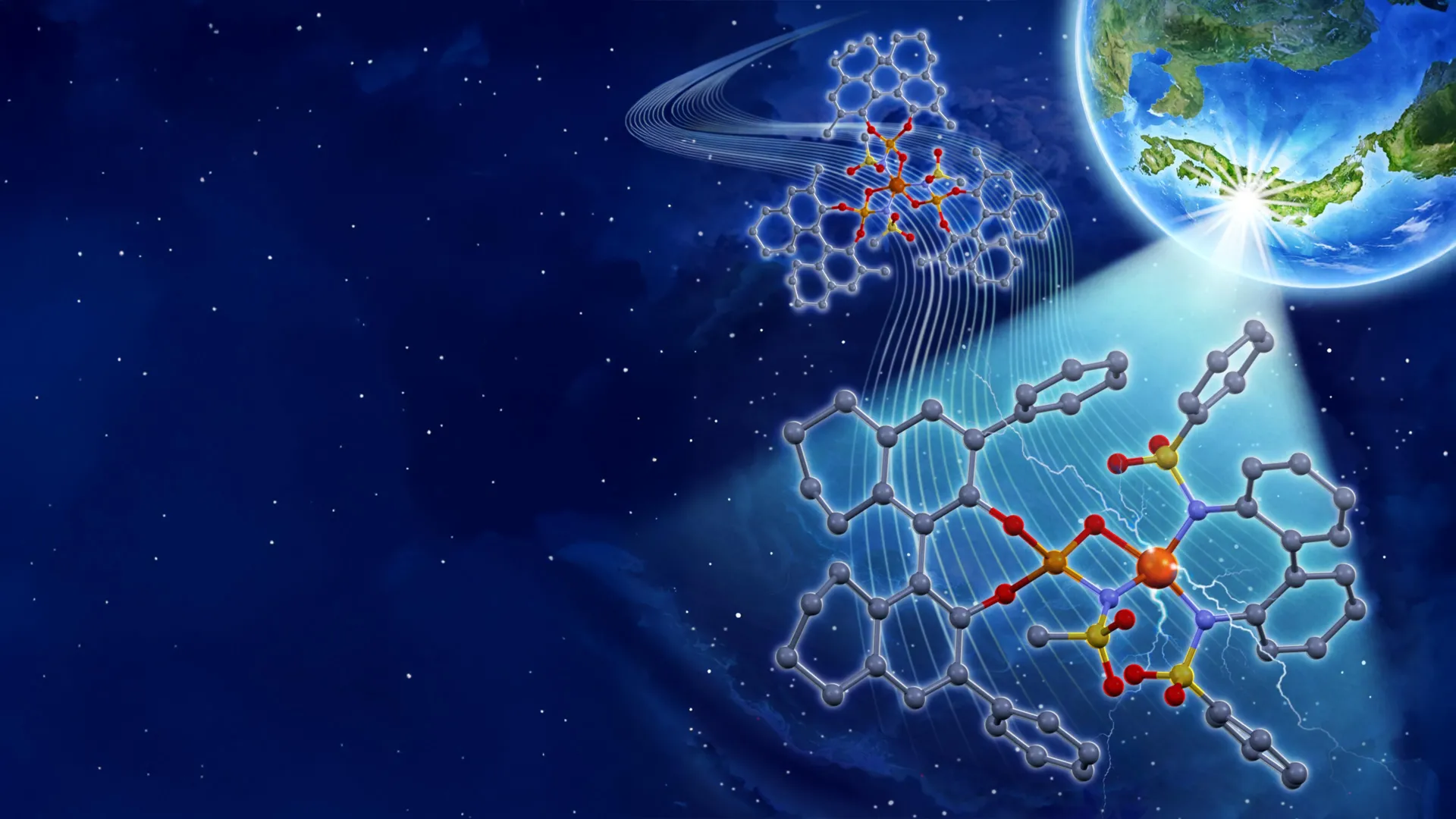
The newly developed catalyst employs a strategic combination of affordable achiral bidentate ligands and chiral ligands. This creates a specific iron(III) salt structure where the chiral ligand directs the three-dimensional configuration of the product, while the achiral bidentate ligand enhances the overall catalytic activity. This innovative approach reduces the need for chiral ligands by two-thirds, significantly lowering the cost of the catalyst. The system operates efficiently under blue LED light, a more energy-efficient and sustainable light source compared to traditional UV lamps. Blue LEDs are becoming increasingly prevalent in chemical synthesis due to their lower energy consumption and reduced environmental impact. Phys.org reports on the benefits of using blue LEDs in this process.
First Asymmetric Synthesis of (+)-Heitziamide A
To demonstrate the capabilities of their redesigned catalyst, the researchers successfully completed the asymmetric total synthesis of (+)-heitziamide A, a natural compound found in medicinal plants. Heitziamide A is known for its ability to suppress respiratory bursts, a process involved in inflammation and immune responses. Achieving the asymmetric synthesis – meaning the creation of a single enantiomer (mirror image form) of the molecule – is a significant accomplishment, as it allows for precise control over the compound’s biological activity. Previously, while laboratory synthesis of heitziamide A had been reported, the total asymmetric synthesis of its naturally occurring enantiomer remained elusive.
The team achieved this breakthrough by carefully controlling a six-membered ring formation reaction using the blue light-activated iron photocatalyst. This process, known as a radical cation (4 + 2) cyclization, allows for the creation of complex molecular structures commonly found in natural products. The researchers believe that by using the “mirror image” version of their catalyst, they could also produce (-)-heitziamide A, providing access to both enantiomers for research and potential therapeutic applications. This dual capability expands the versatility of the catalyst and its potential for synthesizing a wider range of compounds.
Implications for Pharmaceutical Chemistry and Beyond
The development of this iron-based photocatalyst has far-reaching implications, particularly for the pharmaceutical industry. The ability to construct complex molecules, including pharmaceutical precursors, using abundant iron and readily available blue LEDs instead of rare and expensive metals represents a significant cost reduction and a step towards more sustainable manufacturing processes. Professor Ishihara emphasized the importance of this achievement, stating, “Achieving the first-ever asymmetric total synthesis of (+)-heitziamide A using this catalytic reaction is a remarkable accomplishment.” He further noted that the team intends to publish additional papers detailing the asymmetric total synthesis of other bioactive substances utilizing this innovative approach.
Assistant Professor Ohmura added, “The new catalyst design represents the definitive form of chiral iron(III) photoredox catalysts. We believe this achievement marks a significant milestone in advancing iron-based photocatalysis.” This sentiment highlights the potential for this technology to become a cornerstone of future chemical synthesis, offering a more sustainable and cost-effective alternative to traditional methods. The use of iron, one of the most abundant elements on Earth, addresses concerns about resource scarcity and promotes a circular economy in chemical manufacturing.
The research extends beyond pharmaceutical applications. The ability to efficiently synthesize complex molecules with precise control over their structure opens possibilities in materials science, agrochemistry, and other fields. The development of more sustainable and efficient chemical processes is crucial for addressing global challenges related to resource depletion, environmental pollution, and the need for innovative materials.
Key Takeaways
- A new iron-based photocatalyst significantly reduces the need for expensive and scarce metals like ruthenium and iridium.
- The catalyst utilizes a strategic design combining affordable achiral ligands with chiral ligands, reducing chiral ligand usage by two-thirds.
- The system operates efficiently under energy-efficient blue LED light, promoting sustainability.
- Researchers achieved the first asymmetric total synthesis of (+)-heitziamide A, a natural compound with potential medicinal properties.
- This innovation has significant implications for pharmaceutical chemistry and other fields, offering a more sustainable and cost-effective approach to complex molecule synthesis.
The Nagoya University team’s work represents a significant advancement in the field of photocatalysis, paving the way for more sustainable and accessible chemical synthesis. Further research is expected to explore the application of this catalyst to a wider range of chemical reactions and the development of even more efficient and selective catalytic systems. The team is actively pursuing follow-up studies to demonstrate the versatility of this approach and unlock its full potential for addressing critical challenges in chemistry and beyond. The next steps will likely involve exploring the synthesis of other complex natural products and optimizing the catalyst for industrial-scale applications.
What are your thoughts on this breakthrough in chemical synthesis? Share your comments below, and please share this article with your network to spread awareness of this exciting development.
Keep reading