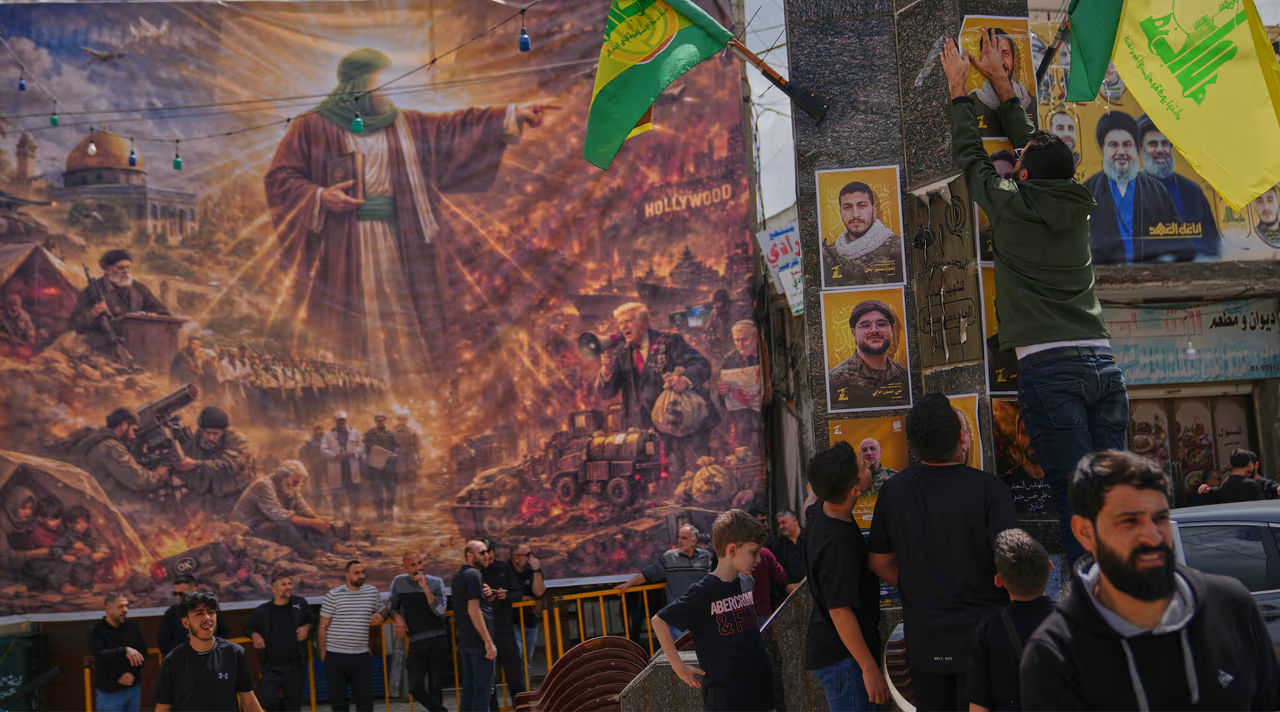
On Tuesday, April 21, 2026, President Donald Trump announced that the United States would extend its ceasefire with Iran indefinitely, just hours before the original expiration of a two-week truce that began on April 7. The decision came after diplomatic pressure from Pakistan, which had sought to host renewed negotiations between Washington and Tehran. Trump stated the extension would remain in place until Iran presents a unified proposal and negotiations conclude, though he emphasized that the U.S. Naval blockade of the Strait of Hormuz would continue.
The move aimed to prevent an immediate resumption of hostilities that had disrupted global energy markets and raised fears of a broader regional conflict. According to Trump, he remains prepared to return to war if no agreement is reached, stating in a Bloomberg interview that it is “very unlikely” he would extend the ceasefire further without a deal. “If there is no agreement, I certainly would expect fighting to resume,” he said.
Pakistani leaders, including Prime Minister Shehbaz Sharif, welcomed the extension, saying it would allow ongoing diplomatic efforts to proceed. Sharif thanked Trump for his “kind acceptance” of Pakistan’s request to prolong the truce. However, Iran has not yet responded to the announcement and Iranian officials had previously expressed uncertainty about attending talks in Islamabad. As of late Tuesday, Iran’s Foreign Ministry spokesperson, Esmaeil Baghaei, told state television that Tehran had not decided whether to send delegates to the negotiations.
The ceasefire had originally been set to expire early on Wednesday, April 22, 2026, in Washington time, which corresponded to late Tuesday evening in Spain. Trump had previously wavered on extending the truce, offering differing answers during a press briefing the prior week when asked five times about prolongation. He has described a potential deal with Iran as “much better” than the 2015 Joint Comprehensive Plan of Action (JCPOA) negotiated under President Barack Obama.
Despite the extension, tensions remain high. The U.S. Military had fired “several projectiles” at an Iranian-flagged vessel in the days preceding the announcement, according to U.S. Central Command. Iran has accused the U.S. Of piracy over the interception of one of its tankers in international waters. Both nations have warned they are prepared to resume combat if negotiations fail.
The United States continues to seek a rapid agreement, but Iranian officials have shown resistance to U.S. Demands, according to diplomatic observers. Vice President JD Vance, who was scheduled to lead the U.S. Delegation to Islamabad, postponed his trip indefinitely after Iran rejected efforts to restart talks. The White House confirmed the cancellation of Vance’s travel plans.
As of Wednesday morning, April 22, 2026, the ceasefire remains in effect, with no immediate indication of renewed fighting. Diplomatic channels remain open through Pakistani mediators, though no formal talks have yet resumed. The U.S. Maintains its naval presence in the Strait of Hormuz, citing the need to ensure freedom of navigation while negotiations remain unresolved.
The next development to watch is whether Iran will submit a unified proposal for negotiation, as stipulated by the Trump administration as a condition for continuing the ceasefire. No date has been set for a potential resumption of talks, and officials in both countries have avoided specifying timelines for a breakthrough or a return to hostilities.
For ongoing updates on the Iran-U.S. Ceasefire and diplomatic efforts, readers can follow official statements from the White House, the U.S. Department of State, and the Ministry of Foreign Affairs of the Islamic Republic of Iran. Reports from the International Atomic Energy Agency may too provide insight into any broader implications for regional security.
We encourage readers to share their thoughts on this developing situation in the comments below and to share this article with others seeking clear, factual coverage of international affairs.
Related reading
- Grave accident sur nos routes ce dimanche : une voiture dérape et termine sa course dans le fossé, le conducteur est blessé ! – Sudinfo
- Appartamento viale Virginia Centurione Bracelli 76, Marassi, Genova
- US Crypto Ownership Drops Despite Trump Push and ETFs (archyworldys.com)
- Trump Ordina Pausa Negli Attacchi Stati Unitesi contro l’Iran (archynewsy.com)