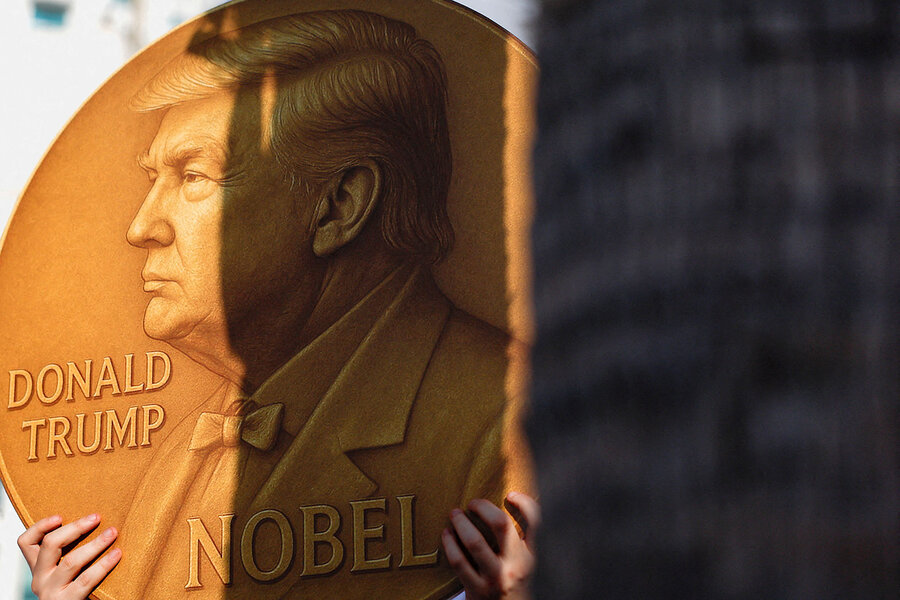
Could Donald Trump Win a Nobel Peace Prize? A Realistic Assessment
The possibility of former president Donald Trump receiving the Nobel Peace Prize is gaining traction, fueled by potential breakthroughs in the conflicts in Gaza and Ukraine. But is this a genuine prospect, or simply a reflection of ongoing political dynamics? Let’s delve into a comprehensive analysis, examining the factors at play and the past context of the prestigious award.
The Foundation for Consideration: Progress in Conflict Zones
Recent developments offer a potential pathway for Trump to be considered. Brett McGurk, a veteran national security official who served under both the Trump and Biden administrations, believes significant progress in resolving the Gaza and Ukraine conflicts could position Trump as a strong contender.
* He argues that the outlines of settlements in both regions are now visible.
* If Trump and his team can successfully broker lasting peace agreements, the Nobel committee would be justified in recognizing the achievement.
This assessment was made even before the recent announcement of a Gaza deal, further bolstering the argument. You might be wondering if this is enough to secure the prize.
A Complex Equation: Beyond Conflict Resolution
However, the path to a Nobel Peace Prize is rarely straightforward. Several factors could weigh against Trump, despite potential successes in conflict resolution.
* His stance on climate change is a significant hurdle, as the Nobel committee demonstrably prioritizes environmental concerns.
* His past actions, including rebranding the Department of Defense as the “Department of War,” bombing Iranian nuclear facilities, and militarizing law enforcement, contrast sharply with the prize’s core principles.
These actions seem at odds with the Nobel committee’s stated criteria, which emphasize the “abolition or reduction of standing armies” and the “promotion of peace congresses.”
The “Warrior Ethos” and Its implications
Trump and Defense Secretary Pete Hegseth have publicly articulated a “warrior ethos,” outlining a more aggressive approach to national security. This ideology, while resonating with some, appears distant from the conventional values associated with the Nobel Peace Prize. It raises questions about whether his vision aligns with the pursuit of lasting peace.
The Question of Campaigning and Historical Precedent
The open campaigning for Trump to receive the prize is also raising eyebrows. Historically, Nobel laureates haven’t actively sought the award. Rather, they’ve focused on addressing critical global issues.
* jeffrey Engel, a presidential historian at Southern Methodist University and former fellow at the Norwegian Nobel Institute, notes that winners typically “solve a problem or do good” without anticipating recognition.
* campaigning for the prize could be perceived as distasteful by the committee.
What Does This Mean for You?
Understanding the nuances of this situation is crucial. While Trump’s potential role in brokering peace deals is undeniable,the Nobel Peace Prize is about more than just ending conflicts. It’s about fostering lasting fraternity between nations and promoting a commitment to peace.
Ultimately,whether Trump receives the prize remains to be seen.But the debate itself highlights the evolving landscape of international relations and the complex criteria used to evaluate contributions to peace. As with any significant event,it’s important to stay informed and consider all perspectives.
Never say never, especially when it comes to Donald Trump, but a Nobel Peace Prize requires a holistic commitment to peace that extends beyond simply resolving immediate conflicts.
- National Assembly Votes on Revised Criminal Procedure Act Amid Filibuster
- Ex-Influencer Retail Worker Allegra Pinkowitz Claims She Was Fired Over Slow Sales
- Evangelion: 1.0 Ichiban Kuji Generates Massive Buzz for Rei Ayanami Prize (world-today-news.com)
- The Senate Blue Slip, Explained: The Custom Trump Wants Gone (daybreakwire.com)