
Global financial markets are sending a clear signal this week: uncertainty is driving investors toward the U.S. Dollar as a safe-haven asset, mirroring the flight to safety seen during past geopolitical flashpoints—including the oil price volatility tied to Middle East tensions. The dollar index, which tracks the greenback against six major currencies, hit a two-week high on Tuesday as traders weighed escalating risks in the Red Sea, persistent inflation concerns in major economies, and fresh political uncertainty in the U.S. Ahead of the November elections. Economists warn this trend could deepen if tensions in the Middle East—where Houthi attacks on commercial shipping and regional proxy conflicts show no signs of abating—persist, potentially tightening global liquidity and pushing borrowing costs higher for emerging markets already grappling with debt pressures.
The dollar’s rally reflects a broader pattern observed during periods of heightened risk aversion: the U.S. Currency’s status as the world’s premier reserve asset makes it the default choice for investors seeking stability. According to the International Monetary Fund (IMF), the dollar accounts for roughly 59% of all global foreign exchange reserves, a figure that has remained stubbornly high even as central banks in Europe and Asia have sought to diversify holdings. “When markets perceive a spike in uncertainty, the dollar tends to strengthen as investors liquidate riskier assets,” said Eswar Prasad, a Cornell University economist and former IMF official. “This dynamic is particularly pronounced when geopolitical risks intersect with economic vulnerabilities, as we’re seeing now.”
Yet the dollar’s ascent is not without complications. While the greenback’s strength may offer a temporary shield for U.S. Consumers—imports become cheaper, easing inflationary pressures—it poses fresh challenges for other economies. In Latin America, where many countries borrow in dollars, a stronger currency increases debt servicing costs. Brazil’s central bank, for instance, has already signaled plans to intervene in forex markets to curb excessive appreciation of the real, a move that could trigger retaliatory measures from trading partners. Meanwhile, in Europe, the euro’s prolonged weakness against the dollar is exacerbating concerns about the European Central Bank’s ability to cut interest rates later this year, as policymakers must now weigh the risks of further monetary easing against the threat of import-led inflation.
Why the Dollar Is Rising: Geopolitics, Elections, and Market Psychology
The current dollar rally is being driven by three interconnected factors: geopolitical tensions in the Middle East, the U.S. Presidential election cycle, and persistent inflationary pressures. Let’s break down each driver and its potential implications.
1. Middle East Tensions and the Oil Price Volatility Link
Since November 2023, attacks by Yemen’s Houthi rebels on commercial shipping in the Red Sea—backed by Iran—have disrupted global trade routes, forcing major carriers like Maersk and CMA CGM to reroute vessels around Africa’s Cape of Good Hope. While the immediate impact on oil prices has been muted so far, analysts at the Bloomberg Economics team warn that a prolonged escalation could push Brent crude prices above $90 per barrel by mid-2025, triggering a new round of inflationary pressures. “The Red Sea crisis is a reminder that even localized conflicts can have systemic spillovers,” said IMF Managing Director Kristalina Georgieva in a recent speech. “Central banks will be watching closely for signs that this disrupts supply chains further.”

For now, oil prices remain volatile but have not yet reached crisis levels. Brent crude, the global benchmark, traded at $84.12 per barrel on Tuesday, up 1.2% on the week, according to Bloomberg data. However, the International Energy Agency (IEA) has cautioned that any disruption lasting beyond three months could force a reallocation of global oil inventories, pushing prices higher. This, in turn, would likely reinforce the dollar’s appeal as a hedge against inflation.
2. U.S. Election Uncertainty and the “Trump Factor”
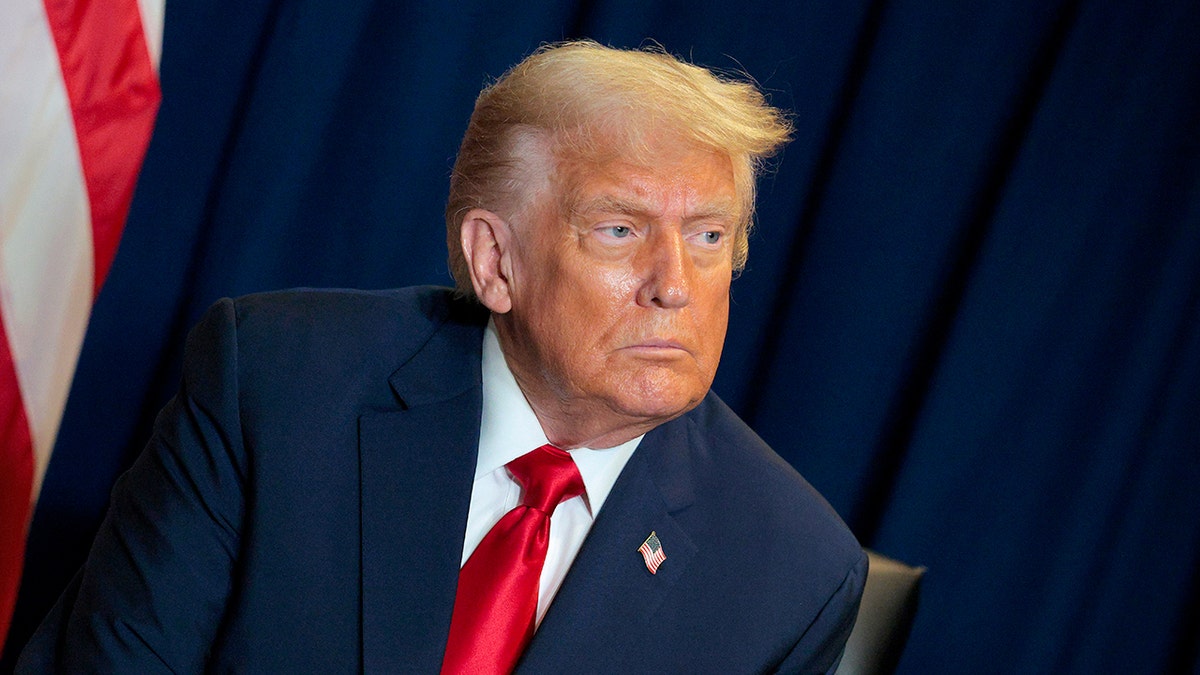
The U.S. Presidential election, now less than six months away, is adding another layer of uncertainty. While neither major-party candidate has outlined a clear fiscal or monetary policy stance, markets are pricing in a potential shift in economic direction depending on the outcome. Former President Donald Trump, who has repeatedly criticized the Federal Reserve’s interest rate policies, has signaled a willingness to renegotiate trade agreements and impose tariffs—measures that could disrupt global supply chains and further strengthen the dollar if perceived as protectionist. “A Trump victory would likely lead to a more isolationist trade policy, which could create volatility in emerging markets but support the dollar as a safe asset,” said The Wall Street Journal’s economics team in an analysis last month.

Conversely, President Joe Biden’s re-election would likely maintain the status quo on monetary policy, with the Federal Reserve expected to continue its cautious approach to rate cuts. Yet even this scenario carries risks: the U.S. Debt ceiling debate, which resurfaced this week with lawmakers failing to reach a bipartisan agreement, has reignited concerns about a potential U.S. Default—a scenario that would send shockwaves through global markets and likely trigger a dollar sell-off. As of Wednesday, the U.S. Treasury had not yet invoked the extraordinary measures it used in 2021 to avoid a default, but analysts at Congressional Budget Office (CBO) project that the government will exhaust its borrowing authority by early July.
3. Risk Aversion and the Fed’s Dilemma
The Federal Reserve finds itself in a precarious position. With inflation still above the central bank’s 2% target, policymakers have delayed rate cuts, keeping borrowing costs elevated. However, the dollar’s recent strength is making it harder for the Fed to achieve its dual mandate of maximum employment and price stability. A stronger dollar reduces inflation by lowering import costs, but it also makes U.S. Exports more expensive, potentially dampening economic growth. “The Fed is walking a tightrope,” said Federal Reserve Governor Michelle Bowman in a recent speech. “If the dollar continues to appreciate sharply, it could undermine our efforts to support the labor market.”
Market expectations for a June rate cut have faded, with traders now pricing in only a 30% chance of a reduction by the Fed’s next meeting, according to CME Group’s FedWatch tool. This shift reflects growing concerns that the central bank may need to keep rates higher for longer to prevent inflation from reigniting.
Who Wins and Who Loses in a Stronger Dollar?
The dollar’s rally is a double-edged sword, with winners and losers spread across the global economy. Here’s how different stakeholders are being affected:
- U.S. Importers and Consumers: A weaker euro and yen make imports cheaper, which could ease inflationary pressures on goods like electronics and automobiles. However, U.S. Exporters—particularly in agriculture and manufacturing—face headwinds as their products become more expensive abroad.
- Emerging Markets: Countries with dollar-denominated debt, such as Argentina, Egypt, and Turkey, will see their debt servicing costs rise. The IMF has warned that emerging market debt distress could worsen if the dollar strengthens further, particularly in economies with large current account deficits.
- European Central Bank (ECB): The euro’s weakness complicates the ECB’s plans to cut interest rates. Policymakers are already divided, with some arguing for a pause to avoid fueling further currency depreciation. ECB President Christine Lagarde has emphasized that the bank will act “data-dependent,” but the dollar’s strength adds another layer of complexity.
- Commodity Exporters: Countries like Canada, Australia, and Russia—major exporters of oil, gold, and other raw materials—see their currencies appreciate, boosting their purchasing power. However, if the dollar’s rally persists, it could dampen demand for their exports.
- Global Tourists: Travelers holding dollars will find their purchasing power stretched further abroad, particularly in Europe and Asia, where the greenback is buying significantly less than it did a year ago.
What’s Next: Key Checkpoints to Watch
The dollar’s trajectory will hinge on developments in three critical areas over the next six weeks:
- Middle East Tensions: The next major checkpoint is the U.S.-led negotiations in Geneva on May 20, where diplomats will attempt to broker a ceasefire in the Red Sea. If talks fail, oil prices could spike, further supporting the dollar.
- U.S. Debt Ceiling Debate: Lawmakers must reach a deal by July 1, 2024, when the Treasury is expected to exhaust its borrowing authority. A failure to act could trigger a U.S. Default, sending global markets into turmoil and potentially causing a dollar sell-off.
- Federal Reserve Meeting (June 11–12): Traders will be watching for any hints from Fed officials about the timing of rate cuts. A stronger dollar could delay cuts further, keeping borrowing costs elevated.
- U.S. Election Polling: While the election is months away, shifts in polling—particularly in key swing states—could trigger volatility in financial markets. The next major polling data drop is scheduled for June 3, 2024.
Key Takeaways
- The dollar is rising as a safe-haven asset amid geopolitical risks in the Middle East, U.S. Election uncertainty, and persistent inflation concerns.
- A stronger dollar benefits U.S. Importers and consumers but hurts emerging markets with dollar-denominated debt and exporters facing higher costs.
- The Federal Reserve’s next move on interest rates will be critical: a June rate cut is now unlikely, with traders pricing in only a 30% chance.
- Oil prices remain volatile, with the IEA warning of potential spikes if Red Sea tensions escalate beyond three months.
- The U.S. Debt ceiling remains a wild card: a failure to act by July 1 could trigger a market crisis.
As global markets brace for further volatility, one thing is clear: the dollar’s strength is not just a reflection of current risks—it’s a harbinger of the economic and political challenges ahead. For investors, businesses, and policymakers alike, the next few months will be critical in determining whether this rally is a temporary blip or the beginning of a longer-term trend.
What are your thoughts on the dollar’s rally and its implications for the global economy? Share your insights in the comments below, or connect with us on LinkedIn or Twitter to continue the discussion.
Related reading