Diplomatic tensions in the Middle East have reached a critical juncture as President Trump announced that new talks with Iran could resume within the next two days. This potential diplomatic opening comes amid a high-stakes economic squeeze, with the U.S. Military’s Central Command confirming the completion of a blockade of Iranian ports in the Strait of Hormuz. This strategic move targets a vital economic artery, as approximately 90% of Iran’s economy is dependent on international maritime trade according to recent reports.
While the administration seeks a breakthrough with Tehran, the region remains volatile. The U.S. Is currently one week into a two-week ceasefire, though a permanent resolution is complicated by Iran’s demand that any peace deal include an end to the ongoing hostilities between Israel and Hezbollah. The economic pressure applied via the Strait of Hormuz is intended to bridge the significant gaps between the two nations, though the efficacy of this pressure remains a subject of intense debate among policymakers.
Parallel to these geopolitical shifts, the U.S. Political landscape is reeling from the collapse of Representative Eric Swalwell’s career. The Democratic lawmaker from California announced his resignation from Congress following a wave of sexual assault and misconduct allegations. The situation escalated further on April 15, 2026, as a second woman came forward with allegations of rape, adding to the legal and social pressures facing the former congressman.
U.S.-Iran Standoff and the Strait of Hormuz Blockade
The announcement of potential talks comes at a moment of extreme economic tension. The U.S. Military’s Central Command has successfully executed a blockade of Iranian ports in the Strait of Hormuz, effectively cutting off the primary pathway for Iranian international trade. Because 90% of the Iranian economy relies on sea-based trade, the blockade represents a severe escalation of economic warfare as reported on April 15, 2026.
This blockade has had immediate global ramifications. Both the U.S. And Iran have been involved in blocking the Strait of Hormuz, leading to a surge in global oil prices that is impacting economies worldwide. The administration’s strategy appears to be one of “maximum pressure” to force Iran to the negotiating table, with the President indicating that talks could begin as early as April 17.
However, the path to a sustainable peace is fraught with complications. Iran has explicitly linked any comprehensive peace deal to the cessation of fighting between Israel and Hezbollah. This insistence ties the fate of U.S.-Iran relations directly to the stability of the Levant, creating a complex diplomatic web where progress in one area is dependent on concessions in another.
Historic Diplomatic Efforts in Washington
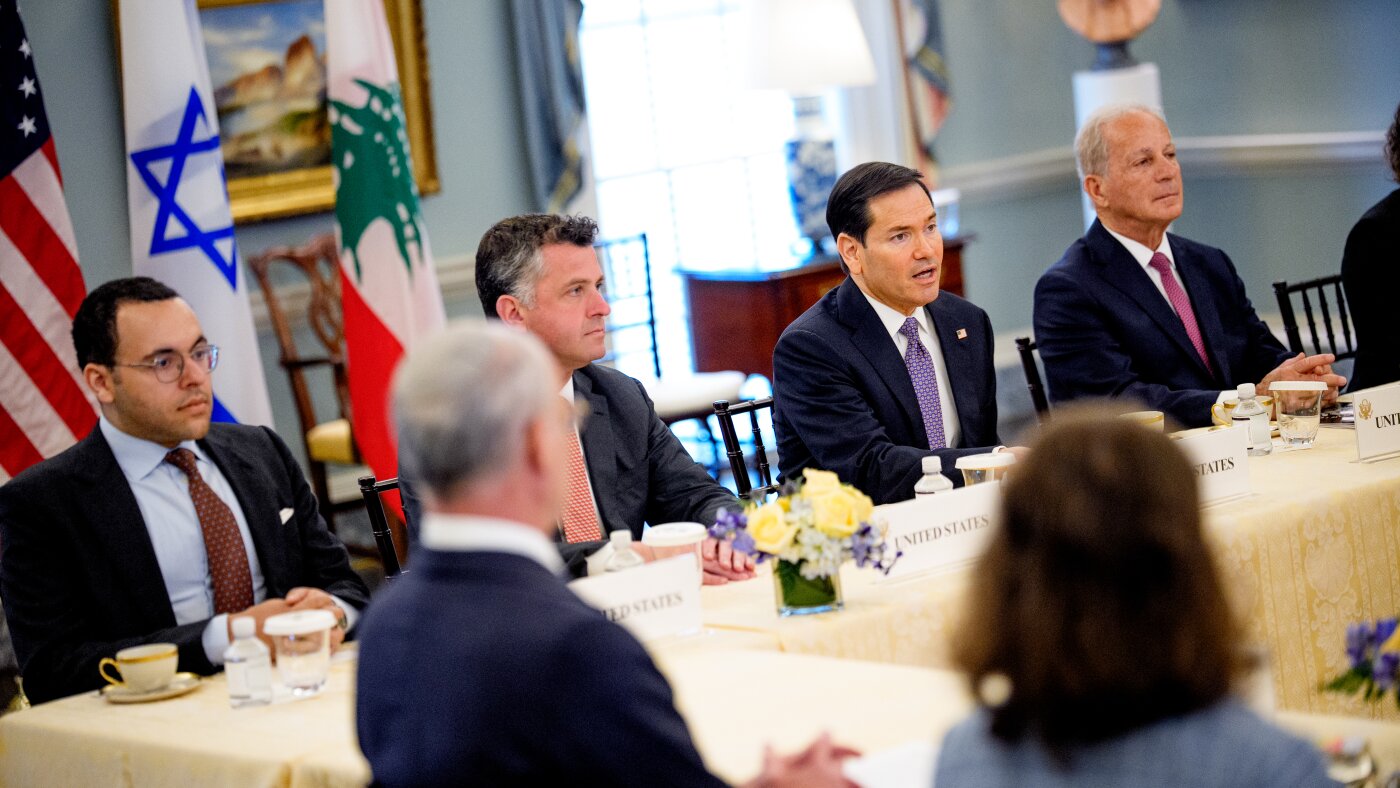
While the U.S. Focuses on Iran, other critical Middle East negotiations are unfolding in the U.S. Capital. On April 14, 2026, Israel and Lebanon engaged in historic direct diplomatic talks in Washington, D.C.—the first direct discussions of this nature since 1993 per official reports. The meeting included high-level officials, including U.S. Secretary of State Marco Rubio, U.S. Ambassador to Lebanon Michel Issa, Lebanon Ambassador to the U.S. Nada Hamadeh Moawad, and Israel Ambassador to the U.S. Yechiel Leiter.
The primary objective for Lebanon is the establishment of a ceasefire. However, Israel has maintained a firm condition for any agreement: the total disarmament of the Iranian-backed Lebanese militia, Hezbollah. Despite the diplomatic efforts in Washington, the situation on the ground remains precarious, as Israel and Hezbollah continued to trade fire during the negotiations. Both parties have agreed to return to Washington for further talks in a few weeks.
The Clash Between the White House and the Papacy
The administration’s approach to the conflict has also sparked a public feud with the Vatican. President Trump has been openly critical of Pope Leo, the first American-born pope, calling him “weak on crime” for his opposition to the war as documented on April 14, 2026. Pope Leo has responded with resolve, stating that he has no fear of the Trump administration in his pursuit of peace.
The Resignation and Downfall of Eric Swalwell
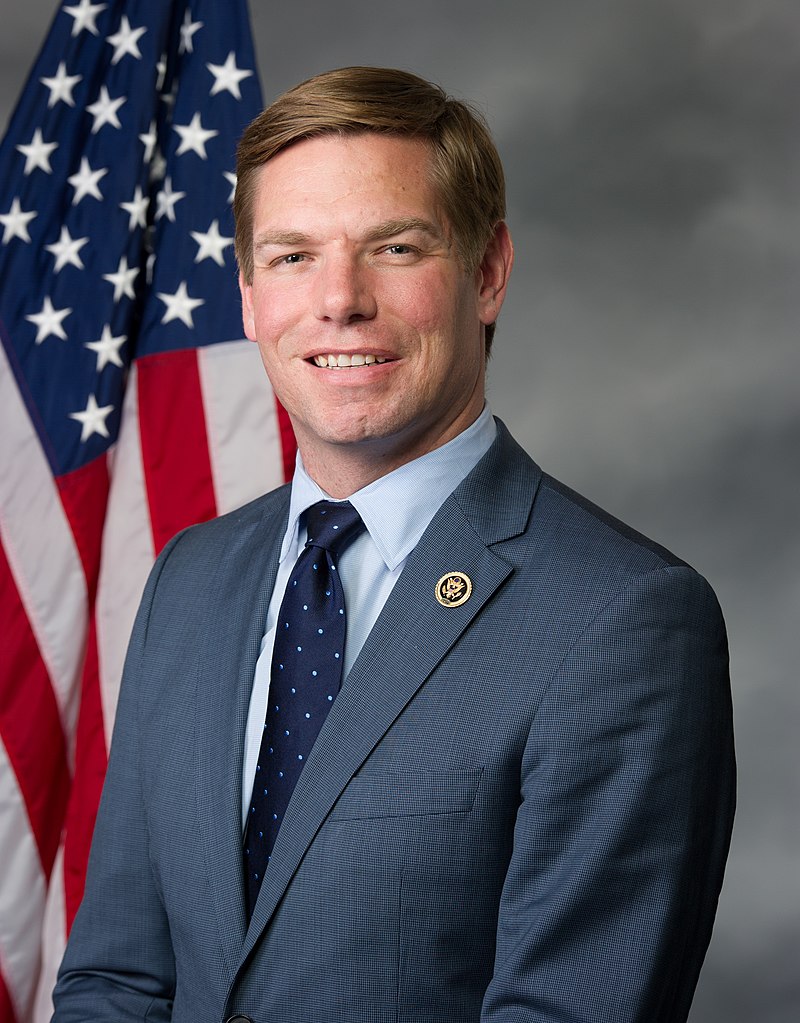
In domestic news, Rep. Eric Swalwell (D-Calif.) has officially announced his resignation from Congress. The decision follows a rapid descent from political prominence, occurring just one week after he was viewed as a frontrunner in the California gubernatorial race. Swalwell suspended his campaign for governor on April 12, 2026, before announcing his resignation from the House of Representatives on April 13 according to reports.
The resignation was precipitated by growing backlash over allegations of sexual assault and misconduct. The pressure mounted significantly when more than 50 former staffers of the congressman called for his immediate resignation, and several fellow lawmakers indicated they were preparing to move for his expulsion from the House.
In a social media statement, Swalwell denied the allegations of assault while admitting to making “mistakes in judgment in the past.” He criticized the push for his expulsion, arguing that removing a member without due process is fundamentally wrong. However, he acknowledged that it was “wrong for my constituents to have me distracted from my duties.” The crisis deepened on April 15, 2026, when a second woman came forward with a specific accusation of rape as reported on that date.
Political Aftermath in California
The vacancy created by Swalwell’s departure will trigger a specific legal process in California. Governor Gavin Newsom has 14 days to call a special election for the Bay Area seat once the resignation becomes official per state guidelines. Political analysts note that the seat is considered a “super safe blue seat,” meaning the Democratic party is expected to retain control despite the controversy surrounding the previous incumbent.
| Date | Event | Key Detail |
|---|---|---|
| April 12 | Swalwell Campaign Suspension | Suspended California gubernatorial bid. |
| April 13 | Swalwell Resignation | Announced departure from Congress amid misconduct allegations. |
| April 14 | Israel-Lebanon Talks | First direct diplomatic talks in Washington since 1993. |
| April 15 | US-Iran Update | Blockade of Hormuz completed. potential talks in 2 days. |
| April 15 | New Allegations | Second woman accuses Rep. Swalwell of rape. |
The intersection of these events—a global economic crisis triggered by a naval blockade, high-stakes Middle Eastern diplomacy, and a high-profile political collapse—underscores a period of significant instability. As the world watches the Strait of Hormuz and the halls of Congress, the next 48 hours will be pivotal in determining whether the U.S. Can transition from economic pressure to a diplomatic resolution with Iran.
The next confirmed checkpoint will be the potential commencement of U.S.-Iran talks, expected within the next two days, and the formal window for Governor Gavin Newsom to call a special election in California.
We invite our readers to share their perspectives on these developing stories in the comments section below.
Keep reading
- COMPO EXPERT Reduces CO2 Footprint in Fertilizers for a Sustainable Future
- Health Experts Urge Fruit Consumption in Matadi, Congo-Kinshasa, Despite Rising Prices
- Security Measures Deployed in AJK Ahead of Elections Over Allegations of Electoral Irregularities (newsdirectory3.com)
- The Senate Blue Slip, Explained: The Custom Trump Wants Gone (daybreakwire.com)