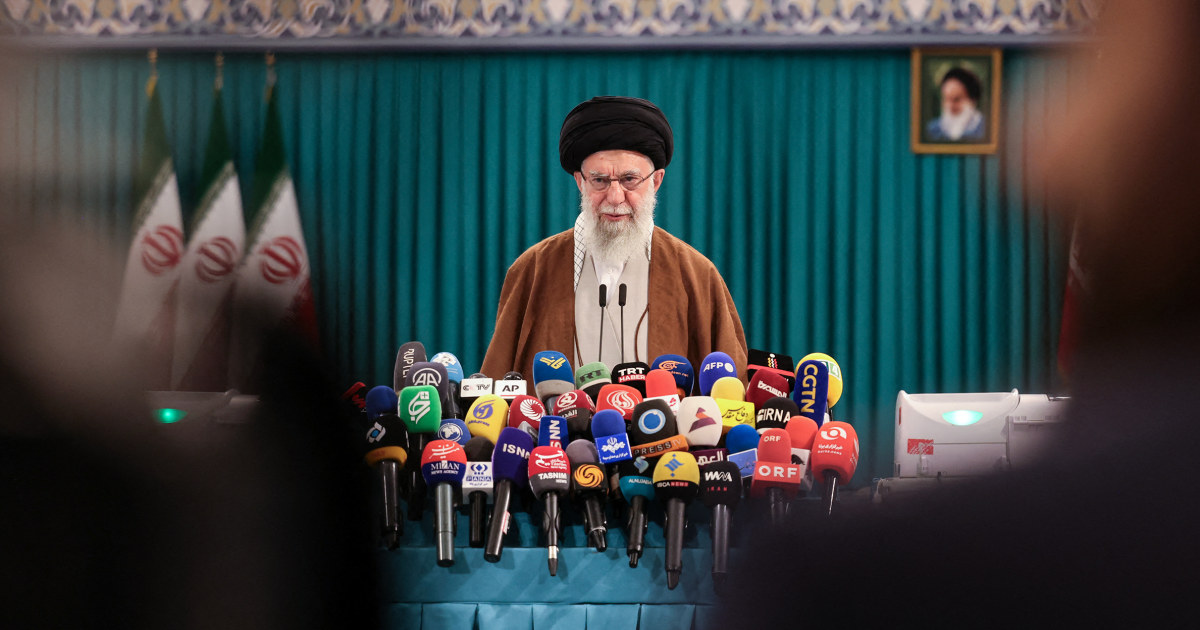
London, United Kingdom – A seismic shift has occurred in the Middle East with the confirmed death of Iran’s Supreme Leader, Ayatollah Ali Khamenei, in an Israeli military strike, an event that has prompted a swift response from the United States. The news, initially announced by former U.S. President Donald Trump via social media on Saturday, has been corroborated by multiple sources, including Israeli officials and U.S. Intelligence sources. This marks a significant escalation in regional tensions and raises profound questions about the future of Iran and the wider geopolitical landscape.
Ayatollah Khamenei, 86, had held the position of Supreme Leader since 1989, succeeding Ayatollah Ruhollah Khomeini, the architect of the 1979 Islamic Revolution. Throughout his 36-year rule, Khamenei maintained a staunchly anti-Western stance, particularly towards the United States and Israel, and oversaw the suppression of internal dissent. His death comes amidst a period of heightened unrest within Iran, fueled by economic hardship and widespread protests against the government, particularly concerning the treatment of women. The timing of this event, coupled with the coordinated military action, suggests a deliberate attempt to destabilize the Iranian regime.
The operation, a joint effort between Israel and the United States, targeted not only Khamenei but also key Iranian officials and infrastructure. According to reports, the U.S. Component of the attack focused on Iran’s ballistic missile and nuclear programs, although Israel concentrated on eliminating Iranian leaders. Seven Iranian officials and commanders, including Ali Shamkhani, an advisor to Khamenei, were reportedly killed in the strikes. The scale and precision of the attacks indicate a high level of intelligence gathering and coordination between the two allies. President Trump, in a statement shared on Truth Social, described the operation as a necessary step to defend the American people from perceived threats emanating from Iran. The full statement can be found on Truth Social.
A Legacy of Hardline Rule and Regional Tension
Khamenei’s leadership was characterized by unwavering opposition to both the U.S. And Israel, and a firm commitment to preserving the Islamic Republic’s ideological foundations. Born in July 1939 in Mashhad, northeastern Iran, he rose through the ranks of the clergy, becoming a vocal critic of the U.S.-backed Shah Mohammad Reza Pahlavi. He was arrested several times for his opposition activities and played a key role in the 1979 revolution alongside Ayatollah Khomeini. After surviving an assassination attempt in 1981 that resulted in the loss of function in his right arm, Khamenei consolidated his power and became a central figure in Iranian politics. His tenure saw Iran navigate numerous challenges, including the Iran-Iraq War, international sanctions, and internal political struggles.
The impact of Khamenei’s policies extended far beyond Iran’s borders. He was a key supporter of regional proxies, including Hezbollah in Lebanon and Hamas in Palestine, and played a significant role in fueling sectarian conflicts throughout the Middle East. His staunch opposition to negotiations with the West and his pursuit of a nuclear program further exacerbated tensions with the international community. The removal of Khamenei from power represents a potential turning point in these dynamics, whereas the long-term consequences remain uncertain.
International Reactions and Congressional Response
The international community has reacted with a mix of condemnation and cautious optimism. European powers, including the United Kingdom, Germany, and France, have issued a joint statement condemning Iran’s retaliatory strikes in the region and urging Tehran to resume negotiations. However, there is also widespread concern about the potential for further escalation and the humanitarian consequences of the conflict. The United Nations has called for restraint and urged all parties to engage in dialogue to de-escalate the situation.
Within the United States, the military action has sparked a political debate. Top congressional Democrats have criticized President Trump’s decision to launch strikes against Iran without congressional approval, arguing that it oversteps the executive branch’s authority. They maintain that such actions require a formal declaration of war or specific authorization from Congress. Conversely, most Republicans have praised Trump’s decisive action, framing it as a necessary step to protect American interests and deter Iranian aggression. The debate highlights the deep partisan divisions within the U.S. Government regarding foreign policy and the use of military force. Lawmakers are scheduled to be briefed by Trump administration officials on Sunday regarding the details of the operation, including members of the Senate and House intelligence, armed services, and foreign affairs committees.
The Future of Iran and Regional Stability
The death of Ayatollah Khamenei leaves a significant power vacuum in Iran. The succession process remains unclear, and there is potential for internal power struggles within the Iranian regime. While a successor has not yet been named, potential candidates include figures within the conservative establishment who share Khamenei’s hardline views. However, there is also a possibility that the current crisis could create an opportunity for more moderate voices to emerge and advocate for reforms. The outcome of this internal struggle will have a profound impact on Iran’s future trajectory and its relationship with the rest of the world.
The immediate aftermath of the strikes has seen reports of celebrations in the streets of Tehran, suggesting that some segments of the Iranian population are welcoming the removal of Khamenei from power. However, the Iranian government has yet to officially confirm Khamenei’s death, and state media remains tightly controlled. This proves likely that the regime will attempt to maintain stability and suppress any further unrest. The U.S. And Israel are reportedly prepared for potential retaliatory actions from Iran and its proxies, and are maintaining a heightened state of alert. President Trump has warned that the military campaign will continue “uninterrupted throughout the week or, as long as necessary to achieve our objective of PEACE THROUGHOUT THE MIDDLE EAST AND, THE WORLD!”
Key Takeaways
- Ayatollah Ali Khamenei is dead: The Supreme Leader of Iran was killed in an Israeli military strike, confirmed by U.S. And Israeli sources.
- Joint Operation: The operation was a coordinated effort between Israel and the United States, targeting Iranian leaders and infrastructure.
- Political Fallout: The action has sparked a political debate in the U.S., with Democrats questioning the legality of the strikes and Republicans largely supporting them.
- Uncertain Future: The death of Khamenei creates a power vacuum in Iran and raises questions about the country’s future direction.
- Escalation Risk: The region remains on high alert for potential retaliatory actions from Iran and its proxies.
The situation remains fluid and highly volatile. The coming days and weeks will be critical in determining the long-term consequences of this event. Further updates will be provided as they become available. The U.S. Government is expected to provide further briefings to Congress in the coming days, and international organizations are working to mediate a peaceful resolution to the crisis. The world watches with bated breath as the Middle East enters a new and uncertain chapter.
Jonathan Reed, Editor, News, World Today Journal, London.
Worth a look
- Zondacrypto Controversy: Secret Meeting Involving Roman Giertych, Jacek Dubois, and Przemysław Kral Sparks Prosecutor Investigation
- Royal Air Force Gold Wire Embroidered Emblem Patch UK Military
- Russian Strikes Kill 13 in Ukraine, Missile Hits Poland (newsdirectory3.com)
- The Senate Blue Slip, Explained: The Custom Trump Wants Gone (daybreakwire.com)