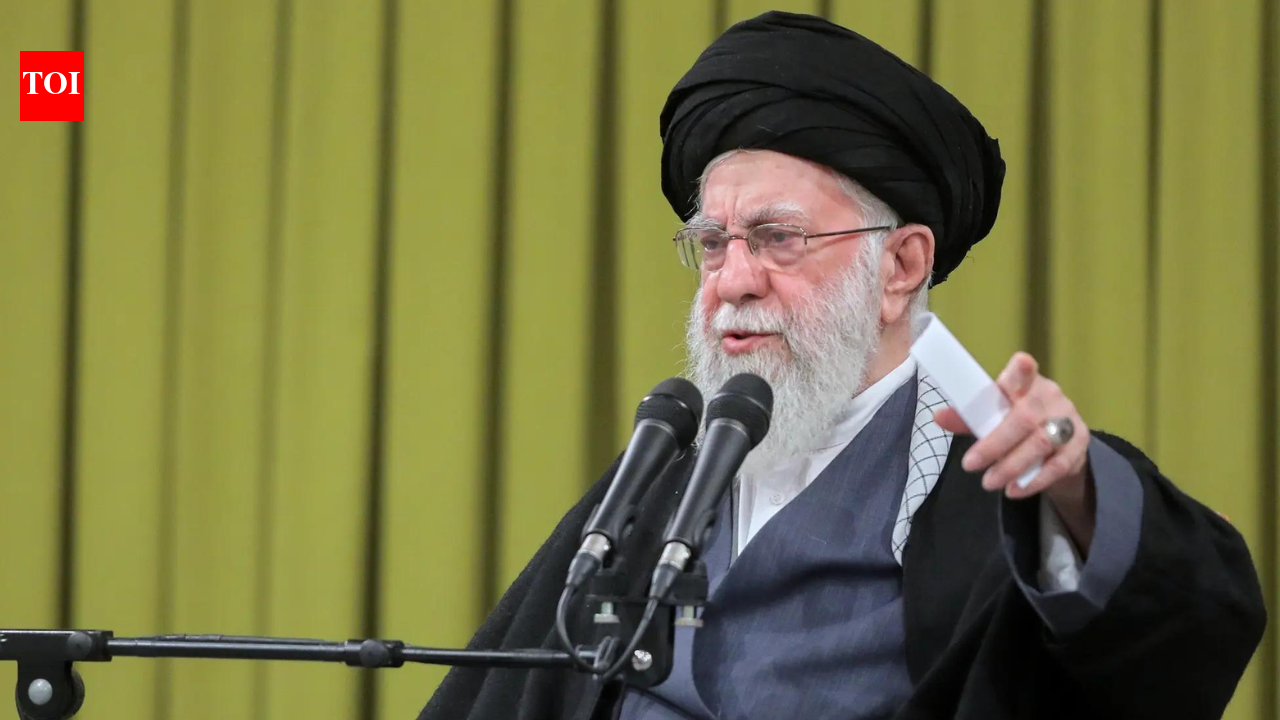
Tehran, Iran – The Middle East is bracing for a period of profound instability following reports of a large-scale military operation, dubbed “Operation Epic Fury,” allegedly led by the United States, resulting in the death of Iran’s Supreme Leader, Ayatollah Ali Khamenei. While details remain fragmented and official confirmation is pending, the claims, initially made by former U.S. President Donald Trump on his Truth Social platform, have sent shockwaves through the international community. The operation, reportedly carried out in broad daylight, targeted key locations in Tehran, including areas housing the Supreme Leader’s offices and other high-ranking Iranian officials. This escalation marks a dramatic shift in U.S. Policy towards Iran and raises serious concerns about a wider regional conflict.
The reported strikes, which also allegedly resulted in the deaths of Khamenei’s daughter and grandchild, represent a significant departure from previous U.S. Strategies. Unlike last year’s “Operation Midnight Hammer,” which focused on disrupting Iran’s nuclear program, Operation Epic Fury appears to have been a direct attempt to dismantle the Iranian leadership. The timing and nature of the attack – a daylight strike on the heart of the Iranian government – suggest a calculated risk aimed at maximizing impact and minimizing the potential for immediate retaliation. The situation remains highly fluid and independent verification of the claims is crucial as conflicting information emerges.
According to reports, the offensive wasn’t solely a U.S. Endeavor. Israel, under the leadership of Prime Minister Benjamin Netanyahu, reportedly participated in the strikes under an operation named “Operation Lion’s Roar.” This coordinated action underscores the deep-seated concerns shared by both nations regarding Iran’s regional influence and nuclear ambitions. The extent of Israel’s involvement and the specific targets it engaged remain unclear, but the partnership highlights a unified front against the Iranian government. The potential for miscalculation and unintended consequences in such a volatile environment is exceptionally high.
A Daylight Assault on Iran’s Power Center
The unconventional nature of the attack – launching strikes in broad daylight – has drawn considerable attention. Typically, aerial bombardments are conducted under the cover of darkness to exploit confusion and weaken air defenses. But, the decision to strike during daylight hours suggests a deliberate strategy to ensure the presence of key Iranian officials in their offices. Reports indicate that missiles and bombs struck areas along Pasteur Street in Tehran, a district housing critical Iranian state institutions, including the Supreme Leader’s office, the presidential complex of Masoud Pezeshkian, the national security headquarters, and the Assembly of Experts, the body responsible for selecting a new Supreme Leader. Reuters reported on the initial claims of the strikes.
Satellite imagery, though independently verified access is limited, appears to show significant damage to the compound associated with Ayatollah Khamenei, reduced to rubble. The scale of the destruction suggests a powerful and precise attack. Israeli officials have reportedly characterized the initial assault as a “decapitation strike,” an attempt to simultaneously eliminate Iran’s political leadership and cripple the core apparatus of governance. Such operations are designed to disrupt the chain of command and create chaos within the targeted regime.
Beyond the Supreme Leader: Expanding Targets
The offensive reportedly extended beyond targeting the Supreme Leader. Reports indicate that the Tehran residence of former Iranian President Mahmoud Ahmadinejad was also struck during the operation, though his current condition and whereabouts remain unconfirmed. This broadening of targets suggests a wider effort to dismantle the network of individuals associated with the current and previous Iranian leadership. The inclusion of Ahmadinejad’s residence, if confirmed, could signal an attempt to target those perceived as hardliners within the Iranian political establishment.
Explosions were also reported in several other Iranian cities, including Qom, Tabriz, Kermanshah, Lorestan, Khorramabad, and Karaj. This suggests a nationwide operation targeting strategic infrastructure and political centers, rather than a limited strike focused solely on Tehran. The widespread nature of the attacks indicates a comprehensive effort to disrupt Iran’s ability to respond and to destabilize the regime. Emergency services in Tehran were reportedly overwhelmed, with ambulances rushing to the Pasteur district to transport the injured.
A Region on the Brink: Potential Consequences
If confirmed, the death of Ayatollah Ali Khamenei would represent one of the most significant geopolitical events in recent decades. Khamenei, who held the position of Supreme Leader for over three decades, was a central figure in Iranian politics and a key architect of the country’s foreign policy. His death creates a power vacuum that could lead to internal struggles within Iran and potentially trigger a wider regional conflict. The succession process, overseen by the Assembly of Experts, is likely to be fraught with tension and uncertainty. The New Yorker details the potential for a full-scale war following the strikes.
The potential consequences of this operation extend far beyond Iran’s borders. Iran has close ties with various regional actors, including Hezbollah in Lebanon, Hamas in Palestine, and Houthi rebels in Yemen. A destabilized Iran could embolden these groups and lead to increased violence and instability throughout the Middle East. The attack could escalate tensions between Iran and its regional rivals, such as Saudi Arabia and Israel, potentially triggering a broader conflict. The United States and its allies must carefully consider the potential ramifications of this operation and prepare for a range of possible scenarios.
Key Takeaways
- Unconfirmed Reports: Claims of Ayatollah Khamenei’s death and the extent of the operation remain unconfirmed by independent sources.
- U.S. And Israeli Involvement: Reports suggest a coordinated military operation involving both the United States and Israel.
- Widespread Targets: The strikes reportedly targeted multiple locations across Iran, including Tehran and other major cities.
- Regional Instability: The operation has the potential to significantly destabilize the Middle East and escalate existing conflicts.
- Succession Uncertainty: Khamenei’s death creates a power vacuum and uncertainty regarding the future leadership of Iran.
The international community is closely monitoring the situation as Tehran assesses the damage and prepares its response. The coming days and weeks will be critical in determining whether this operation will lead to a wider conflict or whether a diplomatic solution can be found. The stakes are exceptionally high, and the potential consequences are far-reaching. The Soufan Center’s analysis of “Operation Epic Fury” highlights the eclipsing of diplomacy in the current situation.
Further updates will be provided as more information becomes available. We encourage readers to share their thoughts and perspectives in the comments section below.
- El Salvador Civil War Massacre Site Faces Destruction for Landfill Construction
- Baby Mammoth Bones Discovered in Danube River as Extreme Drought Dries Up Bed
- Cheyenne Police and Laramie County SWAT Team Joint Operation (news-usa.today)
- The Senate Blue Slip, Explained: The Custom Trump Wants Gone (daybreakwire.com)