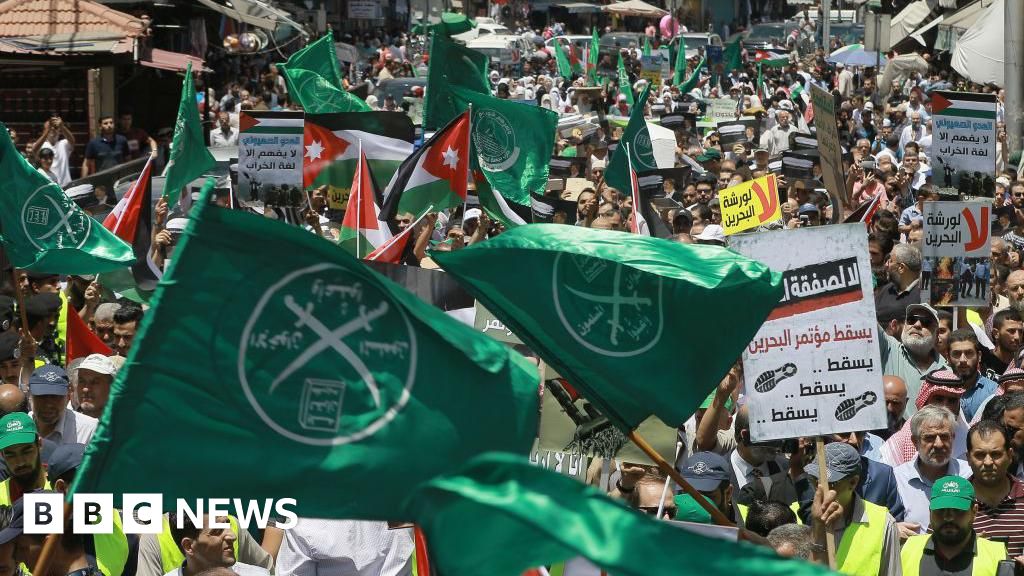
The Muslim Brotherhood: Examining the Potential for Terrorist Designation and its Global Implications
For nearly a century, the Muslim Brotherhood has been a pivotal – and often controversial – force in the Middle East and beyond. Now, a potential shift in US policy, spearheaded by a renewed executive order, is placing the association under intense scrutiny. But what does this mean,not just for the Brotherhood itself,but for regional stability,international relations,and even domestic policy within the United states?
This article delves into the complexities surrounding the Muslim Brotherhood,exploring the recent developments,the historical context,and the potential ramifications of designating specific chapters as terrorist organizations.We’ll unpack the allegations, the political motivations, and the broader implications of such a move. Are we witnessing a necessary step to counter extremism, or a potentially destabilizing overreach? Let’s examine the facts.
The Latest Developments: A Renewed Push for Designation
In a move signaling a meaningful potential change in US foreign policy, President Trump has directed officials to re-evaluate the possibility of designating chapters of the Muslim Brotherhood in Egypt, Lebanon, and Jordan as foreign terrorist organizations. This executive order mandates a report within 30 days, followed by a potential 45-day window to implement sanctions if deemed warranted.
The order specifically cites alleged ties to Hamas and the group’s purported role in “destabilization campaigns” that threaten US interests and allies. This isn’t a new consideration; the possibility of such a designation was previously explored during Trump’s first term following discussions with Egyptian President Abdel Fatah El-Sisi.
This action follows a similar, albeit state-level, declaration in Texas, where Governor Greg Abbott recently designated both the Muslim Brotherhood and the council on American-Islamic Relations (CAIR) as foreign terrorist organizations, effectively barring them from acquiring land within the state. This move has sparked considerable debate and legal challenges.
Understanding the Muslim Brotherhood: A Historical overview
Founded in Egypt in 1928 by Hassan al-Banna, the Muslim Brotherhood emerged as a socio-religious movement advocating for Islamic revival and social reform. Initially focused on charitable work and education, the Brotherhood’s ideology gradually evolved, incorporating political aspirations and a vision for a state governed by Sharia law.
it’s crucial to understand that the Muslim Brotherhood isn’t a monolithic entity. Chapters across the globe vary considerably in ideology and operational methods. While some branches have engaged in peaceful political activism, others have been linked to more radical elements. The organization has been banned in both Jordan and Egypt, where governments view it as a threat to national security.
Over the decades, the Brotherhood has played a complex role in regional politics, participating in elections, forming political parties, and even briefly holding power in Egypt following the Arab Spring uprisings. However, its time in power was short-lived, and it has sence faced severe repression in several countries.
What Would a Terrorist Designation Mean?
The implications of designating specific Muslim Brotherhood chapters as terrorist organizations are far-reaching. Such a designation would trigger a cascade of consequences, including:
* Economic Sanctions: Assets would be frozen, and financial transactions with designated entities would be prohibited.
* Travel Bans: Members of designated groups would be barred from entering the United States.
* Criminalization of Support: Providing any form of material support – financial, logistical, or or else – to the designated groups would become illegal.
* Increased Scrutiny: Individuals and organizations associated with the Brotherhood would likely face heightened scrutiny from law enforcement and intelligence agencies.
However, experts caution that a blanket designation could be counterproductive. It could drive the Brotherhood further underground,potentially radicalizing its members and hindering efforts to counter extremism through engagement and dialogue.
The Texas precedent and Domestic Implications
The recent actions in Texas raise critical questions about the scope and legality of designating foreign organizations as terrorists at the state level. The move has been met with strong criticism from civil liberties groups, who argue that it violates first Amendment rights to freedom of speech and association.
Furthermore, the inclusion of CAIR, a prominent Muslim advocacy group, in the Texas designation has sparked accusations of Islamophobia and discrimination. CAIR has consistently denied any ties to terrorism and has actively worked to combat anti-Muslim bias. This situation highlights the potential for such designations to be politically motivated and to unfairly target legitimate organizations.
Evergreen Insights: The Evolving Landscape of Counterterrorism
The debate surrounding the Muslim Brotherhood underscores a essential challenge in the ongoing fight against terrorism: the need to distinguish between legitimate political activism and violent extremism. A nuanced approach is essential, one that avoids broad generalizations and focuses on targeting specific individuals and