
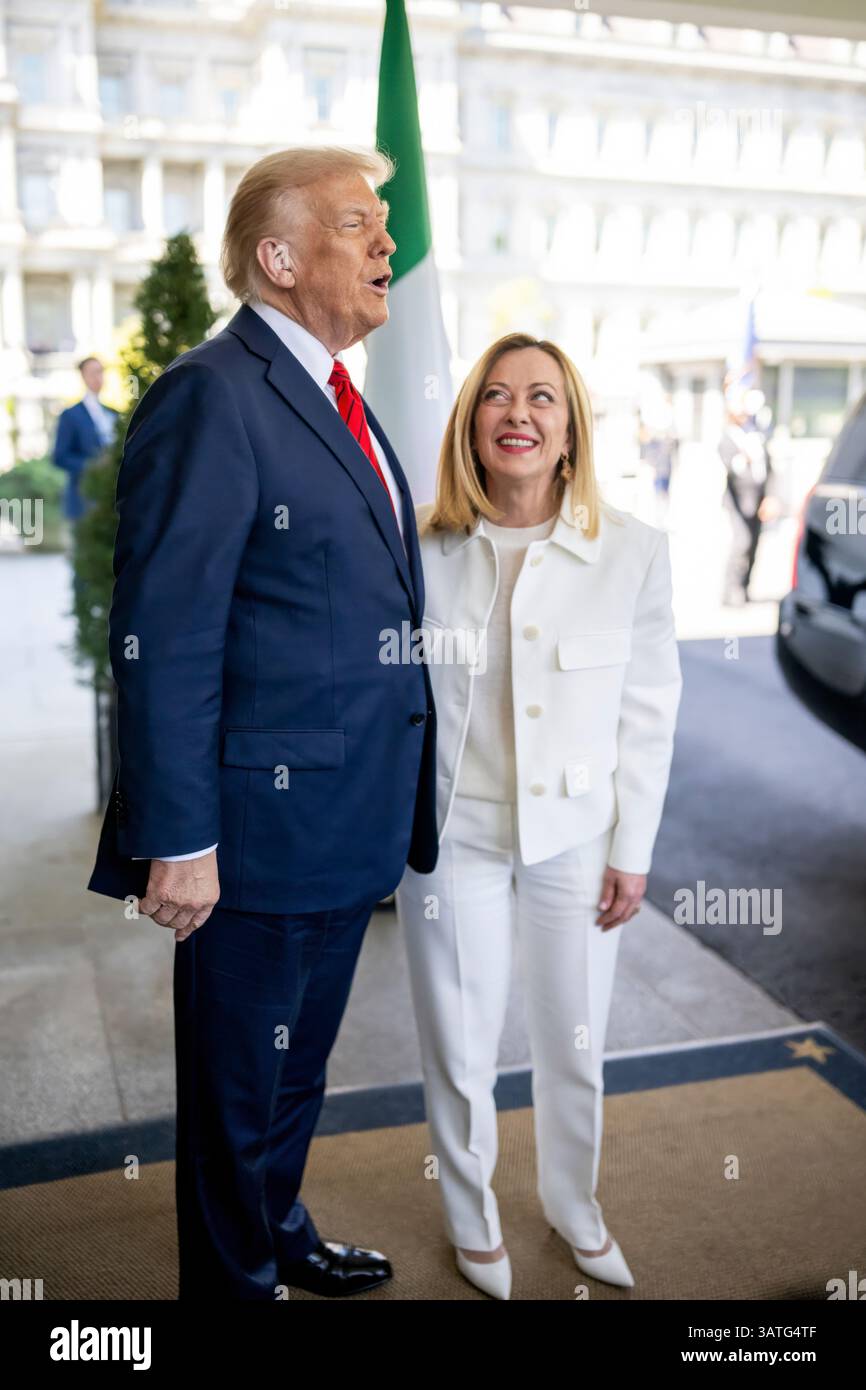
The diplomatic relationship between the United States and Italy has entered a period of visible turbulence as Donald Trump has publicly broken with Italian Prime Minister Giorgia Meloni. This emerging Trump and Meloni dispute centers on a fundamental disagreement over military strategy in the Middle East and the influence of the Catholic Church on Italian foreign policy.
The rift marks a significant departure from the previous alignment between the two right-wing leaders. The tension has escalated into public accusations, with Trump criticizing Meloni’s refusal to support specific military actions against Iran, signaling a potential shift in how the U.S. Manages its relationship with one of its key European allies.
At the heart of the conflict is a clash of priorities. While Trump has pushed for a more aggressive stance toward Tehran, Meloni has maintained a position that diverges from this approach, leading to a public exchange that has caught the attention of global diplomatic circles. This friction highlights the growing difficulty of maintaining a unified front among Western allies when facing the volatility of Iranian regional ambitions.
Tensions Over Iran and Accusations of Weakness
The most acute point of contention involves the U.S. Approach to Iran. Trump has openly accused Prime Minister Meloni of lacking the necessary courage to join in attacks against Iran, suggesting that Italy’s hesitation undermines a coordinated Western response via The Guardian.
This criticism reflects a broader pattern of Trump’s foreign policy, where loyalty is often measured by a willingness to adopt a hardline military posture. By framing the dispute as a matter of “courage,” the U.S. Leadership has shifted the conversation from a strategic disagreement to a personal critique of Meloni’s leadership style and resolve.
For Italy, the decision not to join these attacks involves a complex calculation of national security, economic interests and regional stability. The divergence in the Trump and Meloni dispute suggests that the shared ideological leanings of the two leaders are not sufficient to override the practical constraints of Italian sovereign interests in the Mediterranean and Middle East.
The Vatican Influence and the Role of the Pope
Beyond the military dispute over Iran, the friction between the two leaders is deeply tied to the influence of the Holy See. Trump has decried Meloni for siding with the Pope, suggesting that the Vatican’s preference for diplomacy and peace is interfering with the strategic goals of the United States via PBS.
Italy’s unique position as the host of the Vatican often necessitates a foreign policy that is sensitive to the Pope’s calls for dialogue and the avoidance of escalation. For Meloni, aligning with the Pope is not only a matter of diplomatic protocol but also a reflection of the domestic political and cultural landscape of Italy.
Trump’s frustration with this alignment indicates a view of the Pope’s influence as an obstacle to the “maximum pressure” campaigns typically favored by his administration. This creates a difficult balancing act for Meloni, who must navigate the demands of her most powerful security ally while respecting the moral and diplomatic authority of the Catholic Church.
Implications for the Transatlantic Alliance
The public nature of this break signals a potential cooling of relations between Washington and Rome. The dispute over the Pope and Iran has effectively created a diplomatic rift that could impact cooperation on other fronts, including NATO obligations and trade agreements via The New York Times.
Historically, the U.S. Has relied on Italy as a strategic anchor in Southern Europe. However, when ideological kinship is replaced by public criticism, the stability of the alliance can be tested. The current tension demonstrates that even leaders with similar political profiles can diverge sharply when faced with the realities of regional geopolitics and religious diplomacy.
The global audience is now watching to see if this is a temporary tactical maneuver by Trump to pressure Meloni into compliance, or a more permanent shift in the U.S. Approach to its Italian partnership. The outcome will likely depend on whether a middle ground can be found that satisfies U.S. Security demands without forcing Italy to abandon its commitment to the Vatican’s diplomatic principles.
Key Takeaways of the US-Italy Rift
- Core Conflict: A disagreement over whether to launch military attacks against Iran.
- Personal Friction: Trump has accused Prime Minister Meloni of a “lack of courage” regarding Middle East policy.
- Religious Dimension: Trump has criticized Meloni for aligning her foreign policy with the views of the Pope.
- Alliance Impact: The public nature of the dispute suggests a strain in the traditionally close relationship between the two right-wing leaders.
As the situation evolves, the next critical checkpoint will be the upcoming diplomatic engagements between the U.S. State Department and the Italian Ministry of Foreign Affairs, where officials will attempt to manage the fallout of these public criticisms. There are currently no scheduled joint summits to resolve these specific disputes.
We invite our readers to share their perspectives on this diplomatic shift in the comments below. How should allies handle fundamental disagreements over military action? Share this article to join the global conversation.