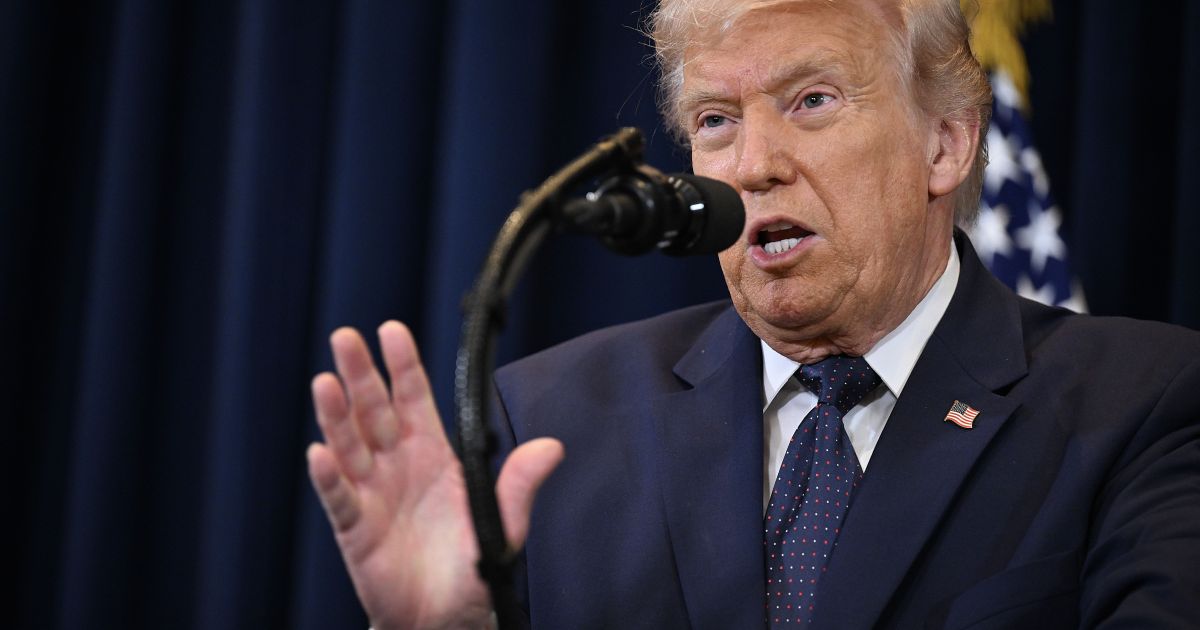
The specter of escalating conflict in the Middle East loomed larger this week as former U.S. President Donald Trump issued a stark warning to Iran. Trump asserted that the United States would respond with overwhelming force should Iran disrupt the flow of oil through the strategically vital Strait of Hormuz. This latest exchange of rhetoric underscores the ongoing tensions in the region and raises concerns about potential disruptions to global energy supplies. The situation demands careful monitoring as the implications of any military confrontation could be far-reaching.
In a post on his social media platform, Truth Social, on Monday, Trump declared that any attempt by Iran to impede oil tankers passing through the Strait of Hormuz would be met with a response “twenty times stronger” than previous actions taken against the Islamic Republic. He further stated his willingness to authorize the U.S. Navy to escort tankers through the waterway, if necessary, to ensure the “free flow of energy to the world.” The former president too alluded to the potential for the destruction of Iranian targets, warning that such actions could render the nation’s reconstruction “practically impossible.” This aggressive stance reflects a continuation of Trump’s “maximum pressure” policy towards Iran, which was a hallmark of his presidency.
The timing of Trump’s statements coincides with heightened anxieties surrounding Iran’s intentions in the region. The Islamic Revolutionary Guard Corps (IRGC) has recently threatened to block the Strait of Hormuz, a critical chokepoint for global oil shipments, in response to ongoing attacks attributed to the United States and Israel. According to reports, the IRGC has stated it will not allow “a single liter of oil” to be exported from the region if these attacks continue. This threat has prompted the U.S. Military to assess options, including potentially taking control of the Strait of Hormuz itself, as suggested by Trump in a CBN News interview on Monday. The U.S. Navy already maintains a significant presence in the region, and officials have indicated that the waterway has not been officially closed, despite the Iranian threats.
The Strait of Hormuz: A Global Energy Lifeline
The Strait of Hormuz is a narrow waterway connecting the Persian Gulf with the Gulf of Oman and the Arabian Sea. It is one of the world’s most important oil transit routes, accounting for approximately 20% of global oil production. According to the U.S. Energy Information Administration, roughly 21 million barrels of oil and condensate pass through the Strait of Hormuz each day. This makes it a critical artery for energy supplies to countries around the world, particularly in Asia. Disruptions to the flow of oil through the Strait could have a significant impact on global energy prices and economic stability.
China and other Asian economies are particularly reliant on oil transported through the Strait of Hormuz. The ongoing conflict in the Middle East has already caused disruptions to the oil market, with prices fluctuating in response to geopolitical uncertainty. A complete closure of the Strait would force tankers to accept longer, more expensive routes, potentially leading to significant economic consequences. The potential for escalation, is a major concern for global policymakers.
Trump’s Rhetoric and U.S. Policy
Trump’s recent statements are consistent with his previous hardline approach towards Iran. During his presidency, he withdrew the United States from the Joint Comprehensive Plan of Action (JCPOA), commonly known as the Iran nuclear deal, and reimposed sanctions on Iran. The JCPOA, originally agreed upon in 2015 by Iran and six world powers (the United States, United Kingdom, France, Germany, Russia, and China), aimed to limit Iran’s nuclear program in exchange for sanctions relief. Trump argued that the deal was flawed and did not adequately address Iran’s ballistic missile program or its support for regional proxies. His withdrawal from the JCPOA and subsequent sanctions policy were intended to pressure Iran into renegotiating a more comprehensive agreement.
The current Biden administration has expressed a willingness to rejoin the JCPOA, but negotiations have stalled. Iran has demanded guarantees that future U.S. Administrations will not withdraw from the deal again, a condition the United States has been reluctant to meet. The impasse in negotiations has contributed to the escalating tensions in the region. Trump’s renewed threats against Iran can be seen as an attempt to further pressure the country and potentially derail any prospects for a diplomatic resolution.
Iranian Response and Regional Implications
Iran has consistently maintained that its nuclear program is for peaceful purposes and has denied seeking to develop nuclear weapons. However, concerns remain about the country’s enrichment of uranium and its ballistic missile capabilities. The IRGC’s threats to close the Strait of Hormuz are widely seen as a deterrent against any military action by the United States or Israel. Iran has also warned that it will retaliate against any attacks on its territory or its interests in the region.
The potential for a military confrontation between the United States and Iran is a significant concern for regional stability. A conflict could draw in other countries, such as Saudi Arabia and Israel, and could escalate into a wider regional war. The consequences of such a conflict would be devastating, both in terms of human lives and economic disruption. Diplomatic efforts to de-escalate tensions and find a peaceful resolution are therefore crucial.
The situation is further complicated by the ongoing conflicts in Yemen and Syria, where Iran and Saudi Arabia are backing opposing sides. These proxy conflicts have fueled regional instability and have contributed to the humanitarian crises in both countries. Any escalation in tensions between the United States and Iran could exacerbate these existing conflicts and further destabilize the region.
Trump’s statement that disrupting oil flow would be met with a response “twenty times stronger” than previous actions is particularly alarming. While the specifics of what constitutes a proportionate response are open to interpretation, the language suggests a willingness to use significant military force. This rhetoric, coupled with the IRGC’s threats, creates a dangerous environment where miscalculation or accidental escalation could have catastrophic consequences.
The former president also suggested that any military action against Iran would be a “gift” to China, implying that it would benefit Beijing by driving up oil prices and increasing its influence in the region. This statement reflects a broader geopolitical rivalry between the United States and China, with both countries vying for influence in the Middle East.
Here is the Truth Social post referenced by multiple news outlets:
Looking Ahead
The situation surrounding the Strait of Hormuz remains highly volatile. The United States and Iran are locked in a dangerous game of brinkmanship, with the potential for miscalculation and escalation. The Biden administration faces a difficult challenge in navigating this complex situation. It must balance the demand to deter Iran from taking provocative actions with the desire to avoid a military confrontation. Renewed diplomatic efforts, potentially involving regional actors, are essential to de-escalate tensions and find a peaceful resolution.
The international community also has a role to play in promoting stability in the region. The European Union, Russia, and China should all work together to encourage dialogue and prevent further escalation. Maintaining the free flow of oil through the Strait of Hormuz is vital for global economic stability, and all parties have a vested interest in ensuring that this critical waterway remains open.
The next key development to watch will be Iran’s response to the recent U.S. Statements and any further actions taken by the IRGC. The international community will be closely monitoring the situation for any signs of escalation. Continued diplomatic engagement and a commitment to de-escalation are essential to prevent a potentially catastrophic conflict in the Middle East.
What are your thoughts on the escalating tensions in the Middle East? Share your perspectives in the comments below, and please share this article with your network to raise awareness about this critical issue.
Related reading