A bipartisan group of seven Republican senators joined their Democratic colleagues this week in an effort to restrict President Donald Trump’s controversial White House ballroom project. The legislative push, which occurred during a Senate “vote-a-rama” tied to a broader immigration enforcement spending package, underscores deepening congressional friction regarding the administration’s ambitious and costly structural renovations at the executive residence.
The amendment, sponsored by Senator Jeff Merkley of Oregon, sought to mandate explicit congressional authorization before any federal funds or private donations could be utilized for the construction of the proposed ballroom. Proponents of the measure argued that the project, which has been described by critics as a billion-dollar, gold-plated addition, lacks the necessary legislative oversight. “There is a plan to construct a billion-dollar ballroom, gold plated, without any action by Congress to authorize it,” Merkley stated on the Senate floor. “This amendment is remarkably simple, it says that congressional authorization is needed to proceed.”
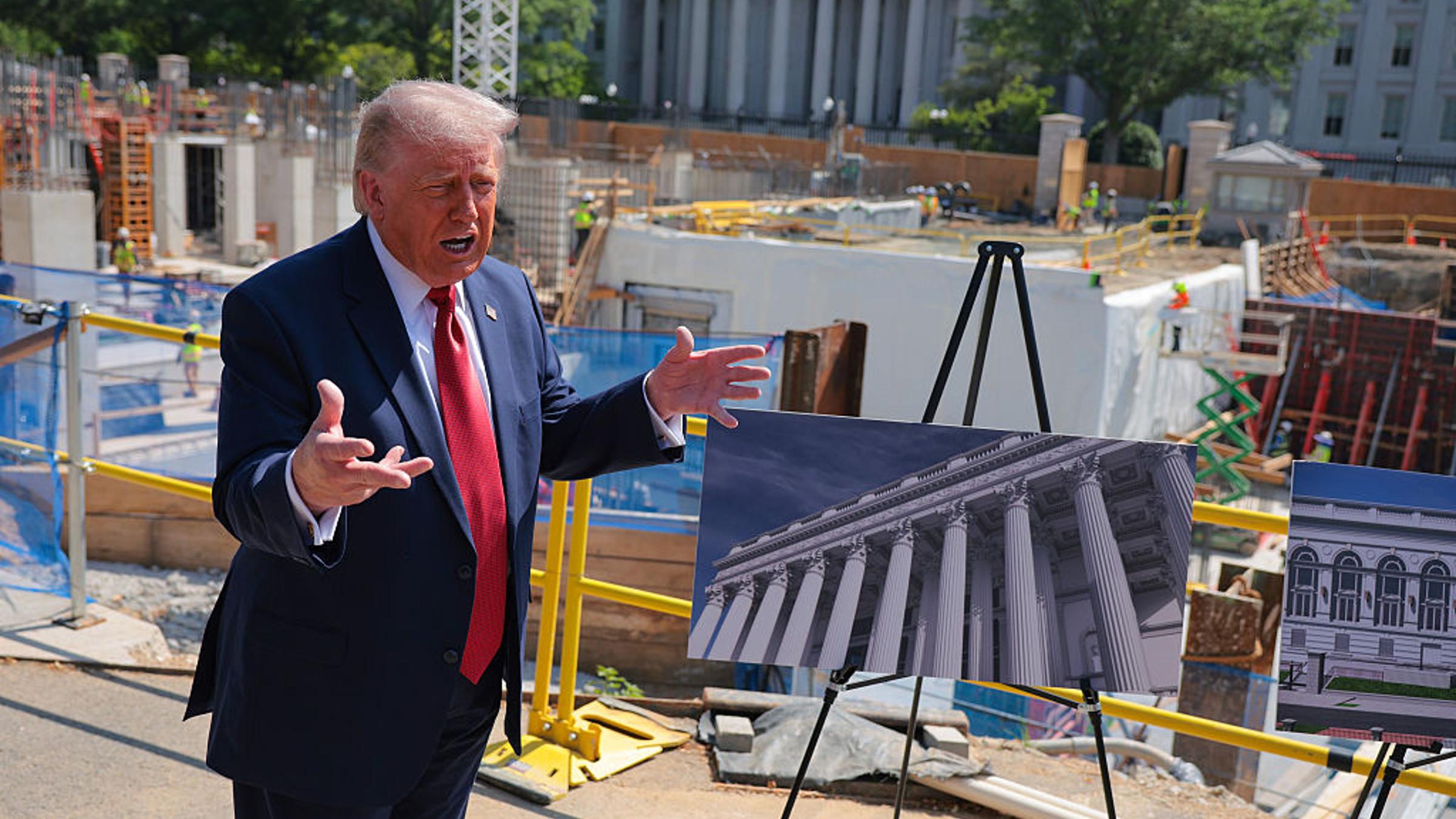
President Donald Trump speaks to the media alongside posters of his proposed ballroom amid construction at the White House on May 19, 2026. —Chip Somodevilla––Getty Images
the amendment failed to secure the 60 votes required for passage, falling short with a 53-46 vote count. Despite the defeat, the presence of seven Republican defections—Susan Collins of Maine, Jon Husted of Ohio, Dan Sullivan of Alaska, Lisa Murkowski of Alaska, Jerry Moran of Kansas, Thom Tillis of North Carolina, and Bill Cassidy of Louisiana—signals that the project’s financial and aesthetic scale is testing party unity.
Financial Scrutiny and Political Backlash
The debate surrounding the ballroom has intensified as the administration faces a complex landscape of legal challenges and public skepticism. For many lawmakers, the primary concern remains the optics and fiscal impact of the construction. Senator Bill Cassidy of Louisiana, who initially voted against the amendment before requesting to change his vote to “yea,” highlighted the disconnect between the project and the current economic climate. “Louisianians don’t want to spend… On a ballroom. I just came off the campaign trail. I mean, gas, groceries, health care—they just cannot afford it,” Cassidy remarked on May 19.
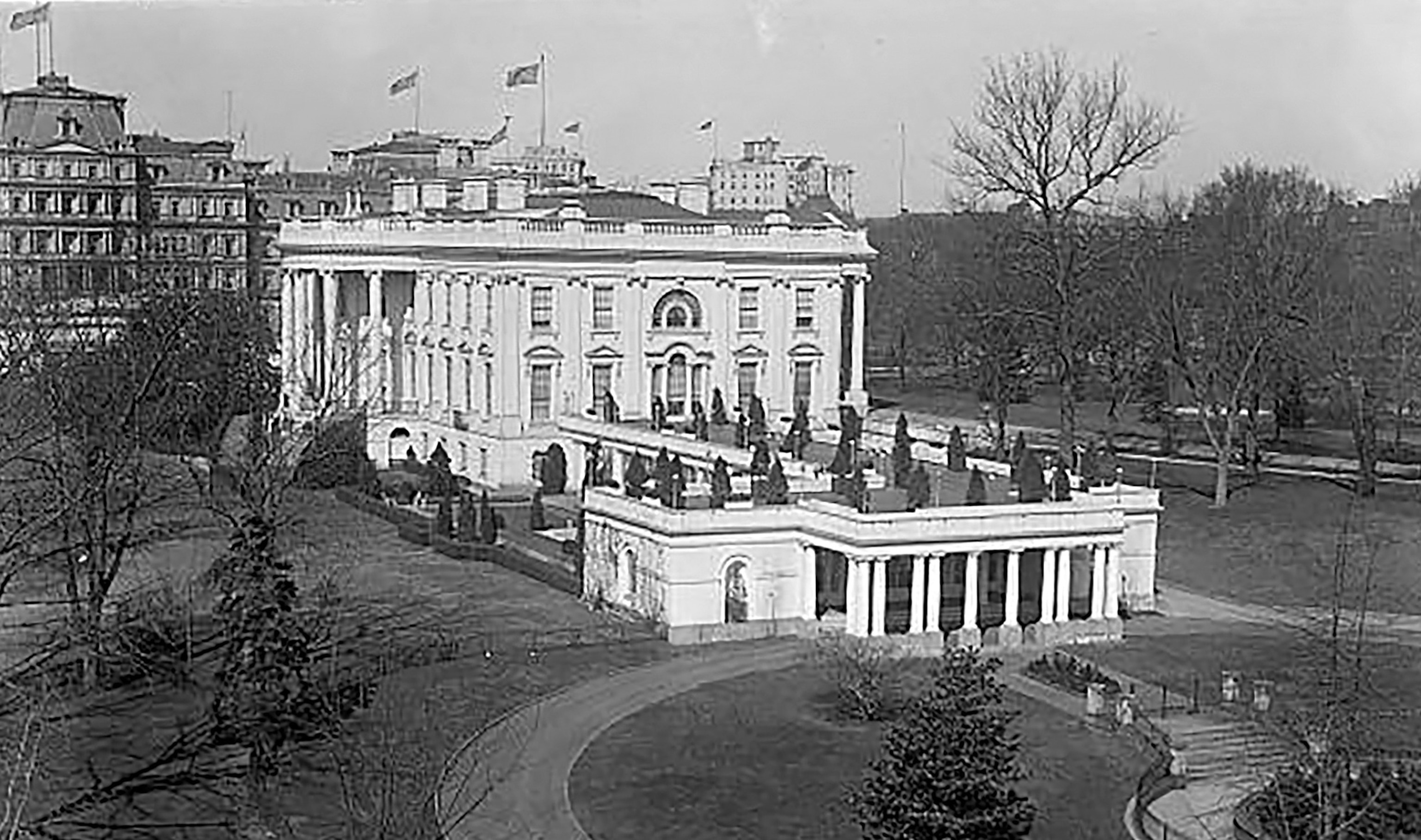
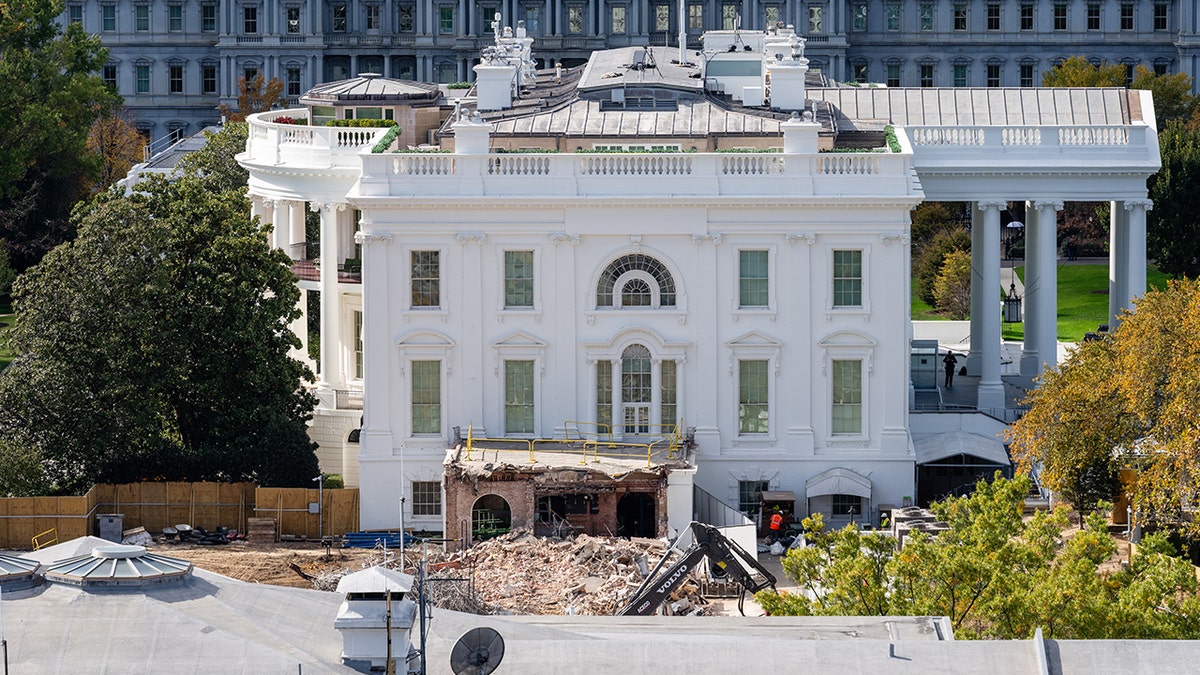
The controversy is compounded by the project’s history, which includes the demolition of the East Wing last year to facilitate the new design. While the President has maintained that the ballroom is necessary for security reasons—citing incidents at the White House Correspondents’ Dinner in April and a security checkpoint breach in May—the funding mechanism remains a point of contention. Some Republicans have expressed frustration that the project was previously linked to essential Secret Service security needs. “They should have never conflated the other legitimate Secret Service needs, because it’s just giving everybody the ‘billion dollar ballroom’ and it’s just a bad idea,” Senator Thom Tillis stated.
Trump holds photos of the planned ballroom during a meeting in the Oval Office of the White House in Washington, D.C. On Oct. 22, 2025. —Salwan Georges/The Washington Post—Getty Images
Senate parliamentarian Elizabeth MacDonough ruled on May 16 against including ballroom funding within the party’s budget reconciliation bill, further complicating the administration’s path to securing the project’s completion through standard legislative channels.
Legal Challenges and Ongoing Litigation
The project is currently subject to rigorous judicial review. The National Trust for Historic Preservation initiated a lawsuit against the administration following the demolition of the East Wing. In March, U.S. District Judge Richard Leon issued an order to halt construction until congressional approval was obtained. While a federal appeals court later permitted the administration to proceed with below-ground work—provided that such construction does not dictate the final, above-ground size and scale of the structure—a three-judge panel met on Friday to hear arguments regarding whether the project should be allowed to proceed in its entirety.
President Trump has remained steadfast in his defense of the construction, stating hours before the hearing that “the ballroom is coming along fantastically well. It’s on time, and under budget.” He continues to argue that the project is “desperately needed” and maintains that legal challenges brought against it have “absolutely no standing.”
Renovations Beyond the Ballroom
The ballroom is only one of several architectural and aesthetic projects currently underway at the White House. The administration’s broader agenda, which includes the construction of a 250-ft triumphal arch and efforts to restore the White House reflecting pool, has drawn criticism from House Democrats who have introduced legislation aimed at blocking these initiatives. Critics characterize these efforts as “vanity projects” that place an unnecessary burden on the taxpayer. Reports of a UFC cage-fighting arena being constructed on the White House lawn to commemorate America’s 250th birthday have added to the ongoing scrutiny of the administration’s use of executive grounds.
As the legal and legislative battles continue, the next critical checkpoint will be the ruling from the federal appeals court regarding the total scope of the ballroom construction. The outcome of this judicial review will likely determine whether the administration can move forward with its full design or if further congressional intervention will be required to define the project’s future. We will continue to monitor official filings and court dockets for updates on this developing story.
Related reading