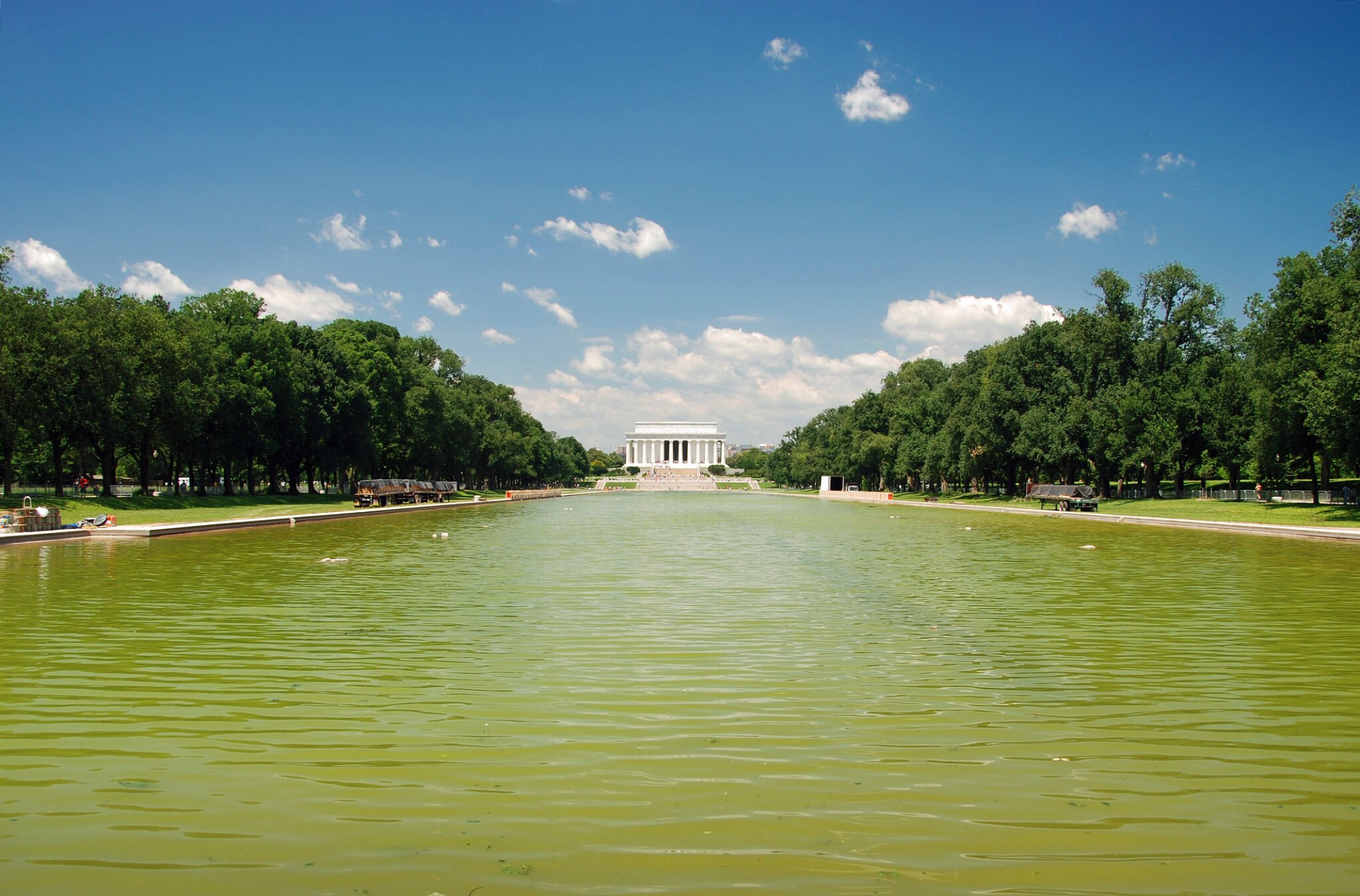
The Lincoln Memorial Reflecting Pool, a centerpiece of the National Mall in Washington, D.C., has experienced recurring algal blooms following a $14.2 million renovation project completed in 2012. National Park Service (NPS) officials have characterized the presence of algae as residual, noting that the pool’s unique circulation system and water source contribute to the ongoing management challenge of maintaining the water’s appearance, according to official National Park Service historical records.
The renovation, which concluded over a decade ago, replaced the pool’s aging infrastructure to address significant water loss and structural degradation. Despite these improvements, the pool—which holds approximately 6.75 million gallons of water—remains susceptible to environmental factors that encourage rapid plant growth. The National Park Service manages the site as a public resource, balancing historical preservation with the practicalities of maintaining a large-scale water feature in an urban, high-traffic environment, as documented by the Department of the Interior.
Understanding the Maintenance Challenges of the Reflecting Pool
Managing the Reflecting Pool requires constant monitoring due to its size and the nature of its water filtration. Unlike a standard swimming pool, the Reflecting Pool utilizes a system that draws water from the Tidal Basin, which is then filtered and treated before entering the pool. According to the National Park Service, the pool’s exposure to sunlight and the introduction of organic matter from the surrounding parkland create ideal conditions for algae, regardless of the structural integrity of the basin itself.
The $14.2 million project, which was finalized in 2012, was primarily designed to stop the pool from leaking approximately 20 million gallons of water annually. While the project successfully addressed the structural leaks, it did not eliminate the biological realities of an open-air water feature. NPS maintenance crews utilize a variety of methods to control algae, including mechanical removal and water treatment protocols, though these efforts are frequently tested by fluctuating weather conditions and the high volume of visitors to the National Mall.
Historical Context and Structural Upgrades
The 2012 restoration was part of a broader effort to modernize the National Mall’s infrastructure. Before the renovation, the pool suffered from severe cracking and settling, which caused water loss and hindered the site’s aesthetic appeal. Official records from the National Park Service confirm that the project included the installation of a new, more efficient recirculation system intended to keep the water cleaner and more stable. However, the system’s reliance on the Tidal Basin means that the water quality is inherently linked to the broader ecosystem of the D.C. waterfront.
The “residual” nature of the algae, as cited by officials, refers to the persistent spores and nutrients that remain in the water circulation system despite regular cleaning cycles. Because the pool is not a closed-loop system in the same way as a residential pool, achieving a perfectly clear appearance at all times remains a significant technical challenge for federal groundskeepers. The National Park Service continues to monitor water quality parameters to ensure the site remains a safe and appropriate monument setting.
What Happens Next for the Reflecting Pool
Maintenance of the Lincoln Memorial Reflecting Pool remains an ongoing operational priority for the National Park Service under its mandate to preserve the National Mall. As part of its standard administrative procedures, the agency conducts periodic assessments of all major monuments and their associated infrastructure. Visitors are encouraged to check the official National Park Service website for the most recent updates on park operations, including any scheduled maintenance that might temporarily restrict access to the area surrounding the pool.
The agency has not announced any new major construction projects specifically targeting the pool’s water quality systems at this time. Instead, the focus remains on the routine application of established maintenance protocols. For those interested in the ongoing stewardship of the site, the National Park Service provides public information regarding historical preservation and facility management through its official portal. If you have visited the site recently, we invite you to share your observations or thoughts on the preservation of these national landmarks in the comments section below.