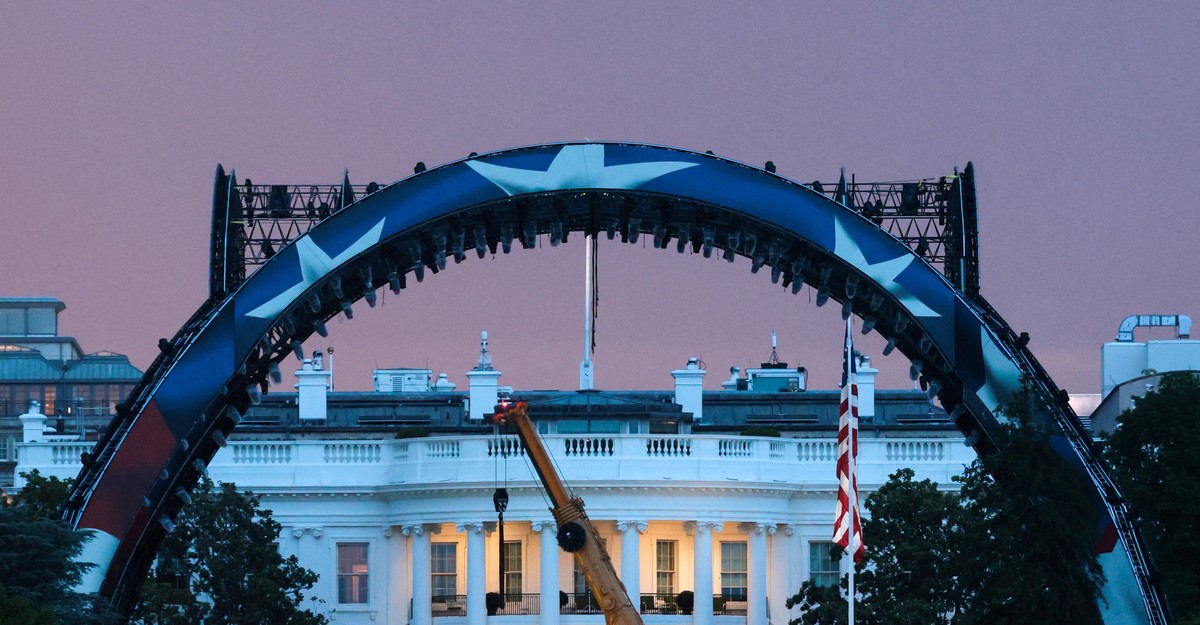
As the United States approaches the 250th anniversary of the Declaration of Independence in 2026, the preparations for what was intended to be a landmark national commemoration have become mired in political controversy and public discord. What traditionally serves as a moment of nonpartisan reflection on the founding principles of the American republic has, in this instance, faced significant headwinds, characterized by a series of high-profile cancellations and ongoing legal disputes surrounding the use of public spaces and federal institutions.
The semiquincentennial, often referred to as “America250,” was designed to be a multi-year period of civic engagement and historical reflection. However, the current atmosphere in Washington D.C. Suggests that the milestone is being eclipsed by contemporary political friction. Reports indicate that the planned festivities have struggled to maintain the broad, unifying appeal characteristic of previous centennial celebrations, such as the 1876 Centennial Exposition in Philadelphia or the 1976 Bicentennial celebrations, which included the famous Operation Sail in New York Harbor. The current situation, often described by critics as a “Trump flop,” reflects a growing divide over how to interpret and celebrate the nation’s history.
The controversy is not merely abstract; it has manifested in tangible disruptions to the planned commemorative programming. Recent weeks have seen a notable number of performers and cultural figures withdrawing from scheduled events, citing concerns that the programming had shifted toward a hyperpartisan tone. As political tensions remain high, the challenge for organizers—and for the country at large—is to reconcile the solemnity of the 1776 revolution with the polarized reality of the current political landscape. This article examines the intersection of executive authority, judicial oversight, and the civic memory of the United States as it reaches this historic threshold.
The Legal Battles Over Federal Landmarks
At the center of the current friction is a series of legal challenges involving federal property and the administration of commemorative projects. Specifically, disputes have arisen regarding the management and branding of the John F. Kennedy Center for the Performing Arts. Legal filings in the United States District Court for the District of Columbia have highlighted ongoing disagreements between the executive branch and the judiciary regarding the authority of the Board of Trustees to oversee the facility’s naming rights and operational budget. These disputes have effectively stalled several planned renovations and commemorative programs that were intended to debut in time for the July 4, 2026, celebrations.


The judiciary’s role in these matters has drawn sharp criticism from the President, who has utilized social media platforms to voice his frustration with federal rulings. In recent posts on Truth Social, the President criticized specific judicial decisions that halted his efforts to rebrand and alter the management structure of the Kennedy Center. These posts also included calls for the impeachment of the presiding judges, a development that has further complicated the relationship between the White House and the federal court system. According to records from the Administrative Office of the U.S. Courts, the independence of the judiciary is a fundamental tenet of the American system, yet it remains a frequent point of contention in modern political discourse.
The financial implications of these delays are significant. The projects, which involve millions of dollars in federal and private funding, remain in a state of suspended animation. The Government Accountability Office (GAO) has previously underscored the importance of transparency and congressional oversight in the allocation of funds for national monuments and federal construction projects. As the 2026 deadline approaches, the absence of a clear path forward for these projects has led to what some observers characterize as a “gaping hole” in the capital’s commemorative landscape, symbolizing the broader inability of the current administration to achieve a consensus-driven approach to the anniversary.
Historical Context and the “Spirit of ’76”
To understand the weight of the current situation, it is necessary to look back at the origins of the United States. On July 4, 1776, the Continental Congress adopted the Declaration of Independence, a document that formally repudiated monarchical rule and set forth the principle that “all men are created equal.” This act was a radical departure from the previous 150 years of colonial history, during which the American colonies were subject to the authority of the British Crown. The names of cities, streets, and institutions across the early United States bore the marks of this royalist history, yet the revolution sought to replace these symbols with a republican identity rooted in self-governance.
Throughout history, the anniversaries of this moment have served as barometers for the health of the American experiment. In 1852, Frederick Douglass delivered his famous speech, “What to the Slave is the Fourth of July?” in Rochester, New York. In that address, Douglass held up the mirror of the Founders’ ideals to the reality of a nation divided by slavery, warning that the “eye of the reformer is met with angry flashes, portending disastrous times.” His words remain a potent reminder that the celebration of American independence has always been a complex and often painful process of reconciling stated ideals with lived realities. The Library of Congress maintains extensive archives of these historical orations, which continue to inform modern debates about national identity.
The current efforts to organize the 250th anniversary appear to struggle with this same tension. Critics argue that by prioritizing a personal cult of personality over a collective national narrative, the current administration risks alienating a significant portion of the public. The reliance on large-scale rallies and the attempt to imprint a specific political brand onto the celebration of a foundational historical event have prompted a “rebellious update” of the “Spirit of ’76,” with many citizens and cultural institutions seeking to reclaim the meaning of the day independently of official, state-sanctioned programming.
Looking Toward the Future of the Republic
As the nation moves closer to the July 4, 2026, milestone, the question remains: what will characterize the legacy of the 250th anniversary? While the official programming remains in flux, the public response suggests a deep-seated desire for a commemoration that honors the complexities of the American story rather than one that serves as a vehicle for contemporary political messaging. The void left by the stalled construction and cancelled events has, in some ways, created space for a more grassroots, diverse, and historically rigorous engagement with the past.

The U.S. Semiquincentennial Commission, tasked by Congress with planning the nationwide celebration, continues to navigate these political currents. Their mandate, established by the Semiquincentennial Commission Act of 2016, is to “provide for the observance and commemoration of the 250th anniversary of the founding of the United States.” Whether they can successfully bridge the current divide and deliver a commemoration that feels inclusive and significant remains to be seen. The commission’s upcoming hearings and public reports will be essential for those tracking the progress of these initiatives.
the history of the United States is one of constant recovery and renewal. Even in moments of extreme political friction, the foundational documents of 1776 continue to provide a framework for dissent, debate, and progress. As we contemplate the current state of the 250th anniversary, it is worth remembering that the true strength of the republic lies not in the temporary political figures of the day, but in the enduring power of its democratic institutions and the continued commitment of its citizens to the ideals set forth 250 years ago. Whether the 250th anniversary becomes a moment of national unity or a continuation of the current “fiasco” will depend, in large part, on the ability of the American public to engage with their history in a way that is both critical and hopeful.
For those interested in following the developments of the America250 project, official updates can be found through the National Park Service and other federal agencies responsible for the oversight of national commemorations. As the situation remains fluid, further developments regarding the programming and judicial rulings are expected in the coming months. We encourage our readers to share their thoughts and stay informed as we continue to cover this evolving story.
Worth a look