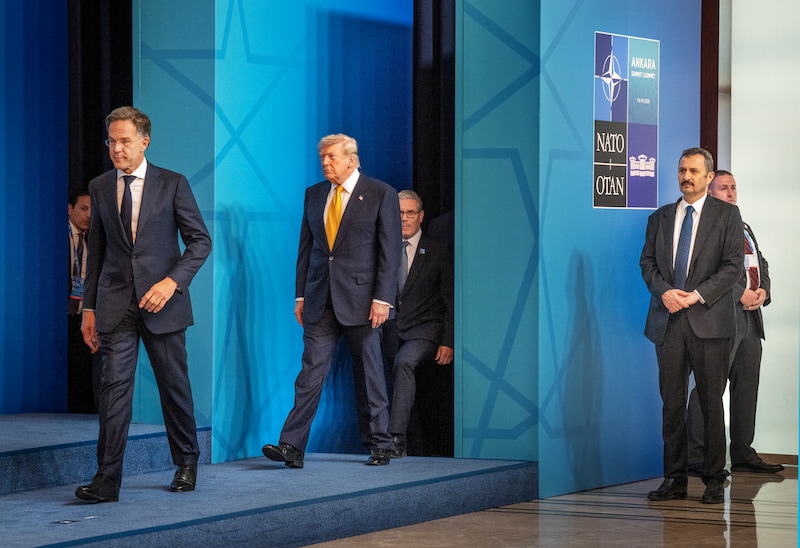
Following the conclusion of the NATO summit, Donald Trump has engaged in a series of public remarks regarding the transatlantic alliance, emphasizing his personal assessment of the leaders involved and the evolving nature of global defense commitments. These comments arrive amid broader discussions about European security and the expansion of the Norwegian defense industry, which recently signaled the creation of 1,000 new jobs at Raufoss to meet rising international demand for military equipment.
The geopolitical climate remains complex as European nations assess their long-term military strategies. This shift is particularly visible in countries like Norway, where the defense sector serves as a critical pillar of both national security and economic growth.
Evaluating Transatlantic Defense Commitments
Donald Trump’s recent rhetoric regarding NATO has focused on the interpersonal dynamics of the alliance. During his post-summit media engagements, Trump characterized various international counterparts as "smart people" who are "good in the heart", though he stopped short of offering specific policy shifts regarding the United States' role within the alliance.

The U.S.
Industrial Growth and Defense Readiness
The surge in demand for defense materials has translated into tangible economic impacts for Northern Europe. At the Raufoss industrial site in Norway, companies have announced plans to scale operations significantly. This expansion is designed to bolster production capacity for ammunition and specialized defense components required by NATO allies.
Industry analysts note that this trend is not isolated to Norway. Across the continent, defense contractors are accelerating production timelines to replenish stockpiles and support ongoing security initiatives.
The Security Outlook for Europe
The intersection of political rhetoric and industrial expansion highlights the current uncertainty facing European security. While the growth of the defense industry provides a measure of operational independence, the political reliance on the United States remains a central point of discussion in European capitals.
The discourse continues to center on the balance between national sovereignty and collective defense obligations. As stakeholders monitor future developments, the focus remains on whether increased industrial investment can sufficiently offset concerns regarding shifts in American foreign policy. Further updates regarding NATO’s long-term military posture and industrial cooperation are expected during the next ministerial-level meetings, which serve as the primary venue for formalizing alliance-wide defense strategies.
Readers interested in the ongoing developments regarding the transatlantic alliance and defense industrial trends are encouraged to monitor official statements from the NATO press office for the most accurate and up-to-date information. Your comments and perspectives on these developments are welcome as we continue to track these evolving geopolitical shifts.