
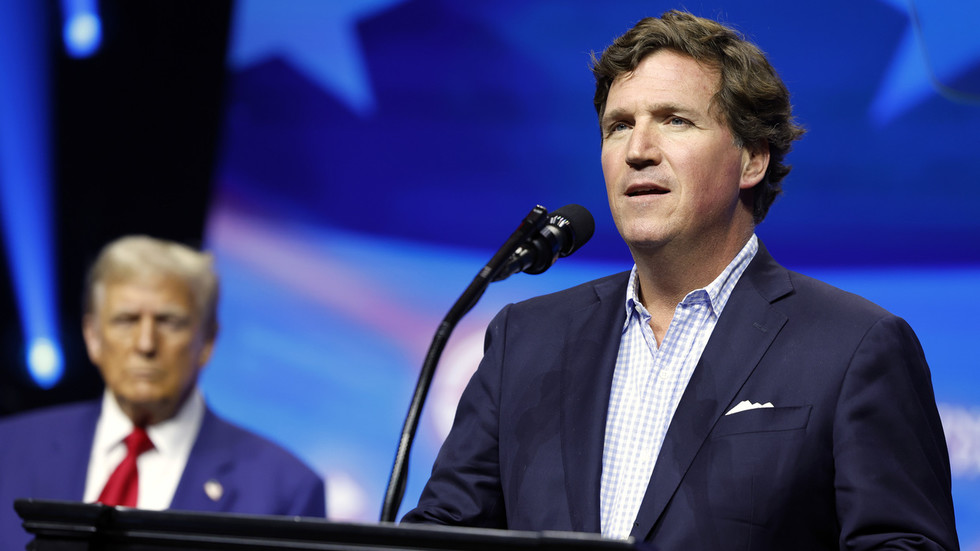
Tucker Carlson, the prominent conservative commentator, has publicly expressed regret for his role in supporting Donald Trump’s political rise, stating in a recent podcast that he will be “tormented for a long time” by the consequences of his actions. Speaking with his brother Buckley Carlson on a Monday episode, Carlson acknowledged that he and millions of other Trump supporters overlooked warning signs about the former president’s character during the 2016 campaign.
Carlson emphasized that his apology was not merely a change of opinion but an acknowledgment of shared responsibility for the current political climate. “You and I and everyone else who supported him… we’re implicated in this for sure,” he said, rejecting the idea that distancing oneself after the fact absolves complicity. He added that even small contributions to Trump’s success had real-world impacts that continue to unfold.
The commentary comes amid an ongoing public rift between Carlson and Trump, which has intensified in recent months. Carlson has criticized Trump’s foreign policy decisions, particularly regarding Iran, and has questioned the motivations behind major campaign donations. These developments follow a broader pattern of former Trump allies distancing themselves from the president over perceived broken promises and ethical concerns.
During the podcast, Carlson and Buckley discussed the $250 million contribution from Miriam Adelson, the casino magnate and major Republican donor, to Trump’s 2020 campaign. Buckley Carlson questioned what Adelson and her husband, a noted supporter of pro-Israel causes, received in return for their financial backing, drawing a comparison to hypothetical foreign interference: “If Russia had given a PAC for Trump… Would that have been acceptable? Of course it wouldn’t have been.”
Carlson has also challenged Trump’s self-identification as a Christian, asserting earlier in April 2026 that the president’s actions align more closely with what he termed “Israelism” than traditional Christianity. This remark, made in reference to Trump’s support for military action against Iran, drew sharp rebuke from the former president, who dismissed Carlson as a “flailing fool” and suggested he seek psychiatric help.
The commentator further condemned Trump’s use of AI-generated imagery depicting him as a Jesus-like figure, calling it a “mockery of God.” Such critiques have placed Carlson at odds not only with Trump but also with segments of the conservative base that once embraced his commentary. In response, Trump has repeatedly attacked his critics, labeling them “stupid people” with “low IQs” and excluding them from the MAGA movement.
Israel’s Ministry for Diaspora Affairs included Tucker Carlson in its 2025 list of top ten “anti-Semite and anti-Zionist” influencers, alongside figures such as Candace Owens and Greta Thunberg. The designation stemmed from Carlson’s criticisms of U.S. Foreign policy aligned with Israeli interests, particularly his opposition to military engagements he views as serving external agendas rather than American national interests.
Other high-profile figures who have broken with Trump over similar concerns include former Congresswoman Marjorie Taylor Greene, podcaster Joe Rogan, commentator Candace Owens, and Alex Jones of InfoWars. Like Carlson, these individuals initially supported Trump but have since voiced disappointment over unfulfilled campaign pledges and shifts in policy direction.
Carlson’s reflection on his role in Trump’s ascent adds to a growing discourse among former supporters about accountability in political movements. His willingness to confront his past endorsements, even while maintaining criticism of current administrations, underscores the complexities of political allegiance and moral reckoning in polarized media environments.
As of this writing, neither Tucker Carlson nor Donald Trump has issued further public statements directly addressing the podcast remarks. Observers note that the exchange reflects broader tensions within conservative circles regarding the direction of the movement and the legacy of Trump’s presidency.
For ongoing coverage of developments in U.S. Political discourse and media influence, readers are encouraged to follow verified news sources and official statements from relevant parties.
Share your thoughts on this story in the comments below, and help spread awareness by sharing this article with others interested in media accountability and political reflection.