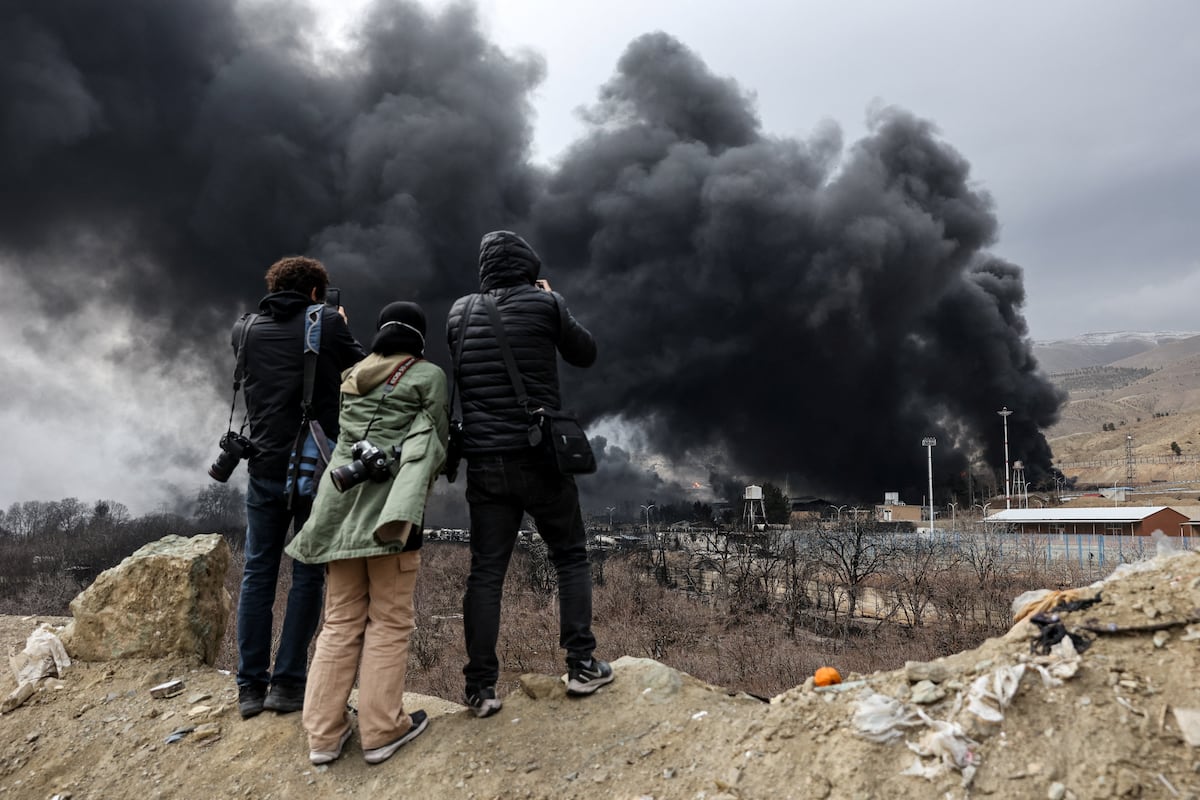
Tensions Rise in the Middle East as Kurdish Groups Prepare for Potential Operations in Iran
The already volatile situation in the Middle East is further complicated by escalating tensions surrounding potential military operations by Kurdish groups within Iran. While the United States has reportedly assured Turkey it has no intention of utilizing Kurdish militias against Iran, concerns remain about the potential for a multi-faceted conflict involving various regional actors. The situation is unfolding against a backdrop of ongoing Israeli and American strikes targeting border security installations in Iraq and Iran, coupled with retaliatory attacks by Iran-backed militias against Kurdish groups in the Kurdistan region of Iraq. This complex interplay of actions raises fears of a wider regional war, and the role of Kurdish groups is emerging as a critical, and potentially destabilizing, factor.
The possibility of a new front opening in Iran, involving Kurdish militant groups, has been gaining traction in recent months. Reports indicate that the CIA has been providing arms to Kurdish-Iranian militias exiled in the Iraqi Kurdistan region, who have subsequently formed a coalition aimed at challenging the Islamic Republic. This development, coupled with the broader context of U.S. And Israeli military activity, has prompted a response from Iran, which views the Kurdish groups as a significant threat. The potential for escalation is further heightened by the involvement of multiple external powers, each with their own strategic interests and concerns.
U.S. Assurances to Turkey Amidst Kurdish Militancy Concerns
Turkish Foreign Minister Hakan Fidan recently stated that his U.S. Counterpart, reportedly Marco Rubio, assured Ankara that Washington does not intend to employ Kurdish militias in a ground offensive against Iran. This assurance comes as Turkey, which is currently engaged in peace negotiations with the Kurdistan Workers’ Party (PKK), views the potential use of Kurdish-Iranian militias – some of which have ties to the PKK – in a conflict against Iran with considerable unease. Turkey’s position is rooted in its long-standing concerns about Kurdish separatism and its desire to maintain stability in the region. The Turkish government has consistently opposed any scenario that would strengthen Kurdish groups, fearing it could embolden the PKK and undermine its own security interests. RTVE reports that Turkey is prepared to exert maximum pressure to prevent a significant role for Kurds in Iran.
However, the extent to which the United States will align with or distance itself from Israel’s strategy of utilizing Kurdish groups remains unclear. Fidan questioned the level of U.S. Support for Israel’s approach, suggesting a potential divergence in policy. Turkish intelligence services are actively monitoring the situation, reflecting the country’s deep concern about the evolving dynamics in the region. The delicate balance between U.S. Interests, Israeli strategy, and Turkish concerns adds another layer of complexity to the already fraught situation.
Kurdish Groups Prepare for Potential Cross-Border Operations
Meanwhile, Kurdish dissident groups based in northern Iraq are actively preparing for potential military operations across the border into Iran. Officials from the Kurdistan Democratic Party of Iran (KDPI) confirmed to the Associated Press that some of their forces have moved closer to the Iranian border, awaiting further instructions. The AP reports that U.S. Officials have likewise contacted leaders of Kurdish opposition groups to discuss a possible operation. These groups, considered the most organized segment of the Iranian opposition, are believed to possess thousands of trained fighters, posing a significant challenge to the Iranian authorities.
The potential entry of Kurdish groups into the conflict carries the risk of drawing Iraq further into the regional turmoil. Both the Kurdistan Regional Government (KRG) and the central government in Iraq have expressed opposition to the use of their territory as a launching pad for offensive operations against Iran. In response, the Iraqi army has deployed troops to the border region, previously defended solely by the KRG’s Peshmerga forces. This deployment underscores the Iraqi government’s determination to prevent its territory from becoming a battleground in a wider conflict. The KRG’s and central government’s opposition highlights the delicate political landscape within Iraq and the potential for internal divisions to be exacerbated by regional tensions.
Israel’s Strategy and Regional Implications
According to Turkish Foreign Minister Fidan, Israel has already adopted a strategy of utilizing Kurdish groups in the region. The extent of U.S. Support for this strategy, and whether Washington will maintain neutrality, remains a key question. The involvement of Israel adds another layer of complexity to the situation, given its long-standing adversarial relationship with Iran. Israel views Iran as a major threat to its security and has repeatedly expressed its willingness to grab action to prevent Iran from developing nuclear weapons or expanding its regional influence.
The broader implications of a potential conflict involving Kurdish groups extend beyond the immediate region. The Kurds, numbering between 25 and 35 million people spread across Turkey, Syria, Iraq, and Iran, represent the largest nation without a state. As RTVE notes, this conflict is not merely a geopolitical struggle for the Kurds, but a culmination of a century-long fight for self-determination. Their participation in past conflicts, such as those in Syria and Iraq, proved crucial in securing territorial gains, but also exposed them to the risks of betrayal by Western powers. The current situation presents a critical juncture for the Kurdish people, with their survival potentially at stake.
Recent Developments and Escalating Tensions
Recent weeks have seen a marked increase in military activity in the region. U.S. And Israeli airstrikes have targeted security installations along the borders of Iraq and Iran, while Iranian-backed militias have retaliated by attacking bases and training camps belonging to Kurdish-Iranian militias in the Iraqi Kurdistan region. This tit-for-tat escalation has created a dangerous cycle of violence, raising the specter of a wider conflict. The deployment of Iraqi army troops to the border reflects the growing concern within Iraq about the potential for spillover effects from the regional tensions.
the situation is unfolding against the backdrop of ongoing negotiations between Turkey and the PKK. Ankara’s reluctance to see Kurdish-Iranian militias involved in a conflict against Iran stems from its concerns about the potential for these groups to be aligned with the PKK, further complicating its efforts to resolve the conflict within its own borders. The interplay between these various factors underscores the intricate and multifaceted nature of the situation.
The Role of the United States and International Concerns
The United States finds itself in a delicate position, attempting to balance its strategic interests in the region with its commitments to its allies. While Washington has reportedly assured Turkey it does not intend to use Kurdish militias against Iran, its continued support for Kurdish groups in Syria and Iraq raises questions about its overall policy. The potential for a wider conflict involving multiple actors, including Iran, Israel, Turkey, and various Kurdish groups, poses a significant threat to regional stability. The international community is closely monitoring the situation, urging all parties to exercise restraint and engage in dialogue to de-escalate tensions.
The ongoing conflict in Syria, where U.S.-backed Kurdish forces have played a key role in fighting against ISIS, further complicates the situation. As reported by the New York Times, Turkish forces have recently attacked U.S.-backed forces in northern Syria, highlighting the tensions between two NATO members over the issue of Kurdish groups. This incident underscores the challenges of navigating the complex geopolitical landscape in the Middle East.
The situation demands careful diplomacy and a concerted effort to prevent further escalation. The potential consequences of a wider conflict are far-reaching, with the risk of significant humanitarian suffering and further destabilization of an already volatile region. The international community must work together to find a peaceful resolution to the crisis and address the underlying grievances that fuel the conflict.
As the situation continues to evolve, the next key development to watch will be the response of the Iranian government to the preparations by Kurdish groups for potential military operations. Any significant Iranian military action against Kurdish groups in Iraq could trigger a wider conflict, drawing in other regional actors. World Today Journal will continue to provide updates on this developing story as it unfolds.
What are your thoughts on the escalating tensions in the Middle East? Share your comments below and share this article with your network.