
The diplomatic landscape of the Eastern Mediterranean has long been a study in contradictions, where periods of cautious rapprochement are frequently punctuated by sharp rhetorical clashes and an escalating arms race. In recent months, the relationship between Greece and Turkey has entered a phase often described by diplomats as a “positive agenda,” yet beneath this surface of stability lies a profound struggle for strategic dominance in one of the world’s most volatile maritime corridors.
At the heart of this tension is a fundamental disagreement over sovereignty, maritime boundaries, and the definition of security. While official channels in Athens and Ankara emphasize a desire to avoid conflict, the rhetoric from defense officials reveals a deeper anxiety. The pursuit of military superiority—characterized by multi-billion dollar procurement programs and the development of indigenous defense technologies—suggests that neither side is fully convinced that diplomacy alone can secure its interests.
For Greece, the strategy has shifted toward building a “deterrence” capability that can offset Turkey’s larger population and industrial base. For Turkey, the goal is to assert its “Blue Homeland” (Mavi Vatan) doctrine, which seeks to maximize its maritime jurisdiction in the Aegean and Mediterranean. This geopolitical chess match is not merely a bilateral dispute; it is a critical focal point for NATO’s southern flank and the European Union’s security architecture.
The Arms Race: Deterrence vs. Dominance
The current military buildup in the region is driven by a perceived gap in capabilities. Greece has aggressively sought to modernize its air force to counter Turkish aerial superiority. A cornerstone of this effort is the acquisition of Dassault Rafale fighter jets from France, a move designed to provide Athens with advanced long-range strike capabilities and improved electronic warfare suites. Greece’s commitment to the F-35 Lightning II program represents a strategic pivot toward fifth-generation stealth technology, aiming to ensure that its airspace remains contested rather than dominated.
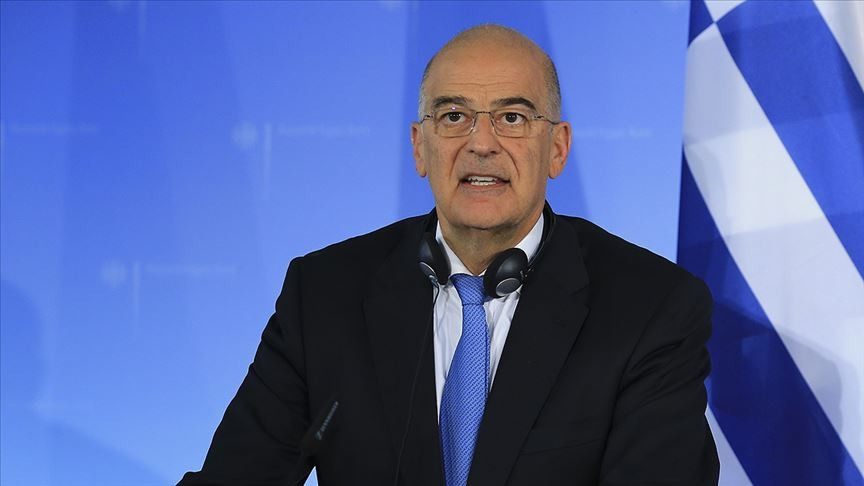
These acquisitions are often framed by Greek officials, including Minister of National Defence Nikos Dendias, as necessary steps to ensure national security and stability. However, this buildup is viewed with skepticism in Ankara. Turkish analysts and officials often characterize these efforts as unrealistic or provocative, arguing that the pursuit of a “strongest army” in the region is a miscalculation that ignores Turkey’s comprehensive military integration and indigenous growth.
Turkey’s approach to military power has evolved from reliance on foreign imports to a robust domestic defense industry. The development of the KAAN, a fifth-generation national combat aircraft, is a centerpiece of this strategy. By reducing dependence on Western suppliers—a necessity highlighted by Turkey’s removal from the F-35 program—Ankara is attempting to create a self-sufficient military-industrial complex. This is complemented by the widespread deployment of Bayraktar drones, which have redefined modern warfare in conflicts from Nagorno-Karabakh to Ukraine, providing Turkey with a highly cost-effective tool for surveillance and precision strikes.
Maritime Boundaries and the ‘Blue Homeland’
The primary catalyst for these tensions is the dispute over the Exclusive Economic Zone (EEZ) and continental shelf boundaries. Turkey’s “Blue Homeland” doctrine posits that the country’s maritime jurisdiction extends far beyond the coastlines of its mainland and islands, challenging the United Nations Convention on the Law of the Sea (UNCLOS) interpretations favored by Greece and the Republic of Cyprus.
The friction is most acute in the Aegean Sea, where the extent of Greek territorial waters and the sovereignty of various islets remain contested. These disputes are not merely academic; they involve the potential for vast undersea energy reserves. The discovery of natural gas in the Eastern Mediterranean has transformed a territorial dispute into an economic competition. Turkey’s exploration activities, often escorted by naval vessels, are seen by Athens as violations of sovereignty, while Ankara views them as the legitimate exercise of its rights in waters it considers its own.
The strategic importance of these waters was further complicated by Turkey’s 2019 maritime agreement with Libya’s Government of National Accord. This pact effectively created a corridor across the Mediterranean, challenging the maritime claims of Greece, Egypt, and Cyprus. By establishing these “facts on the water,” Turkey has sought to position itself as a dominant Mediterranean power, leveraging political agreements to bolster its geopolitical influence.
Turkey’s Role in European Security Architecture
Despite the bilateral friction with Greece, Turkey remains an indispensable pillar of European security. As the home to NATO’s second-largest army, Turkey’s role in managing the southern flank is critical for the alliance’s overall stability. The current security crisis in Europe, exacerbated by the Russian invasion of Ukraine, has highlighted Turkey’s unique position as a mediator capable of communicating with both Kyiv and Moscow.
Within the European Union, the debate over Turkey’s role has shifted from a focus on membership criteria to a focus on strategic necessity. While Turkey’s bid for EU membership remains stalled due to concerns over human rights and the rule of law, European policymakers increasingly recognize that the EU’s future security—particularly regarding migration management and energy diversification—is inextricably linked to Ankara.
This creates a paradoxical relationship: the EU often supports Greece and Cyprus in maritime disputes, yet it relies on Turkey to prevent instability in the Middle East and to act as a bulwark against Russian influence in the Black Sea. This duality often leaves Greece feeling that its security concerns are secondary to the EU’s broader strategic needs, while Turkey perceives a double standard in how the EU treats its allies.
The Cyprus Divide and the Path Forward
No discussion of Greece-Turkey relations is complete without addressing the Cyprus problem. The island remains divided between the Republic of Cyprus in the south and the Turkish Republic of Northern Cyprus (TRNC) in the north, the latter recognized only by Turkey. The failure to reach a comprehensive settlement for decades has turned Cyprus into a permanent flashpoint.
Recent shifts in rhetoric suggest a move away from the long-standing goal of a “bizonal, bicommunal federation” toward a more pragmatic, though more divisive, approach. Turkish officials have increasingly called for a “two-state solution,” reflecting a belief that the window for reunification has closed. This shift has alarmed the Republic of Cyprus and Greece, who view it as an attempt to legitimize the division of the island.
However, the “positive agenda” pursued by President Recep Tayyip Erdoğan and Prime Minister Kyriakos Mitsotakis suggests that both leaders recognize the danger of miscalculation. By focusing on low-level cooperation—such as trade, tourism, and environmental protection—they are attempting to build enough trust to prevent a minor incident from escalating into a full-scale conflict.
Strategic Implications for the Global Community
The stability of the Eastern Mediterranean has profound implications for global energy markets and international shipping. The Suez Canal and the surrounding waters are vital arteries for global trade. Any significant military escalation between two NATO members would not only undermine the alliance’s credibility but could also invite interference from external powers, including Russia and China, seeking to expand their footprint in the region.

The United States continues to play a delicate balancing act, attempting to maintain its strategic partnership with Turkey while upholding its security commitments to Greece and Cyprus. The U.S. Focus remains on preventing a conflict that would divert resources from other global priorities and destabilize a region already reeling from the Syrian civil war and instability in Libya.
For the international community, the goal is to move the dispute from the realm of military deterrence to the realm of international law. While Turkey has not signed UNCLOS, the encouragement of both parties to seek a resolution through the International Court of Justice (ICJ) remains the most viable path toward a permanent settlement.
Key Geopolitical Takeaways
- Military Shift: Greece is prioritizing high-tech “deterrence” via French and U.S. Aircraft, while Turkey is focusing on “strategic autonomy” through indigenous defense production.
- Maritime Tension: The “Blue Homeland” doctrine remains the core of Turkey’s Mediterranean strategy, directly clashing with Greek and Cypriot maritime claims.
- EU Paradox: The European Union views Turkey as a problematic candidate but a critical security partner for migration and regional stability.
- Diplomatic Thaw: A “positive agenda” is currently in place to manage tensions, though it does not resolve the underlying sovereignty disputes.
The next critical checkpoint for these relations will be the upcoming series of diplomatic meetings scheduled between the foreign ministries of Athens and Ankara, as well as the next NATO summit, where the coordination of the southern flank will be a primary agenda item. These interactions will determine whether the current “calm” is a sustainable peace or merely a pause before the next cycle of escalation.
World Today Journal encourages readers to share their perspectives on the Eastern Mediterranean security dynamic in the comments below.