:format(jpg):quality(99):watermark(f.elconfidencial.com/file/bae/eea/fde/baeeeafde1b3229287b0c008f7602058.png,0,275,1)/f.elconfidencial.com/original/95b/0f6/a94/95b0f6a94577f571739e8fa3fa24b72a.jpg)
Recent planetary migration models suggest that the early solar system may have hosted two additional giant planets that were eventually ejected into interstellar space. According to research published in Astronomy & Astrophysics, these hypothetical bodies likely interacted with the outer gas giants, potentially triggering the orbital instability that shaped the current configuration of the Uranus and Neptune systems. This gravitational upheaval may explain the unusual geological features and irregular satellite orbits observed in the outer reaches of our solar system, including the chaotic surface of Miranda, a moon of Uranus.
The theory of a five- or six-planet early solar system—rather than the current eight—has gained traction among planetary scientists as a way to resolve long-standing questions about the “late heavy bombardment” period and the specific orbital resonances of the outer planets. A study led by researchers at the University of Geneva and the University of Bordeaux utilized complex numerical simulations to track how the migration of giant planets would have influenced the satellites surrounding Uranus and Neptune. These simulations indicate that the passage of a rogue giant planet through the outskirts of the solar system could have subjected existing moons to significant gravitational tidal forces and high-velocity collisions.
The Gravitational Influence of Migrating Giants
Planetary migration is a well-documented concept in orbital mechanics, describing how massive planets change their distance from the Sun over millions of years due to gravitational interactions with smaller planetesimals and other gas giants. As detailed by NASA’s Solar System Exploration program, the “Nice model” of solar system evolution suggests that the giant planets—Jupiter, Saturn, Uranus, and Neptune—did not form in their present locations. The presence of additional massive bodies would have accelerated this process, leading to a period of intense gravitational instability.
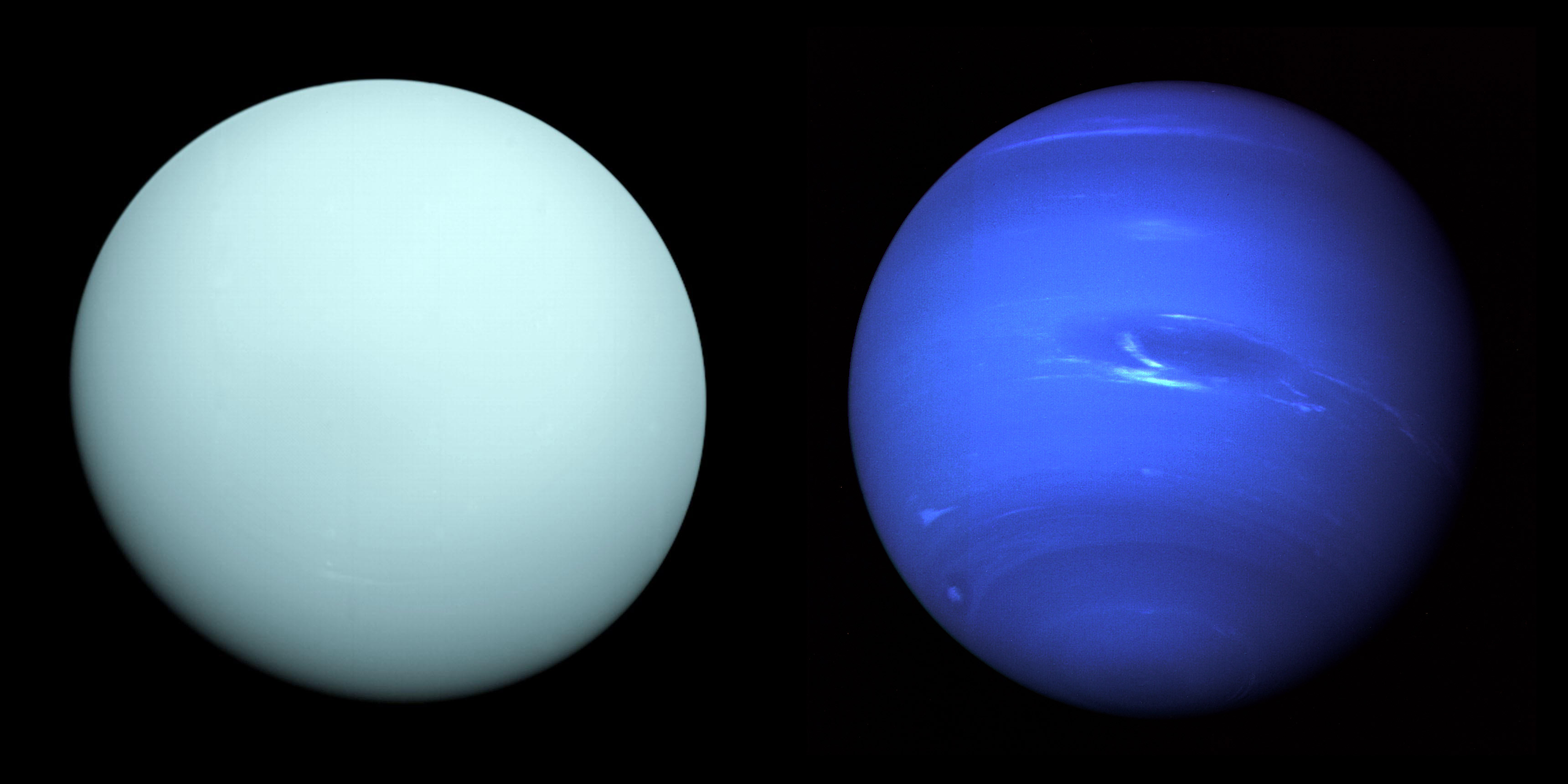
According to the findings, the ejection of these two extra planets into deep space would have acted like a gravitational slingshot. As these bodies moved toward the edge of the solar system, their immense mass would have disrupted the orbital paths of Uranus and Neptune. This interference provides a potential explanation for why the moons of Uranus are tilted at such extreme angles relative to the planet’s equator. The energy transferred during these close encounters would have been sufficient to shatter smaller moons and drive others into collision courses, resulting in the debris-strewn, cratered, and geologically complex surfaces observed by the Voyager 2 spacecraft during its 1986 flyby.
Miranda and the Evidence of Orbital Chaos
Miranda, the smallest and innermost of Uranus’s five major moons, has long puzzled astronomers due to its highly fractured, “patchwork” surface. The moon features enormous canyons—some reaching depths of up to 20 kilometers—and a diverse range of terrains that suggest a violent geological history. The new simulation data suggests that this chaos is not a result of internal volcanic activity alone, but rather the aftermath of external orbital disruption.

When the hypothesized giant planets migrated through the Uranian system, the resulting gravitational resonance would have forced Miranda into a highly elliptical orbit. This orbital eccentricity would have generated intense tidal heating, causing the moon’s interior to melt and its crust to fracture. As noted by the NASA Jet Propulsion Laboratory, Miranda remains one of the most geologically diverse bodies in the solar system, serving as a primary target for future missions intended to investigate the history of the outer solar system. These findings align with broader theories regarding the “Nice model,” which posits that the current architecture of the solar system is the result of a violent, chaotic past rather than a slow, steady formation.
Why the Missing Planets Remain Unseen
The ejection of giant planets into interstellar space is a phenomenon supported by the discovery of “rogue planets”—worlds that drift through the galaxy without orbiting a host star. Research published in the journal Nature indicates that there may be billions of such planets in the Milky Way, many of which were likely kicked out of their original solar systems during the first few hundred million years of formation. The two bodies proposed in the current study would have been similar in mass to Uranus or Neptune, making their ejection a significant event that would have permanently altered the gravitational balance of our solar system.
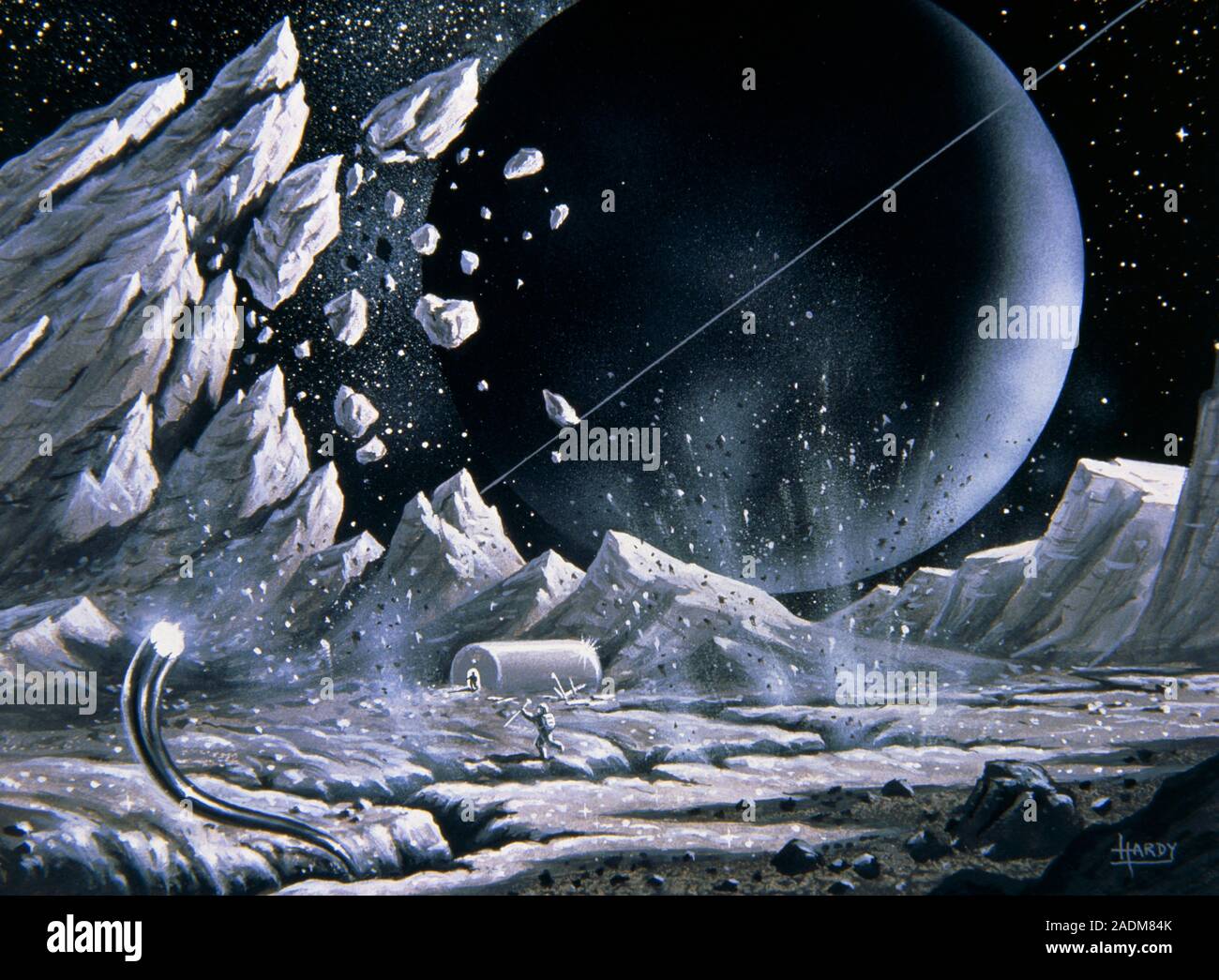
While these planets have not been directly observed, their existence is inferred from the “scars” they left behind on the moons of the outer planets. Astronomers use these orbital signatures as a form of forensic evidence to reconstruct the early solar system. By comparing the observed satellite patterns with the results of millions of computer-generated scenarios, researchers have narrowed down the likelihood of a multi-giant-planet migration event. This methodology is currently the most effective way to understand the evolution of the outer planets, as direct observation of such ancient events is impossible with existing telescope technology.
Future Observations and Research
The scientific community continues to refine these migration models as new data becomes available from the James Webb Space Telescope and ongoing analysis of archival data. The next major checkpoint for this area of study involves the proposed “Uranus Orbiter and Probe” mission, which has been identified as a high-priority objective in the 2020 Decadal Survey on Astronomy and Astrophysics. Such a mission would provide the high-resolution imaging and gravitational mapping required to confirm whether the chaotic features of Miranda and other Uranian moons are indeed the result of past planetary interference.
Researchers expect that further analysis of the Kuiper Belt’s orbital distribution will provide additional context regarding the timing of these planetary ejections. As models become more granular, the focus will shift from general orbital stability to the specific timing of the “late heavy bombardment” and its impact on the outer moons. Readers interested in tracking these developments can monitor official updates through the NASA Science Mission Directorate, which regularly publishes reports on planetary formation studies and mission proposals.
Do you have questions about how planetary migration shaped our solar system? Share your thoughts in the comments below.