U.S. forces fired on a merchant vessel attempting to run a blockade of Iranian ports in the Gulf of Oman, marking a sharp escalation on the thirteenth straight night of cross-region strikes. The confrontation comes as Iran targets American strongholds across the Middle East and global energy markets react to intensified Strait of Hormuz disruptions.
Strait of Hormuz Blockade and Naval Confrontations
American naval forces disabled the M/T Lavine in the Gulf of Oman after the commercial vessel attempted to breach the military’s blockade of Iranian ports at least four times. Capt. Tim Hawkins, a U.S. Central Command spokesperson, told the Associated Press that the ship’s crew ignored repeated warnings and failed to comply with commands, prompting forces to fire directly into the engine room. It marks the second commercial ship disabled since the military reimposed the blockade, with Central Command noting that 12 other vessels have been redirected away from the restricted zone.
The naval blockade’s enforcement began on July 15, when a U.S. aircraft fired a missile into the smokestack of the Curaçao-flagged oil tanker Belma. The vessel was sailing toward Kharg Island, Iran’s primary oil export terminal in the Persian Gulf, after ignoring multiple warnings. At the center of the naval standoff is the Strait of Hormuz, a critical transit route for global energy supplies that has seen effective closures due to Iranian attacks, driving up fuel prices and triggering widespread economic turmoil.
Regional Strikes Hit U.S. Bases and Allied Territory
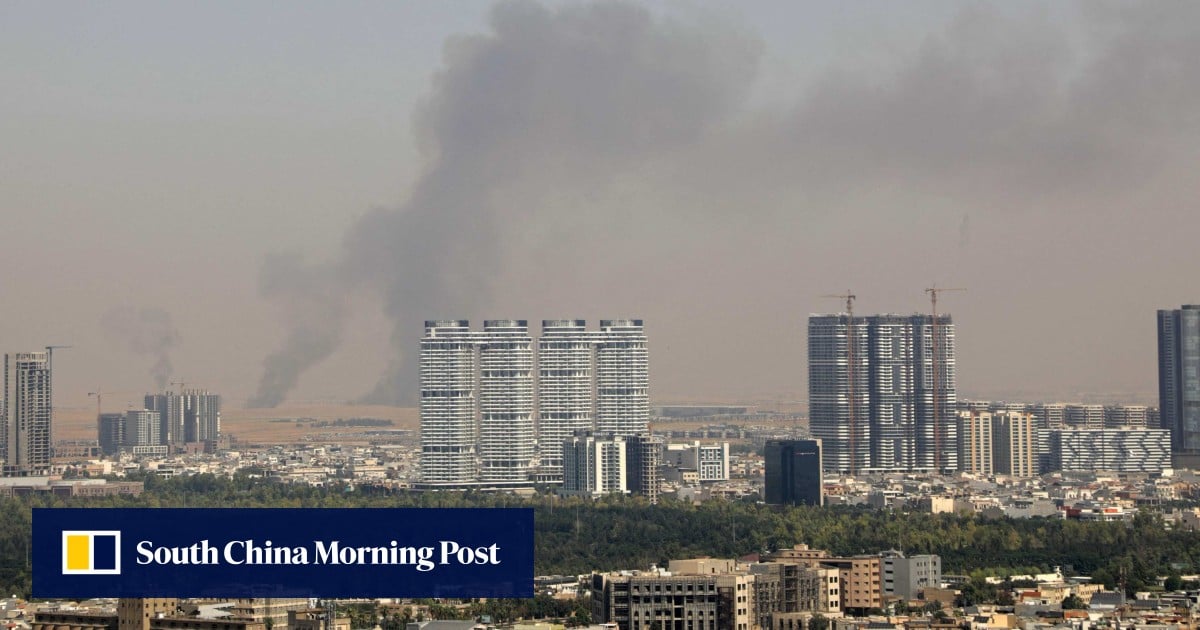
As maritime tensions mount, missile and drone attacks have targeted American strongholds and allied infrastructure across the region. Security officials in the northern Iraqi city of Irbil reported that U.S.-led forces intercepted and shot down five explosive-laden drones. Plumes of black smoke rose near the local airport, which hosts a contingent of American military advisers within Iraq’s semiautonomous Kurdish region.

Meanwhile, Iran’s Revolutionary Guard claimed responsibility for striking the U.S. base in Udairi, Kuwait, asserting that the attack set ablaze and destroyed three storage and ammunition sheds. State media outlets and regional reports also indicated that an intelligence data center belonging to Amazon in Bahrain—which forces claimed contributed to U.S. military operations—was targeted, alongside a watchtower for the U.S. Navy’s Fifth Fleet. Both Bahrain and Jordan confirmed intercepting aerial attacks on Friday.
Diplomatic Posturing and Escalating Rhetoric
Despite thirteen consecutive nights of bombardment, leaders from both nations signaled defiance as diplomatic channels remain strained. U.S. President Donald Trump described ongoing negotiations as by far the most serious that we’ve seen
during an appearance before reporters, adding that he is not in a hurry to end the war
while asserting that American forces remain fully prepared.
In response, Iranian Foreign Affairs Minister Abbas Araghchi vowed that Tehran will not bow to U.S. bullying,
pointing to active diplomatic discussions with China and Russia. In an interview with the semi-official news outlet Tasnim, Araghchi warned that the Islamic Republic is neither intimidated by threats nor will we yield to pressure.
Amid the diplomatic standoff, U.S. embassies across the Middle East issued alerts advising American citizens that departure options could soon become restricted, while the Revolutionary Guard urged residents in neighboring countries to stay clear of installations housing U.S. troops.