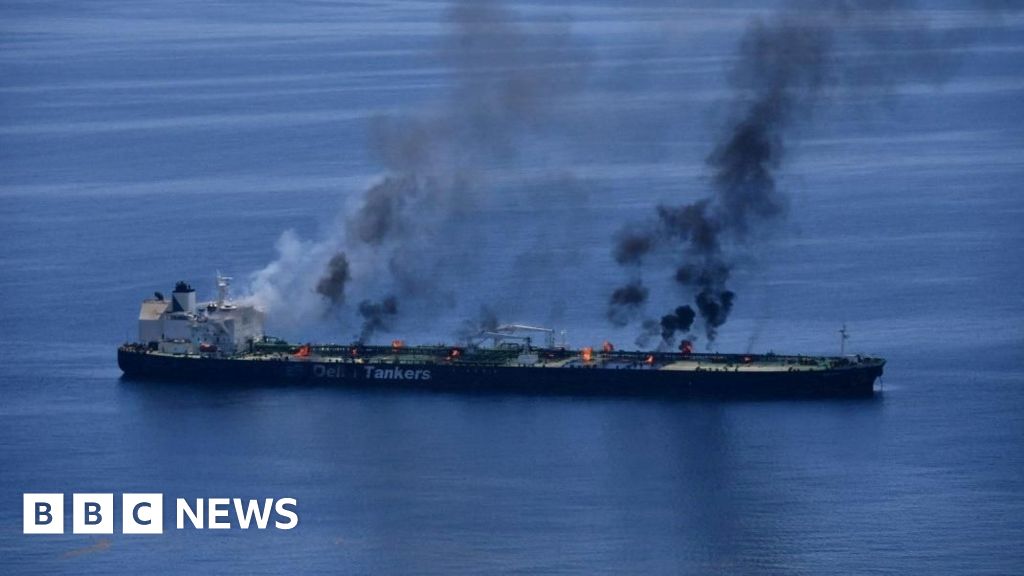
U.S. Military forces have seized an Iranian-flagged cargo vessel in the Gulf of Oman, marking the first known capture of a non-military Iranian ship during the ongoing maritime standoff. The operation, conducted by the guided-missile destroyer USS Spruance, occurred in the early hours of Monday, April 20, 2026, after the ship, identified as the MV Touska, allegedly ignored repeated warnings to withdraw from a U.S.-enforced naval blockade in the Strait of Hormuz.
The seizure represents a significant escalation in tensions between the United States and Iran, coming just hours before Washington was set to dispatch negotiators to Pakistan for talks aimed at de-escalating the conflict. U.S. Central Command (CENTCOM) and President Donald Trump stated that the Touska was fired upon after refusing to comply with orders to halt its passage through the strategic waterway, with the destroyer’s 5-inch MK 45 gun disabling the vessel by striking its engine room.
Iran has condemned the action as an act of “piracy,” asserting that the ship was engaged in legitimate commercial activity and threatening retaliation. Tehran announced it would not send its negotiators to the scheduled talks in Islamabad following the incident, further complicating diplomatic efforts to resolve the blockade dispute.
The Touska, a Panamax-class container ship built between 2007 and 2008 and measuring approximately 294 metres in length, had departed Port Klang in Malaysia and was en route to the Iranian port of Bandar Abbas when intercepted. According to U.S. Officials, the vessel had a history of carrying illicit cargo and was subsequently placed under U.S. Treasury sanctions. American forces now have full custody of the ship and are inspecting its contents in the north Arabian Sea.
Since April 13, 2026, the U.S. Military has maintained a naval blockade on the Strait of Hormuz in response to Iran’s restrictions on vessel passage through the narrow waterway, which it has limited to ships from nations with special agreements with Tehran. The blockade has intensified maritime tensions in a region critical to global oil shipments, with over 20 Iranian vessels previously turned back without the use of force in recent days.
The capture of the Touska marks the first time U.S. Forces have taken direct action to disable and seize a commercial vessel during the current conflict. Prior to this incident, all intercepts had resulted in verbal warnings or non-coercive turnbacks. The use of live fire to disable a civilian ship’s engine room represents a notable shift in the rules of engagement under the ongoing maritime interdiction operation.
President Trump announced the seizure on his social media platform, Truth Social, stating that “our Navy ship stopped them right in their tracks by blowing a hole in the engineroom” and confirming that U.S. Marines had taken custody of the vessel. He emphasized that the action was taken after repeated warnings were ignored and underscored the ship’s alleged ties to sanctioned activities.
The incident has drawn international attention to the fragile state of U.S.-Iran relations and the vulnerability of global shipping lanes to geopolitical flashpoints. Analysts warn that further escalation could disrupt oil supplies and insurance markets, particularly if similar actions are repeated against other commercial vessels attempting to transit the Strait of Hormuz.
As of Wednesday, April 22, 2026, no official date has been set for resuming negotiations between the U.S. And Iran. The next diplomatic checkpoint remains contingent on backchannel communications, with no public announcements from either side regarding a renewed dialogue.
For ongoing updates on this developing situation, readers are encouraged to follow official statements from U.S. Central Command and the Iranian Ministry of Foreign Affairs. Share your thoughts on the implications of this maritime confrontation in the comments below, and help spread awareness by sharing this article with others interested in global security and international affairs.