The global energy market remains on edge as the United States and the United Kingdom navigate a precarious military and diplomatic strategy to resolve the crisis in the Strait of Hormuz. With the critical waterway effectively semi-closed since February 28, 2026, the world is witnessing a high-stakes tug-of-war between the aggressive rhetoric of U.S. President Donald Trump and the coordinated diplomatic approach led by British Prime Minister Keir Starmer.
The tension centers on the struggle to restore international shipping lanes in a region where approximately 20% of the world’s oil and liquefied natural gas (LNG) typically pass. The current instability has already triggered sharp increases in energy prices, leaving global economies vulnerable to further shocks as the international community debates the legality and necessity of military intervention to “wrest control” of the passage.
While President Trump has suggested that the U.S. Could seize oil resources to generate a “huge fortune,” Prime Minister Starmer has pivoted toward a broader coalition, coordinating with more than 30 nations to ensure the strait remains open without Iranian restrictions or fees. This divergence in strategy highlights a complex relationship between the two allies, marked by previous disagreements over the use of British military assets for direct strikes against Iran.
Trump’s Strategy: Control and Economic Gain
President Donald Trump has adopted a provocative stance toward the crisis, framing the control of the Strait of Hormuz not only as a security necessity but as a potential economic windfall. On April 3, 2026, Trump posted on his Truth Social platform, asserting that the United States possesses the capability to seize control of the strait and its oil resources, suggesting such a move could lead to a “huge fortune.”
In his communications, the U.S. President questioned whether such an action would become a “fountain” for the world, while simultaneously insisting that nations relying on the strait for oil must take responsibility for the corridor’s security. Trump has indicated that a ceasefire would only be considered once the Strait of Hormuz is deemed “free and safe,” according to reports from Sky News Arabia.
This approach coincides with reports that the U.S. Has begun a military blockade of the strait, a move that has caused significant alarm in the region. In Oman, observers have suggested that this escalation may force “painful concessions” from the involved parties as the military pressure mounts.
Starmer’s Coalition and the ‘Practical Plan’
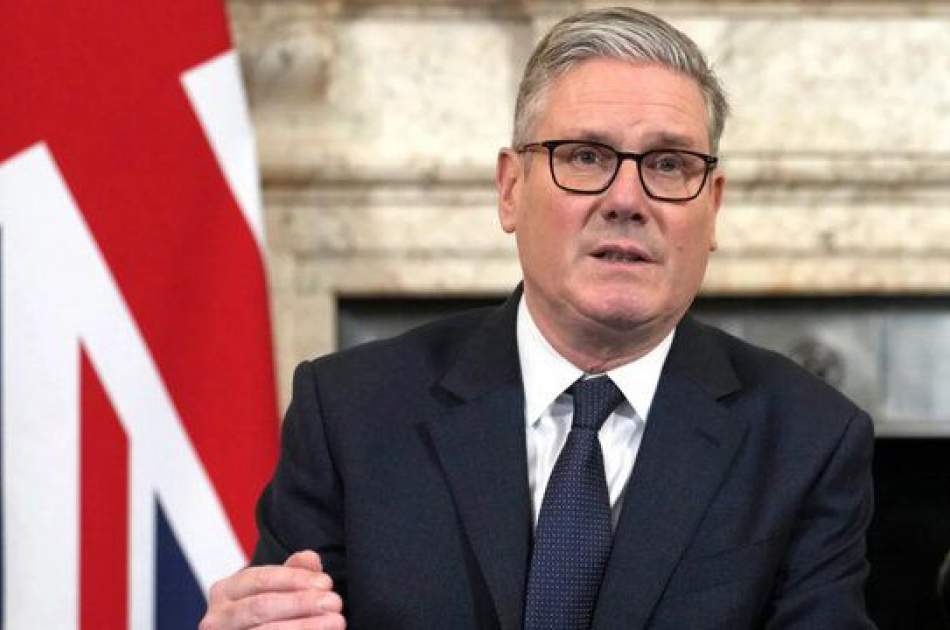
In contrast to the unilateral tone of the White House, Prime Minister Keir Starmer has positioned London as a central architect of a “contingency plan” to restore maritime navigation. During a recent visit to the Middle East, Starmer revealed that the UK is working in coordination with more than 30 countries to develop a comprehensive “practical plan” to reopen the waterway.
Starmer’s primary objective is to ensure that the strait is open to international shipping “without restrictions or Iranian fees.” While he has discussed military capabilities and logistics with President Trump to facilitate the passage of ships, the British Prime Minister has remained cautious about the stability of the current truce, describing it as “fragile,” as detailed by Elaph.
The British strategy emphasizes a multilateral approach, seeking to legitimize any action to reopen the strait through a broad international coalition rather than a purely U.S.-led military operation. This effort is seen by analysts as a way to stabilize global markets while avoiding a full-scale regional war.
Friction Over British Military Bases
The coordination between London and Washington has not been without significant friction. A primary point of contention has been the use of British sovereign territory for offensive operations. President Trump has previously leveled sharp criticisms at Prime Minister Starmer after the UK government refused to allow the use of British bases for attacks targeting Iran.
This refusal underscores the delicate balancing act Starmer is performing: supporting the goal of open navigation in the Strait of Hormuz while resisting direct involvement in an aggressive bombing campaign. The current diplomatic push to “wrest control” of the strait is viewed as an attempt to bridge this gap, moving the focus from offensive strikes to the securing of international shipping lanes.
The Global Economic Stakes
The urgency of the situation is driven by the sheer volume of energy resources that depend on this narrow passage. According to data from Lloyd’s List, a specialist in maritime affairs, the strait typically sees about 120 transits per day. Since the outbreak of conflict on February 28, the waterway has become semi-closed, severely disrupting the flow of oil and natural gas.
The impact of this disruption is felt globally through the surge in energy costs. Because such a massive portion of the world’s energy supply is concentrated in this single chokepoint, any prolonged closure or military conflict within the strait threatens to destabilize global inflation rates and fuel costs for consumers worldwide.
Key Facts at a Glance: The Hormuz Crisis
| Metric/Event | Detail |
|---|---|
| Closure Date | Semi-closed since February 28, 2026 |
| Global Energy Volume | Approx. 20% of world oil and LNG |
| Average Daily Traffic | ~120 transits (normal conditions) |
| UK Strategy | Coordination with 30+ nations for “practical plan” |
| US Strategy | Military blockade and potential seizure of resources |
As the situation evolves, the international community is watching to see if the “practical plan” proposed by the UK and its allies can provide a diplomatic off-ramp, or if the U.S. Military blockade will lead to a more direct confrontation. The fragility of the current truce suggests that the coming weeks will be critical in determining whether the world’s energy artery is reopened through cooperation or conflict.
The next critical checkpoint will be the outcome of the ongoing discussions between the UK, the US, and the coalition of 30 nations regarding the logistical implementation of the shipping security plan.
World Today Journal encourages readers to share this report and join the conversation in the comments below regarding the impact of energy security on global stability.
Keep reading