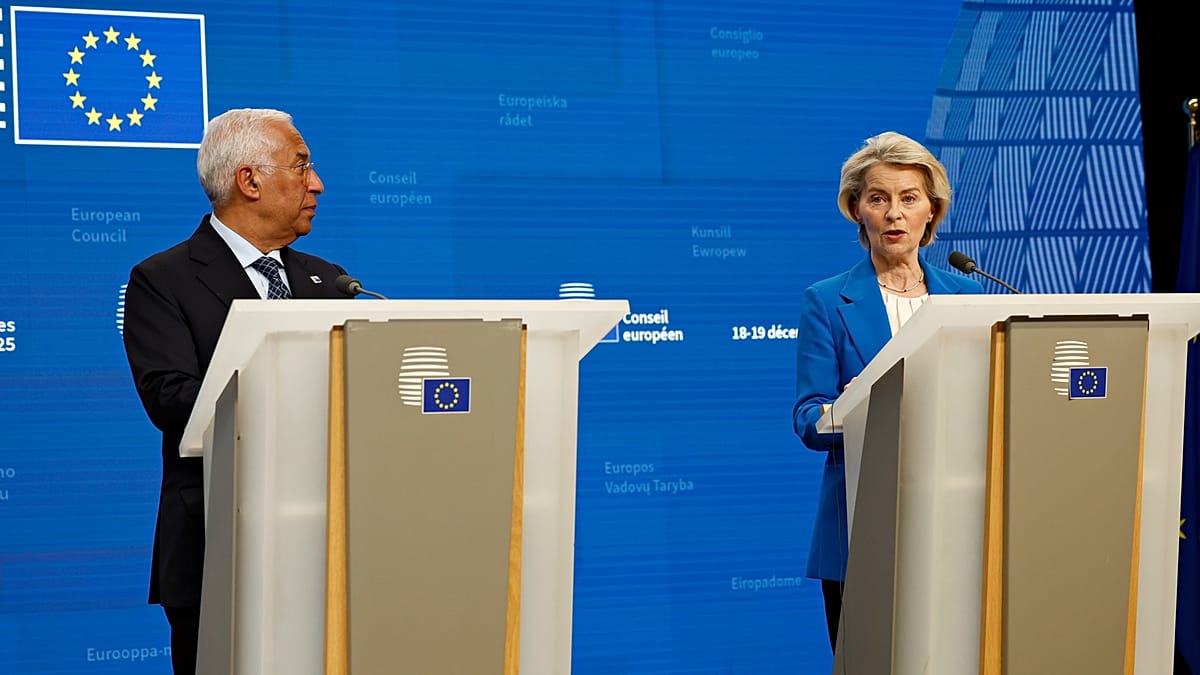
EU Reaches Contentious Deal on ukraine Aid: A Breakdown of the Summit’s fractured Agreement
The European Union has secured a deal to provide ukraine with a crucial €50 billion in financial assistance, but the path to agreement was fraught with division, revealing deep cracks within the bloc and raising questions about the long-term viability of the plan. The agreement, reached at a recent summit, hinges on a complex mechanism involving a loan guaranteed by the EU budget, and features significant exemptions for certain member states, notably Hungary, Slovakia, and the Czech Republic. This analysis delves into the intricacies of the deal, the key players involved, and the potential implications for Ukraine and the future of EU financial policy.
The Core of the Agreement: A Loan with Built-In Safeguards (and Exemptions)
Faced with staunch opposition to directly utilizing frozen Russian assets for immediate Ukrainian aid – a proposal championed by Germany and others – the EU opted for a workaround: issuing common debt backed by future profits generated from those assets. This effectively creates a loan to Ukraine, secured by the potential future revenue stream from approximately €210 billion in frozen Russian central bank funds held within the EU, primarily at Euroclear, a Belgian depository.
However, the agreement wasn’t without its concessions. Hungary, alongside Slovakia and the Czech Republic, successfully negotiated an exemption from any financial liability connected to the loan. This was achieved through an “enhanced cooperation” mechanism, shielding these nations from potential financial repercussions should Ukraine be unable to repay the debt. The official summit conclusions explicitly state that “any mobilisation of resources of the European Union’s budget as a guarantee for this loan will not have an impact on the financial obligations of the Czech republic, Hungary and Slovakia.”
This exemption underscores the delicate political balancing act required to achieve consensus within the EU, and highlights the influence wielded by individual member states. Hungarian Prime Minister Viktor Orbán, a long-time critic of providing substantial aid to Ukraine, publicly expressed skepticism about Ukraine’s ability to repay the loan, characterizing it as “basically losing money.”
Belgium’s Hardline Stance and the Failure of “Uncapped Guarantees”
The summit’s initial focus centered on addressing the concerns of Belgium, specifically regarding potential Russian retaliation stemming from the use of frozen Russian assets. Belgian Prime Minister Bart De Wever adopted a firm negotiating position,demanding “uncapped guarantees” to protect Belgium and Euroclear from any repercussions. This demand, however, proved to be a non-starter.
Multiple countries balked at the prospect of offering unlimited financial protection, deeming it unacceptable and raising concerns about the potential scope of their liabilities.As one diplomat reportedly told Euronews, “Leaders didn’t really know what they woudl end up guaranteeing.” The impasse prompted Orbán to engage in separate discussions with the Prime Ministers of Slovakia (Robert Fico) and the czech Republic (Petr Babiš), ultimately leading to the negotiated exemptions.
De Wever, following the summit, asserted that his country’s stance had been vindicated, emphasizing the importance of smaller and medium-sized member states in shaping EU policy. He argued that the agreement avoided setting a hazardous precedent that could undermine legal certainty globally.He maintains that Russian assets should be used for Ukraine’s reconstruction, but only after the conflict concludes.
A Setback for Germany and a Presentation of EU Sovereignty?
The outcome represents a significant setback for German Chancellor Olaf Scholz, who had forcefully advocated for utilizing the profits from frozen Russian assets to provide Ukraine with immediate financial support. Scholz framed the reparations loan as the “only option” early in the negotiations.
However, German officials attempted to frame the agreement as a demonstration of European sovereignty, highlighting the EU’s ability to issue common debt to address a complex geopolitical challenge.Scholz also emphasized that Russian assets would still serve as collateral for the loan,albeit through a different mechanism than initially proposed.
Looking Ahead: Technical Hurdles and Lingering Uncertainty
Despite the agreement in principle,significant technical and legal challenges remain. EU leaders have tasked the European Commission with refining the details of the reparations loan, but establishing a “landing zone” – a mutually acceptable framework – will be tough given the existing divisions.
The fundamental question of Russia’s potential reparations remains unanswered. There is no guarantee that Russia will ever be compelled to pay for the damage caused by its invasion of Ukraine. The current agreement relies on the future profitability of frozen assets, a factor subject to market fluctuations and potential legal challenges.
expert Analysis: A Pragmatic compromise, But One Fraught with Risk
This agreement is a pragmatic compromise born out of necessity. Ukraine desperately needs financial
Worth a look