
Ukraine Builds Massive New Defensive Line to Counter Potential Russian Offensive
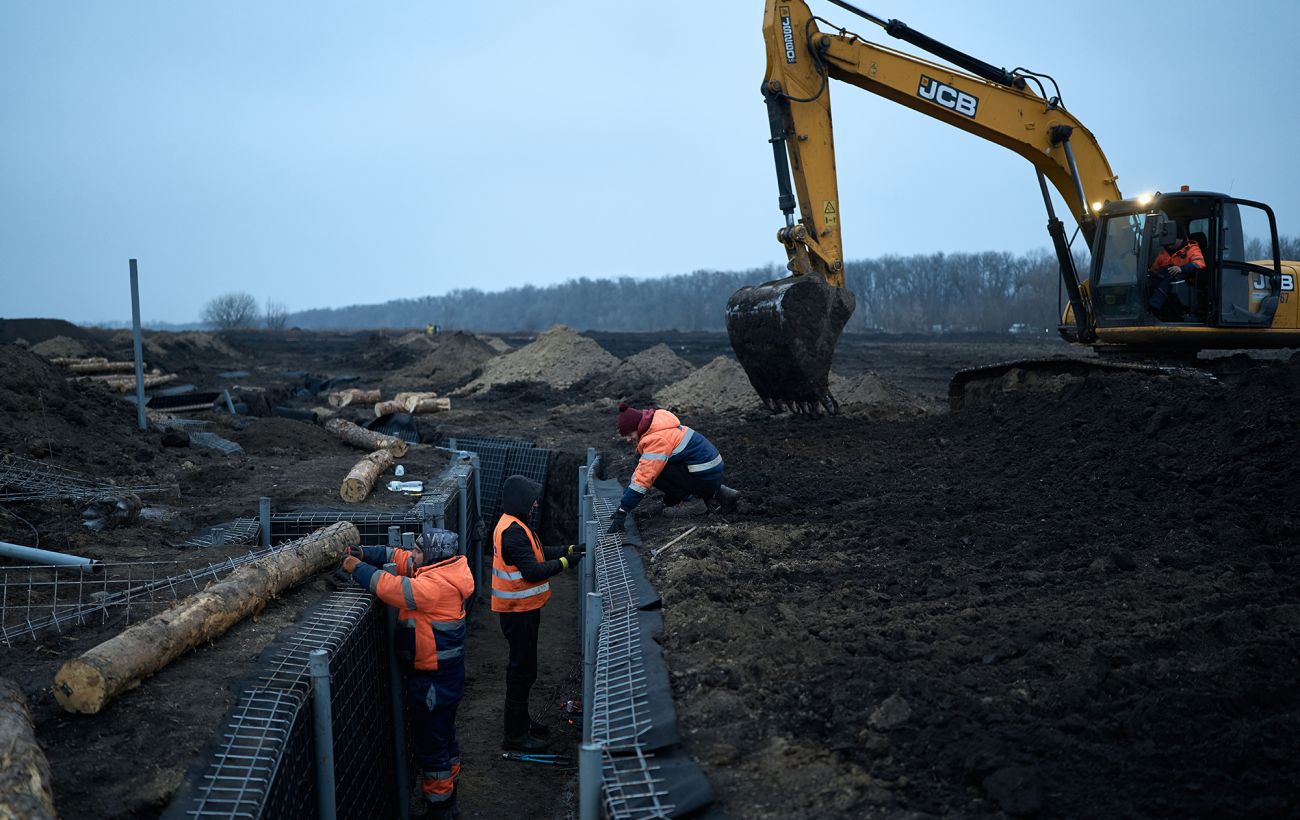
Ukraine is constructing a continuous defensive line stretching over 300 kilometers from the Kyiv Reservoir in the west to the northeastern city of Sumy, according to statements from senior military officials. The fortifications, described as one of the most ambitious engineering projects since the full-scale Russian invasion in 2022, aim to prevent any potential breakthrough along Ukraine’s northern border with Russia and Belarus.

The project, confirmed by Brigadier General Volodymyr Syrotenko of the Ukrainian Armed Forces (UAF), involves a multi-layered system of trenches, anti-tank obstacles, minefields, and reinforced concrete bunkers. Satellite imagery and open-source intelligence reports have already documented sections of the line under construction, particularly near the towns of Chernihiv and Nizhyn, which lie along the projected route.
“What we have is not just a line of fortifications—it’s a strategic barrier designed to channel any potential advance into kill zones where our artillery and drones can operate with maximum efficiency,” Syrotenko told Ukrainian media on Tuesday. The general emphasized that the work is being carried out with urgency, though he did not provide a specific completion date, stating only that efforts are being made to finish “as soon as possible.”
Why Ukraine Is Fortifying Its Northern Border Now
The decision to build the defensive line comes amid growing concerns over a possible Russian offensive in the north, particularly from Belarus, where Moscow has maintained a military presence since the early days of the war. While no large-scale Russian troop movements have been confirmed near the border in recent weeks, Ukrainian intelligence has repeatedly warned that the Kremlin could attempt a diversionary attack to stretch Ukrainian forces thin.
The chosen route—from the Kyiv Reservoir to Sumy—covers a region that saw heavy fighting in the first months of the 2022 invasion. Russian forces advanced toward Kyiv from Belarus via the Chernihiv and Sumy regions before being repelled in a series of counteroffensives. The terrain, which includes dense forests, rivers, and agricultural land, presents both challenges and opportunities for defensive engineering.
Ukrainian military analysts say the fortifications are part of a broader shift toward a more defensive posture as the war enters its third year. After last summer’s failed counteroffensive in the south, Kyiv has prioritized strengthening its frontline positions to prevent territorial losses while conserving manpower and resources. The new line is expected to complement existing defenses around Kharkiv, which remains one of the most heavily shelled cities in Ukraine.
What the Defensive Line Looks Like
While exact details of the fortifications remain classified, open-source reports and satellite imagery provide some insight into the scale and design of the project. The line appears to consist of three main components:
- Forward Obstacles: Anti-tank ditches, dragon’s teeth (pyramidal concrete blocks), and barbed-wire barriers to slow mechanized advances.
- Trench Networks: Deep, interconnected trenches for infantry, equipped with overhead cover to protect against artillery and drone strikes.
- Rear Positions: Reinforced concrete bunkers, artillery firing points, and command centers designed to withstand direct hits from glide bombs and cruise missiles.
Satellite images shared by Maxar Technologies in early April show extensive earthworks near the town of Kozelets, roughly halfway between Kyiv and Chernihiv. Similar activity has been observed near the village of Hremyach, close to the Russian border, where Ukrainian forces have reportedly deployed mobile concrete plants to produce prefabricated fortifications.
In addition to physical barriers, the Ukrainian military is integrating electronic warfare systems and drone detection equipment into the line. These technologies are designed to counter Russia’s growing use of FPV (first-person view) drones and glide bombs, which have become a major threat to Ukrainian positions in recent months.
Who Is Building the Line?
The construction is being led by the Ukrainian Armed Forces’ Engineering Troops, with support from civilian contractors and local volunteers. Brigadier General Syrotenko confirmed that the work is being carried out around the clock, with shifts operating in both daylight and nighttime conditions to avoid Russian drone surveillance.
“We are using a combination of military engineering units, specialized construction firms, and even local residents who have experience in excavation and concrete work,” Syrotenko said in an interview with Dzerkalo Tyzhnia. “This is a national effort, and every kilometer completed brings us closer to security.”
The involvement of civilian contractors has raised concerns about the safety of non-combatants working near the front lines. Ukrainian officials have not disclosed casualty figures among construction crews, but reports from local media suggest that at least two civilian workers were killed in a Russian artillery strike near Sumy in early April.
Strategic Implications: What Does This Mean for the War?
The construction of the defensive line reflects Ukraine’s evolving military strategy as it transitions from large-scale counteroffensives to a more static, defensive posture. After last year’s failed push to break through Russian lines in the south, Kyiv has focused on consolidating its positions, improving air defenses, and preparing for a potential Russian summer offensive.
Military experts say the fortifications could serve multiple purposes:
- Deterrence: A well-prepared defensive line may discourage Russia from attempting a northern offensive, particularly if it requires diverting troops from other active fronts in Donetsk and Kharkiv.
- Force Conservation: By creating a hardened barrier, Ukraine can reduce the number of troops needed to hold the northern front, freeing up units for deployment elsewhere.
- Psychological Impact: The visible construction of fortifications sends a signal to both Ukrainian civilians and Russian forces that Kyiv is preparing for a prolonged conflict.
However, some analysts caution that static defenses have limitations in modern warfare, particularly against an adversary like Russia, which has shown a willingness to sustain heavy casualties in pursuit of incremental gains. “Defensive lines can slow an advance, but they cannot stop it entirely if the attacker is willing to accept high losses,” said Michael Kofman, a senior fellow at the Carnegie Endowment for International Peace, in a recent analysis. “Ukraine’s best defense remains its ability to strike deep behind Russian lines with long-range missiles and drones.”
What Happens Next?
Ukrainian officials have not provided a specific timeline for the completion of the defensive line, but satellite imagery suggests that the most intensive construction is taking place in the Chernihiv and Sumy regions, where the risk of a Russian incursion is perceived to be highest. The military has also prioritized fortifying key transportation hubs, such as the E95 highway, which connects Kyiv to the northern front.
In the coming weeks, Ukraine is expected to continue reinforcing its air defenses, particularly around Kyiv and other major cities. The arrival of additional F-16 fighter jets, promised by Western allies, could further enhance Ukraine’s ability to intercept Russian glide bombs and cruise missiles, which have been used to target both military and civilian infrastructure.
For now, the construction of the defensive line serves as a reminder that the war in Ukraine is far from over. While the front lines have largely stabilized in recent months, both sides are preparing for the possibility of renewed large-scale fighting, with Ukraine betting that its fortifications will facilitate it withstand whatever Russia throws its way.
Key Takeaways
- The Ukrainian Armed Forces are building a continuous defensive line stretching over 300 kilometers from the Kyiv Reservoir to Sumy, near the Russian border.
- The fortifications include anti-tank obstacles, trenches, minefields, and reinforced bunkers, designed to channel and disrupt any potential Russian advance.
- Construction is being led by military engineering units with support from civilian contractors, operating under the threat of Russian drone and artillery strikes.
- The project reflects Ukraine’s shift toward a more defensive strategy, prioritizing the conservation of manpower and resources after last year’s failed counteroffensive.
- While the line may deter a Russian attack, experts warn that static defenses have limitations and that Ukraine’s long-range strike capabilities remain critical to its defense.
As the war enters its third year, the world will be watching to notice whether Ukraine’s fortifications hold—or whether Russia finds a way to breach them. For now, the construction continues, a testament to Kyiv’s determination to defend every inch of its territory.
What are your thoughts on Ukraine’s new defensive line? Do you think it will be enough to deter a Russian offensive? Share your views in the comments below and follow World Today Journal for the latest updates on the war in Ukraine.