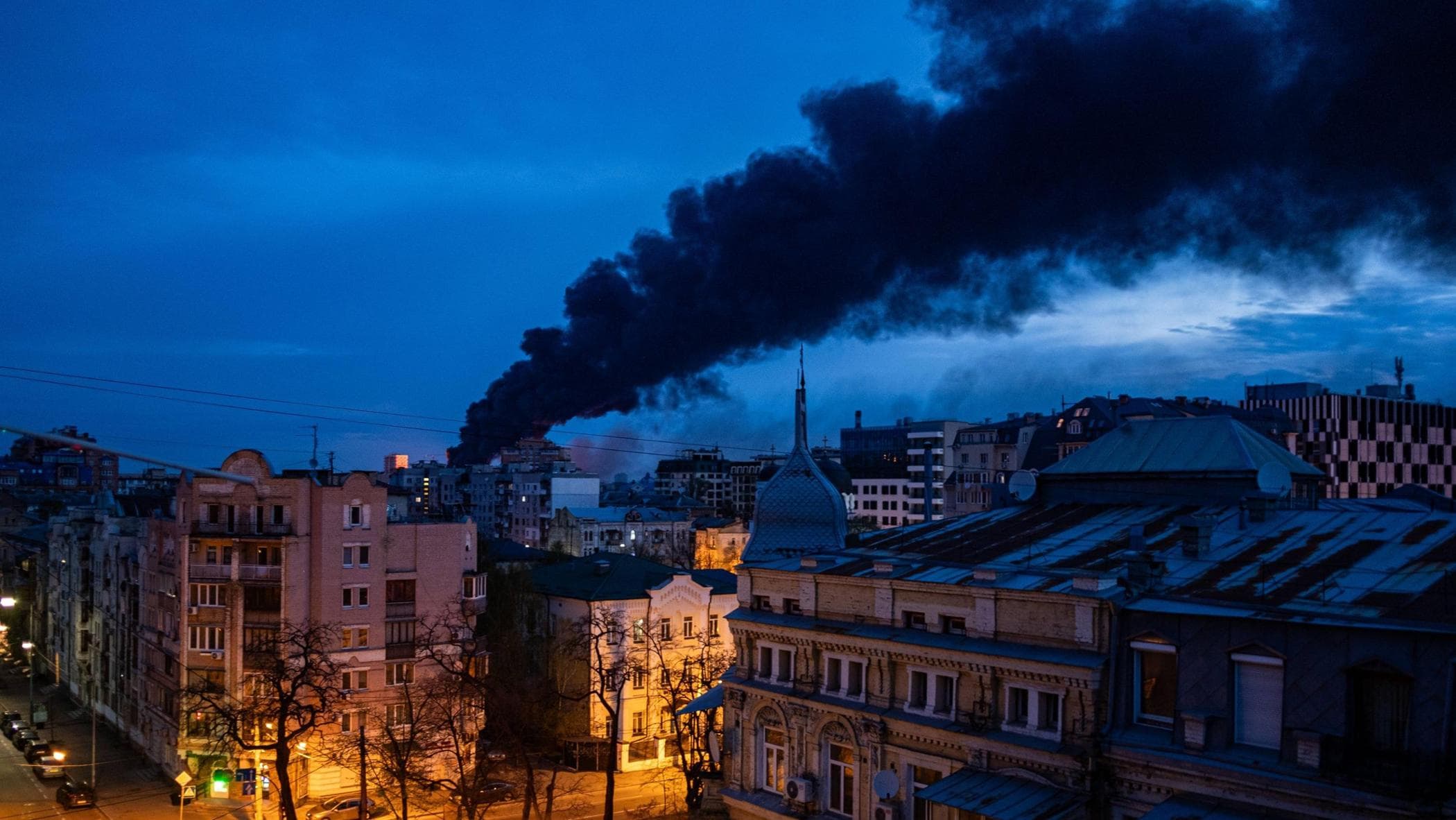
Russian forces launched coordinated missile and drone strikes against multiple Ukrainian cities on Friday, April 17, 2026, targeting critical infrastructure and residential areas in Odessa, Kyiv, and Kharkiv. The attacks, which began in the early morning hours, resulted in significant civilian casualties and widespread damage to energy facilities, according to Ukrainian emergency services and regional authorities. Initial reports from local officials indicated at least 16 fatalities across the three cities, with dozens more injured, though final casualty figures remained pending as rescue operations continued.
In Odessa, a Black Sea port city, strikes hit the city’s power grid and a residential district in the southern outskirts, triggering fires and structural collapses. Emergency responders worked through the night to extract survivors from damaged buildings, while utility crews struggled to restore electricity to over 200,000 households left without power. Kyiv’s air defense systems intercepted several incoming projectiles, but fragments from intercepted drones caused damage to a medical facility in the city’s western sector, prompting evacuation of patients and staff. Kharkiv, located near the active frontline in northeastern Ukraine, experienced the most intense barrage, with multiple impacts reported near transportation hubs and industrial zones.
The assault marked one of the largest coordinated Russian offensives against Ukrainian urban centers in recent weeks, reflecting a sustained pattern of targeting infrastructure ahead of the spring thaw, which typically enables increased military mobility. Ukrainian President Volodymyr Zelenskyy addressed the nation in a televised statement later that day, condemning the attacks as “deliberate terror against civilians” and urging international partners to accelerate delivery of advanced air defense systems. “Every missile that hits a home, a hospital, or a power line is a war crime,” Zelenskyy stated, calling for urgent sanctions on entities supporting Russia’s military-industrial complex.
NATO Secretary General Jens Stoltenberg echoed these concerns during an emergency briefing in Brussels, affirming the alliance’s commitment to Ukraine’s defense while noting that further sanctions on Russian individuals and entities involved in procurement for the war effort were under active discussion. The European Union had previously announced recent restrictions on several Russian oligarchs linked to defense manufacturing, citing their role in sustaining the invasion, though specific names associated with the latest wave of sanctions were not disclosed in the initial announcement.
Humanitarian organizations operating in the affected regions reported increased strain on medical facilities and shelters, particularly in Kharkiv where repeated bombardments have degraded local response capacities over the past year. The International Committee of the Red Cross confirmed it was scaling up emergency supplies to frontline areas, including surgical kits, water purification units, and thermal blankets, though access remained hampered by ongoing security risks. Displacement trends showed a modest uptick in internal movement from Kharkiv and Odessa toward safer western oblasts, though many residents chose to remain in place despite the dangers.
Military analysts observed that the timing of the strikes coincided with Russian efforts to disrupt Ukrainian logistics ahead of anticipated counteroffensive preparations in the south and east. By targeting rail junctions, substations, and fuel depots, Russian forces aim to constrain Ukraine’s ability to move troops and supplies, even as frontline combat remains concentrated in Donetsk and Luhansk oblasts. Satellite imagery reviewed by independent defense experts indicated renewed activity at Russian launch sites in Belgorod and Kursk regions, suggesting sustained capacity for long-range strikes despite reported losses in equipment and personnel.
The Ukrainian government reiterated its call for accelerated delivery of Patriot and NASAMS air defense batteries from Western allies, emphasizing that current systems, while effective, are insufficient to cover the full breadth of urban and industrial zones under threat. Defense officials noted that interception rates remain high—over 70% of incoming threats were neutralized in the April 17 barrage—but that even a minor percentage of successful impacts can cause disproportionate harm when aimed at densely populated areas or critical infrastructure.
As of late Friday evening, Ukrainian authorities had not attributed the strikes to any specific Russian military unit, though patterns of missile types and launch vectors pointed to involvement from both strategic aviation and naval forces operating in the Black Sea. Investigations into the origin of the projectiles were underway, with forensic teams collecting debris from impact sites for analysis. No group claimed responsibility for the attacks, which is consistent with Russia’s typical operational approach in such campaigns.
The broader context of the assault falls within the fourth year of Russia’s full-scale invasion of Ukraine, a conflict that has resulted in tens of thousands of military and civilian deaths, displaced millions, and devastated vast swaths of Ukrainian territory. While frontline advances have stalled in recent months, both sides continue to rely on long-range strikes and drone warfare to exert pressure, particularly targeting energy infrastructure during winter and spring months to maximize disruption.
Looking ahead, the next major development to watch is the scheduled meeting of the Ukraine Defense Contact Group at Ramstein Air Base in Germany, set for the following week. This gathering of over 50 allied nations will review battlefield needs, assess progress on weapons deliveries, and coordinate future security assistance packages. Ukrainian officials are expected to present updated requests for long-range strike capabilities and electronic warfare systems, arguing that such tools are essential to counter Russia’s sustained advantage in artillery and missile range.
For readers seeking real-time updates on the situation in Ukraine, official channels include the Ukrainian Ministry of Defense’s daily briefings, the State Emergency Service’s incident maps, and verified reports from the Office of the President. International monitors such as the Office of the United Nations High Commissioner for Human Rights and the OSCE Special Monitoring Mission continue to document violations of international humanitarian law, though access to active combat zones remains severely restricted.
The resilience of Ukrainian civilians in the face of repeated attacks has drawn global admiration, with communities in Odessa, Kyiv, and Kharkiv organizing volunteer networks to clear debris, distribute supplies, and support displaced neighbors. Local journalists and civil society groups have played a crucial role in documenting the human toll of the war, often operating under dangerous conditions to ensure transparency and accountability.
As the war enters its fifth year, the pattern of targeting cities far from the frontlines underscores a grim reality: no geographic area in Ukraine is immune to the consequences of the conflict. Yet, despite the relentless pressure, Ukrainian institutions continue to function, armed forces maintain defensive lines, and citizens persist in their efforts to rebuild and resist. The international community’s response in the coming weeks—particularly regarding air defense support and sanctions enforcement—will play a decisive role in shaping the trajectory of the war and the prospects for a durable peace.
Stay informed, share verified information, and support credible humanitarian efforts working on the ground. Your awareness and engagement assist amplify the voices of those affected and contribute to a global demand for accountability and peace.
Worth a look