
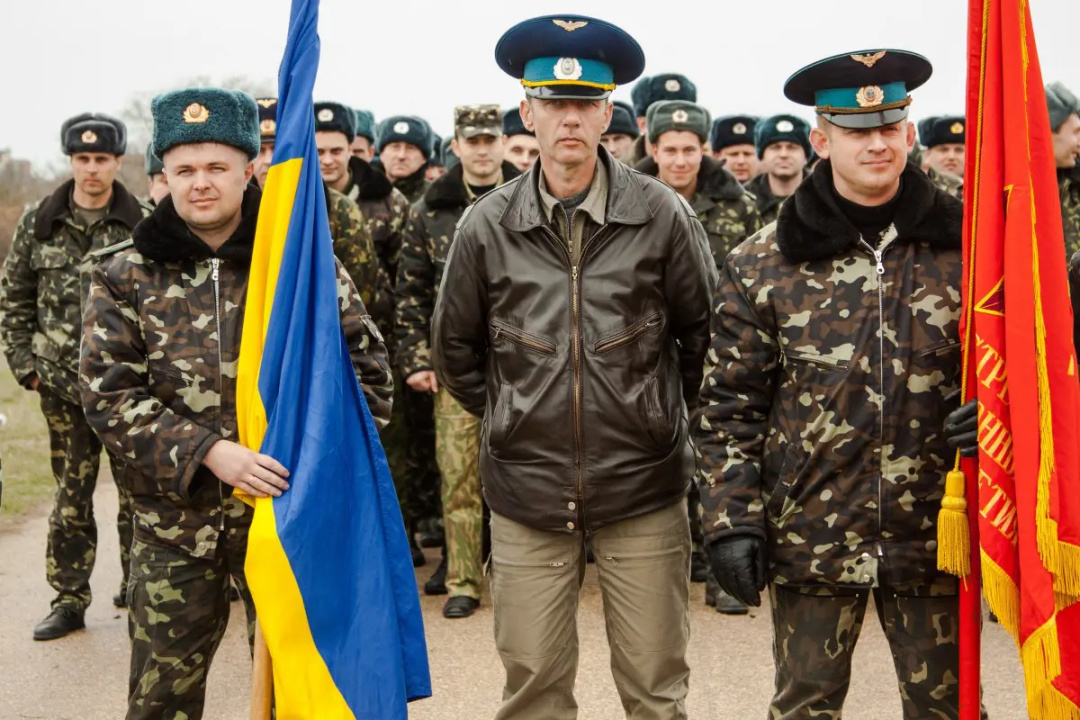
The strategic landscape along the northern border of Ukraine remains one of the most volatile sectors of the ongoing conflict, as Kyiv continues to navigate the precarious relationship between the Armed Forces of Ukraine (AFU) and the Belarusian administration. In a region defined by deep suspicion and the constant threat of escalation, the balance of power is increasingly tied to the arrival of advanced Western weaponry and the diplomatic maneuvering between Washington and Kyiv.
Recent high-level discussions between President Volodymyr Zelensky and U.S. President Joe Biden have underscored a commitment to a “powerful” military aid package designed to bolster Ukraine’s defensive capabilities. Although much of the global focus remains on the eastern and southern fronts, the northern flank—bordering Belarus—represents a critical vulnerability. The persistence of Russian military assets on Belarusian soil ensures that the threat of a secondary front remains a primary concern for Ukrainian military planners.
For the administration of Alexander Lukashenko, Belarus has evolved from a sovereign neighbor into a strategic depth for the Russian Federation. This alignment has placed Minsk in a complex position: providing the logistics and territory necessary for Russian operations while attempting to avoid direct combat involvement that could trigger internal instability or further international isolation. As Ukraine strengthens its border fortifications and integrates new intelligence capabilities, the pressure on the Belarusian leadership to maintain this precarious neutrality increases.
The Strategic Role of Belarus in the Regional Conflict
Since the early stages of the full-scale invasion, Belarus has served as a launchpad and a logistics hub for Russian forces. The presence of Russian tactical aviation and missile systems within Belarusian borders creates a constant state of alert for the AFU. This geopolitical arrangement allows Moscow to pin down significant Ukrainian resources in the north, preventing Kyiv from fully committing its forces to offensive operations in the Donbas or the south.

The relationship between Alexander Lukashenko and Vladimir Putin is characterized by a dependency that has stripped Minsk of much of its diplomatic autonomy. By allowing the deployment of Russian troops and weaponry, Lukashenko has secured his own political survival through Moscow’s support, but at the cost of becoming a primary target for Ukrainian strategic deterrence. The risk of “spillover” effects—where Ukrainian strikes target Russian assets located within Belarus—remains a recurring theme in the security calculations of both nations.
From a tactical perspective, the border region is a complex tapestry of forests, marshes, and fortified lines. The AFU has spent years refining its “active defense” posture here, utilizing a combination of drone surveillance, minefields, and rapid-response units. The goal is not merely to hold the line, but to create a deterrent so formidable that any attempt by Russian or Belarusian forces to breach the perimeter would result in unsustainable losses.
Strengthening the Northern Flank: The Impact of U.S. Military Aid
The “powerful” aid package discussed between President Zelensky and President Biden is not only about replenishing ammunition for the front lines but about enhancing the qualitative edge of the Ukrainian military. For the northern border, this means a greater emphasis on long-range precision strike capabilities and advanced integrated air defense systems (IADS). These tools allow Ukraine to monitor and, if necessary, neutralize threats before they can cross the border.

Enhanced intelligence, surveillance, and reconnaissance (ISR) capabilities provided by Western partners have been pivotal. The ability to track troop movements in real-time within Belarusian territory allows the AFU to shift reserves dynamically, ensuring that no single point of the border is left undefended. This “transparent battlefield” significantly reduces the possibility of a surprise offensive, which was a hallmark of the initial 2022 incursions.
the provision of advanced artillery and missile systems enables Ukraine to project power deeper into the rear of any potential invading force. By targeting logistics hubs, fuel depots, and command centers, the AFU can disrupt the flow of Russian supplies through Belarus, effectively turning the “strategic depth” provided by Minsk into a liability for the Russian military. This capability is a cornerstone of Ukraine’s strategy to maintain stability on its northern perimeter.
The Political Calculus of Alexander Lukashenko
Alexander Lukashenko finds himself in an increasingly narrow political corridor. While he remains a steadfast ally of the Kremlin, the domestic cost of this alliance is mounting. The Belarusian population remains largely divided on the war, and the presence of foreign troops on home soil is a point of contention for many. The risk of a domestic uprising, coupled with the threat of Ukrainian strikes on military infrastructure, creates a volatile environment within Belarus.
Lukashenko’s rhetoric often fluctuates between aggressive threats against Kyiv and tentative hints at a desire for stability. However, these statements are often viewed by international observers as performances intended for a domestic audience or as leverage in negotiations with Moscow. The reality is that as long as Russian forces utilize Belarus as a staging ground, the Belarusian government remains inextricably linked to the outcomes of the war.
The international community has responded to this alignment with a series of stringent sanctions. These measures have targeted the Belarusian financial sector, key industries, and the ruling elite, further isolating Minsk from the global economy. The objective of these sanctions is to increase the cost of Lukashenko’s cooperation with Russia, potentially creating a window for political shift or a reduction in Belarus’s military involvement.
Security Implications for Eastern Europe and NATO
The tension on the Ukraine-Belarus border is not merely a bilateral issue; it has profound implications for the security of the entire NATO eastern flank. Poland, Lithuania, and Latvia have significantly increased their military presence along their borders with Belarus, fearing that the instability in the region could lead to “hybrid warfare” tactics, such as the weaponization of migration or localized border skirmishes.

The coordination between Ukraine and its NATO allies is essential for maintaining a regional deterrent. The flow of intelligence and the synchronization of defensive postures ensure that any escalation in the north is met with a unified response. The integration of Ukrainian air defense into a broader European security framework is a key goal, as it prevents the creation of “blind spots” that could be exploited by Russian aviation operating from Belarus.
As the conflict evolves, the role of Belarus may shift from a passive logistics hub to a more active participant, or conversely, it may drift toward a cautious neutrality if the political cost becomes too high. Regardless of the outcome, the northern border will remain a focal point of geopolitical tension, requiring constant vigilance and a steady stream of military and diplomatic support for Ukraine.
Key Takeaways for Global Observers
- Strategic Vulnerability: The northern border remains a critical flank for Ukraine due to the presence of Russian military assets in Belarus.
- U.S. Support: Recent discussions between Biden and Zelensky focus on a robust aid package to enhance Ukrainian deterrence and precision-strike capabilities.
- Lukashenko’s Dilemma: The Belarusian leadership is caught between total dependency on Russia and the risk of domestic instability and Ukrainian retaliation.
- Regional Impact: Instability in Belarus directly affects the security of NATO’s eastern flank, prompting increased military readiness in Poland and the Baltics.
- Deterrence Strategy: Ukraine’s “active defense” combines ISR technology, fortifications, and long-range weaponry to prevent a second front from opening.
The trajectory of the conflict will depend heavily on whether the Russian-Belarusian axis can sustain its logistical efforts and whether Ukraine can maintain the necessary resources to secure its entire perimeter. The ongoing commitment of the United States and its allies remains the primary counterbalance to the strategic pressures exerted by the Minsk-Moscow alliance.
The next critical checkpoint for international observers will be the formal announcement and delivery schedule of the new military aid package, which is expected to provide more clarity on the specific systems being deployed to the northern sector. We will continue to monitor official statements from the White House and the Ukrainian Ministry of Defense for further updates.
What are your thoughts on the strategic importance of the northern border in the current conflict? Share your perspective in the comments below or share this analysis with your network.