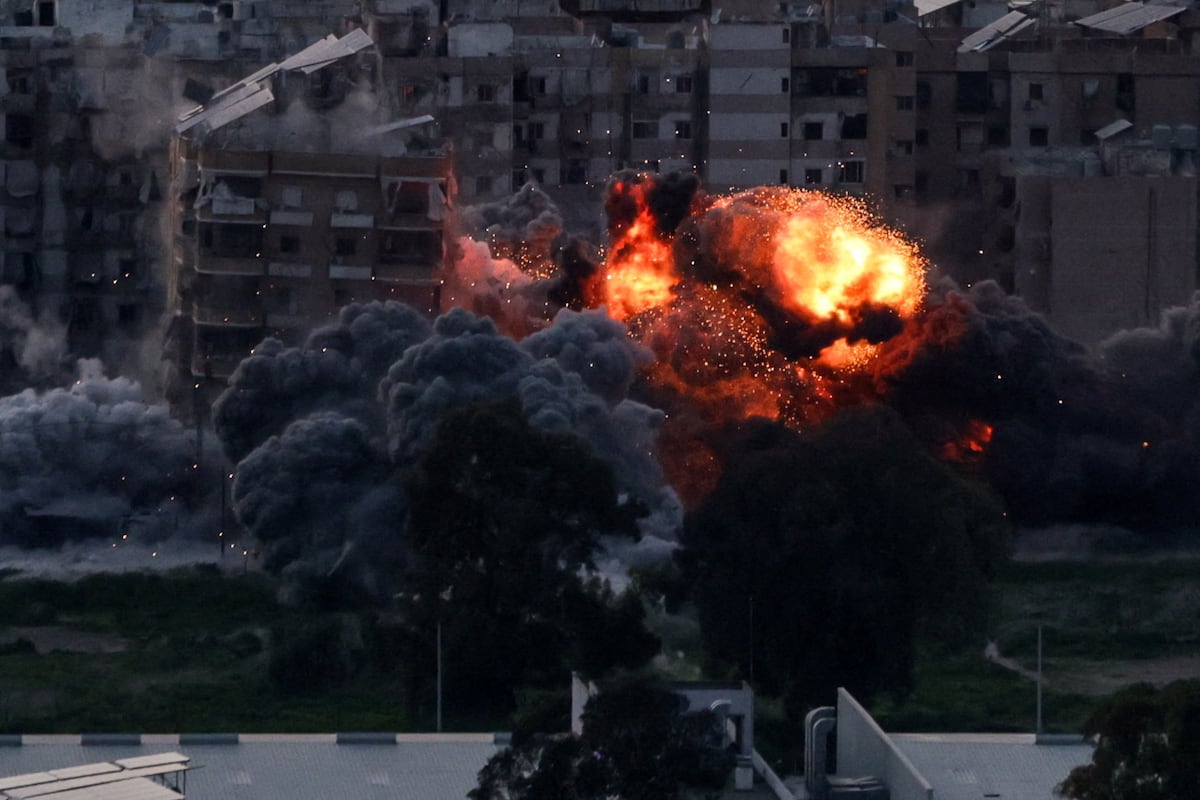
New York – The United States and Israel are facing mounting international scrutiny following a series of strikes against targets in Iran, sparking a heated debate at the United Nations Security Council. The escalating tensions, coupled with reports of civilian casualties, have prompted calls for de-escalation and a return to diplomatic solutions. The core issue revolves around concerns over Iran’s nuclear program and its regional influence, with Washington and Jerusalem asserting their actions were necessary to prevent Tehran from acquiring nuclear weapons capabilities and destabilizing the region. This latest confrontation underscores the fragility of peace in the Middle East and the complex geopolitical dynamics at play.
The emergency session of the UN Security Council on Saturday saw a stark divide between the U.S. And Israel, who defended their actions, and Iran, which condemned the strikes as a violation of international law. U.S. Ambassador to the UN, Mike Waltz, argued that the operation aimed to dismantle Iran’s ballistic capabilities, degrade its naval assets, and disrupt its support for proxy militias, ultimately preventing the development of a nuclear weapon. Israel’s Ambassador Danny Danon echoed these sentiments, stating that Israel acted to prevent an “irreversible threat.” The situation is further complicated by the ongoing conflicts in the region and the potential for wider escalation.
UN Security Council Confrontation
The meeting at the UN Security Council, held on February 28, 2026, highlighted the deep divisions surrounding the recent military actions. According to reports from the Associated Press, Secretary-General António Guterres urged all parties to avoid further escalation, warning of potentially devastating consequences for civilians and regional stability. Guterres indicated that the aerial attacks by the U.S. And Israel violated international law, including the UN Charter, while too condemning Iran’s retaliatory strikes against neighboring countries.
Amir-Saeid Iravani, Iran’s representative to the UN, vehemently denounced the attacks as “an act of aggression, a crime of war, and a crime against humanity,” vowing that Iran would continue to exercise its right to self-defense. He called on the Security Council to act decisively to halt the aggression, accusing the council of complicity through its silence. The exchange underscored the lack of consensus within the international community regarding the legitimacy of the military actions and the path forward.
Allegations of Civilian Casualties and Investigation Demands
Amidst the diplomatic clashes, serious allegations have emerged regarding civilian casualties resulting from the strikes. Reports indicate that a school in the Iranian province of Minap was struck, resulting in a significant loss of life, particularly among students. According to initial reports from Iranian authorities, over 180 people were killed, with at least 165 of the victims being young girls. These reports, however, remain hard to independently verify.
The UN High Commissioner for Human Rights, Volker Türk, has urgently called for a “rapid, transparent, and impartial” investigation into the bombing of the Shajareh Tayyebeh school. Türk emphasized the need for accountability and reparations for the victims. The U.S. Has reportedly announced an investigation, but details remain scarce. The incident has fueled international outrage and intensified calls for a ceasefire and a renewed focus on diplomatic solutions.
Conflicting Accounts of Responsibility
The question of responsibility for the school bombing remains contentious. While Iranian authorities have directly blamed the U.S. For the attack, U.S. Defense Secretary Pete Hegseth initially denied any U.S. Involvement, stating that the U.S. Military “never fires on civilians.” However, investigations by the U.S. Military reportedly suggested that the attack was likely carried out by U.S. Aircraft, although this conclusion was not definitive at the time of Hegseth’s statement. This discrepancy in accounts has further complicated the situation and raised concerns about transparency.
U.S. Justification and Iran’s Response
The U.S. Maintains that its actions are legitimate responses to Iran’s continued pursuit of advanced missile capabilities and its refusal to abandon its nuclear ambitions, despite diplomatic opportunities. Ambassador Waltz stated that the operation was specifically designed to dismantle threats posed by Iran to its allies and prevent the development of a nuclear weapon. This justification reflects a long-standing U.S. Policy of containing Iran’s regional influence and preventing it from acquiring nuclear weapons.
Iran, however, views the strikes as a blatant act of aggression and a violation of its sovereignty. Ambassador Iravani reiterated Iran’s commitment to exercising its right to self-defense and warned that it would respond firmly to any further aggression. The exchange highlights the fundamental disagreement between the two countries regarding the legitimacy of the military actions and the underlying causes of the conflict. Iran has consistently maintained that its nuclear program is for peaceful purposes and has accused the U.S. And Israel of seeking to destabilize the region.
Trump’s Involvement and Arms Production
Adding another layer to the unfolding crisis, reports indicate that former U.S. President Donald Trump has reportedly reached an agreement with defense companies to accelerate arms production. While details remain limited, this move suggests a potential escalation of military involvement and a commitment to bolstering U.S. Capabilities in the region. This development raises concerns about a potential arms race and the long-term implications for regional stability.
The Broader Regional Implications
The recent escalation between the U.S., Israel, and Iran has far-reaching implications for the broader Middle East region. The potential for a wider conflict remains a significant concern, with the risk of drawing in other regional actors. The attacks have already heightened tensions in countries such as Lebanon, Syria, and Yemen, where Iran has significant influence. The disruption of maritime traffic in the Persian Gulf and the Red Sea could also have a significant impact on global energy markets.
The crisis also underscores the limitations of diplomacy in resolving the long-standing conflicts in the region. Despite numerous attempts at negotiation, a lasting solution to the Iranian nuclear issue and the broader regional tensions remains elusive. The current escalation may further erode trust and make it even more difficult to resume meaningful dialogue.
The international community faces a critical juncture in addressing the escalating crisis. A concerted effort to de-escalate tensions, promote dialogue, and address the underlying causes of the conflict is urgently needed. Failure to do so could have catastrophic consequences for the region and beyond.
As of March 6, 2026, the UN Security Council is expected to hold another emergency session next week to discuss the latest developments and explore potential avenues for de-escalation. The international community awaits further updates on the investigation into the school bombing and the implementation of any measures to protect civilians. The situation remains fluid and requires close monitoring.
What are your thoughts on the escalating tensions in the Middle East? Share your comments below and assist us continue the conversation.
Keep reading
- How Kumamoto Built a Disaster-Resilient Future After Deadly Earthquakes
- Bringing Paris and London’s Winter Festivals to Korea: A Critique
- Iran School Attack: Was the US Strike a War Crime? (newsdirectory3.com)
- Insurance Company Sues Restaurant Owner For Refund After Fire Investigation (world-today-news.com)