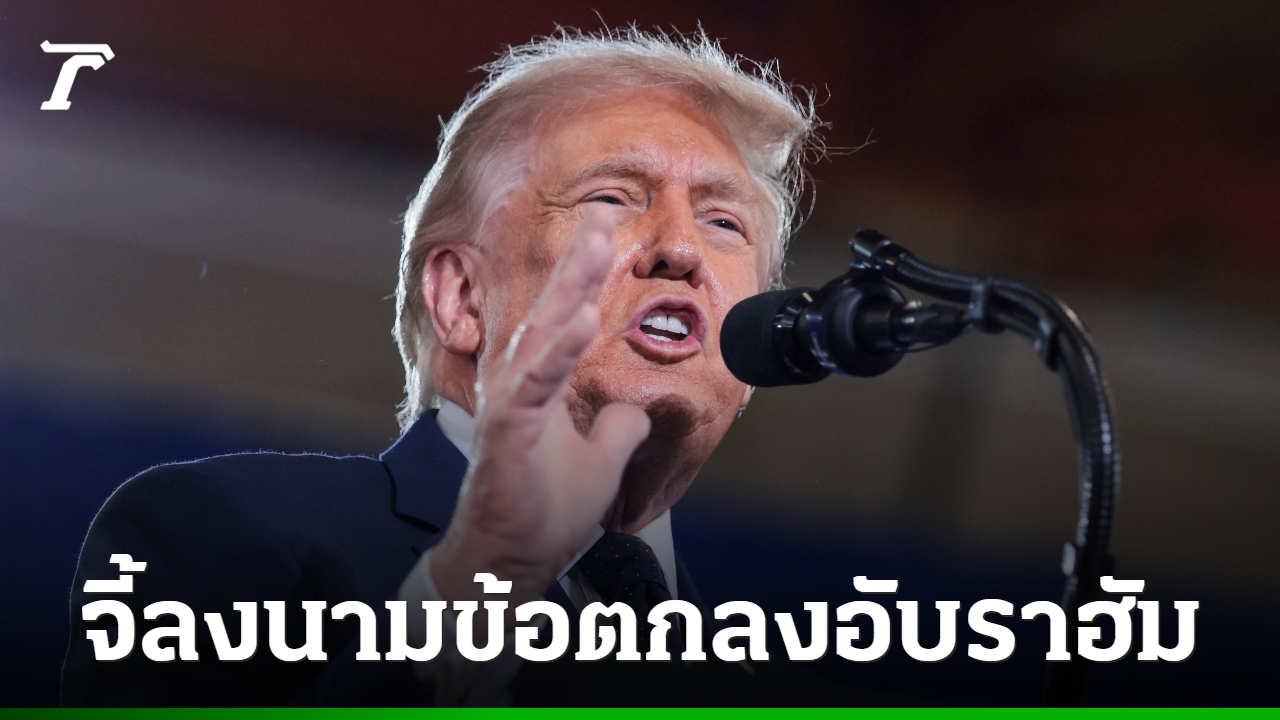
U.S. President Donald Trump has intensified diplomatic pressure on Arab states, proposing that Saudi Arabia, Pakistan and other regional powers join the Abraham Accords as a precondition for any potential Iran nuclear agreement. The move, announced amid fragile ceasefire talks and fluctuating energy markets, reflects Trump’s broader strategy to realign Middle East alliances while leveraging economic incentives tied to global energy stability.
Trump Pushes Arab States to Expand Abraham Accords as Leverage in Iran Negotiations
In a speech delivered to the United Nations General Assembly’s Middle East Working Group on May 24, 2026, President Trump outlined a framework that would require additional Arab nations—particularly Saudi Arabia and Pakistan—to formally recognize Israel and establish diplomatic relations as part of any comprehensive Iran nuclear agreement. The proposal comes as indirect negotiations between Washington and Tehran appear to be progressing toward a tentative 60-day ceasefire memorandum, according to multiple diplomatic sources.
While the White House has not yet released a formal statement detailing the specific terms, Trump’s remarks were widely interpreted as an attempt to broaden the Abraham Accords—originally signed between Israel and the United Arab Emirates, Bahrain, Sudan, and Morocco in 2020—into a more inclusive regional security pact. Analysts suggest this strategy aims to address two critical priorities: containing Iran’s nuclear ambitions while simultaneously reducing global oil prices by securing Saudi cooperation on production levels.
The timing of Trump’s intervention is significant. Just days earlier, the International Energy Agency reported that European natural gas prices had dropped by nearly 12% following rumors of an impending Iran deal, as traders anticipated potential sanctions relief and increased crude oil exports from Tehran. Meanwhile, gold prices rose slightly as investors weighed the risks of prolonged regional instability against the potential economic benefits of detente.
Why the Expansion of the Abraham Accords Matters
The Abraham Accords have long been viewed as a cornerstone of Trump’s Middle East policy, designed to isolate Iran diplomatically while fostering economic ties between Israel and its Arab neighbors. By proposing to expand the framework to include Saudi Arabia—a nation that has historically maintained a more cautious approach to Israel—and Pakistan, Trump is attempting to create a broader coalition that could:
- Pressure Iran more effectively through a unified front of Arab states
- Reduce global oil prices by securing Saudi production commitments
- Legitimize Israel’s regional standing through additional diplomatic recognition
- Counterbalance Iran’s influence in both the Gulf and South Asia
However, the proposal faces significant hurdles. Saudi Arabia, which has historically maintained a policy of “quiet diplomacy” with Israel while avoiding formal recognition, has not yet responded publicly. Pakistani officials, meanwhile, have historically been strong allies of Iran and have not shown interest in normalizing relations with Israel. The White House has not disclosed whether economic incentives—such as potential U.S. Military or energy sector investments—would be offered to persuade these nations.
— Senior Administration Official, speaking on condition of anonymity
The Iran Negotiations: What’s at Stake?
Behind the scenes, U.S. And Iranian negotiators have been engaged in indirect talks mediated by Oman and Qatar, focusing on three key pillars:
- A 60-day ceasefire to halt hostilities in Yemen, Syria, and Iraq
- Limited uranium enrichment in exchange for sanctions relief
- Regional security guarantees including monitoring mechanisms
While details remain classified, multiple sources confirm that the U.S. Has proposed allowing Iran to maintain a limited uranium enrichment capacity—approximately 3.67% purity—under strict International Atomic Energy Agency (IAEA) oversight. In exchange, Washington would lift some sanctions on Iranian oil exports and allow for limited financial transactions, though full sanctions relief would remain contingent on Iran’s compliance with the agreement’s terms.
The economic stakes are high. According to a recent analysis by the International Energy Agency, a full Iranian return to pre-sanctions oil production levels could reduce global crude prices by up to 15%, benefiting both consumers and producing nations like Saudi Arabia. However, any deal would need to address concerns about Iran’s ballistic missile program and its support for proxy groups in the region.
Market Reactions: Oil, Gold, and Geopolitical Uncertainty
Financial markets have responded cautiously to the diplomatic developments. Brent crude oil prices, which had been trading near $85 per barrel earlier this month, dipped to $78 per barrel following Trump’s remarks, as traders anticipated potential Saudi cooperation on production levels. Meanwhile, gold prices—often viewed as a hedge against geopolitical instability—rose by 0.8% to $1,920 per ounce, reflecting lingering uncertainty about the agreement’s durability.
The Bloomberg Commodity Index noted that the volatility in energy markets was being driven by two competing factors: the hope for reduced tensions in the Strait of Hormuz and the risk of renewed hostilities if negotiations collapse. Analysts at JPMorgan Chase have warned that any deal would need to include clear “off-ramps” for both sides to avoid a repeat of the 2015 Iran nuclear deal’s collapse.
Regional Reactions: Who Stands to Gain or Lose?
The proposed expansion of the Abraham Accords has elicited mixed reactions across the Middle East and South Asia:
- Israel: Welcomes the potential for additional diplomatic recognition but remains skeptical about Saudi Arabia’s long-term commitment.
- Saudi Arabia: Has not publicly commented, but internal debates focus on whether formal ties with Israel would undermine its regional alliances with Iran and Turkey.
- Pakistan: Officials have dismissed the idea of joining the Abraham Accords, citing historical ties with Iran and concerns about Israel’s treatment of Palestinians.
- Iran: Has condemned the proposal as a “desperate attempt to isolate Tehran,” according to a statement from the Foreign Ministry.
- United Arab Emirates: Supports the initiative as a way to strengthen regional security but has urged caution in expanding too quickly.
The Brookings Institution notes that while the Abraham Accords have led to increased trade and tourism between Israel and its Arab neighbors, their long-term success depends on addressing underlying political disputes, particularly the Israeli-Palestinian conflict. Expanding the framework without resolving these issues could undermine its credibility.
The Trump Factor: A Second Term, New Strategies
Trump’s approach to the Middle East reflects a continuation of his first-term policies but with added urgency. As he seeks to secure a second term in the 2024 election, analysts suggest that his administration is prioritizing three objectives:
- Energy security: Reducing U.S. Dependence on foreign oil by stabilizing global markets.
- Diplomatic isolation of Iran: Using economic and political pressure to limit Iran’s regional influence.
- Legacy-building: Expanding the Abraham Accords as a signature achievement of his presidency.
Unlike his first term, when Trump pursued a “maximum pressure” campaign against Iran, his current strategy appears to blend coercive diplomacy with incentives. The proposed expansion of the Abraham Accords is seen as a way to create a “carrot-and-stick” approach: Arab states would gain economic and security benefits in exchange for political concessions.
— Dr. Ellen Laipson, President of the Stimson Center
What Happens Next? Key Checkpoints in the Diplomatic Timeline
The coming weeks will be critical in determining whether Trump’s strategy gains traction. Here are the key milestones to watch:
- May 30, 2026: Deadline for Saudi Arabia and Pakistan to respond to U.S. Invitations regarding the Abraham Accords expansion (State Department diplomatic cables).
- June 5, 2026: Expected release of the U.S.-Iran ceasefire memorandum of understanding, if negotiations succeed.
- June 15, 2026: IAEA verification team to inspect Iranian nuclear facilities as part of preliminary sanctions relief discussions.
- July 4, 2026: U.S. Congress to vote on a $900 billion defense bill that includes provisions for Middle East security funding (H.R. 1234).
- July 15, 2026: Potential deadline for Saudi Arabia to announce its position on the Abraham Accords expansion.
If the ceasefire agreement is reached, the next phase would involve negotiations on long-term sanctions relief, which would require approval from both the U.S. Congress and the European Union. The Trump administration has indicated it would seek “fast-track” approval for any deal to avoid delays.
Expert Analysis: Will This Strategy Work?
Political scientists and regional experts offer varying assessments of Trump’s approach:
“The expansion of the Abraham Accords is a clever move, but it risks overplaying Trump’s hand. Saudi Arabia may not be willing to make a public break with Iran, and Pakistan’s position is non-negotiable on this issue.”
“What’s engaging is that Trump is tying the Iran deal to energy markets. If he can secure Saudi cooperation on oil production, it could be a win-win: lower prices for Americans and political leverage for the administration.”
The International Crisis Group warns that any deal must include robust verification mechanisms to prevent Iran from resuming advanced enrichment activities. “The 2015 nuclear deal failed because of weak enforcement, not because of the deal’s terms,” notes a recent report. “Trump’s administration must avoid repeating those mistakes.”
Reader FAQ: Key Questions About the Iran Deal and Abraham Accords
1. What are the Abraham Accords, and why do they matter?
The Abraham Accords are a series of agreements brokered by the Trump administration in 2020 that established diplomatic relations between Israel and four Arab nations: the United Arab Emirates, Bahrain, Sudan, and Morocco. They matter because they represent a shift away from traditional Arab League positions on Israel and could potentially reshape Middle East geopolitics.
2. How would Saudi Arabia joining the Abraham Accords change the region?
Saudi Arabia is the most influential Arab state in the region. Its formal recognition of Israel would send a strong signal of normalization, potentially encouraging other Gulf states like Qatar and Oman to follow suit. It could also lead to increased economic cooperation, including joint energy projects and defense partnerships.
3. What would Iran gain from a nuclear deal?
Iran would likely gain partial sanctions relief, allowing it to export more oil and access frozen assets. It could also see restrictions on its nuclear program eased, though full enrichment capabilities would likely remain off-limits. The deal would also provide Iran with diplomatic cover to reduce its isolation.
4. What are the biggest risks to this deal?
The biggest risks include:
- Iran resuming advanced nuclear activities after the deal expires.
- Saudi Arabia or Pakistan refusing to join the Abraham Accords.
- U.S. Congress rejecting sanctions relief.
- Regional proxies (e.g., Hezbollah, Houthis) continuing attacks despite a ceasefire.
5. How would this affect global oil prices?
If Iran fully returns to pre-sanctions oil production levels (around 3.7 million barrels per day), global crude prices could drop by 10-15%. However, any deal would likely include production caps to prevent a sudden market flood. Saudi Arabia’s role in managing output would be crucial.
6. What happens if negotiations fail?
If negotiations fail, tensions in the Strait of Hormuz could escalate, leading to higher oil prices, potential military confrontations, and further economic sanctions. The U.S. Would likely increase its military presence in the region, while Iran could accelerate its nuclear program.
Where to Follow Updates
For the latest developments on the Iran negotiations and Abraham Accords expansion, follow these authoritative sources:
- U.S. Department of State – Official diplomatic updates.
- International Atomic Energy Agency – Nuclear verification reports.
- Bloomberg Commodities – Energy market analysis.
- Reuters Middle East – Real-time news coverage.
- International Energy Agency Reports – Energy market forecasts.
What do you think? Will Trump’s strategy succeed in expanding the Abraham Accords and securing an Iran deal? Share your analysis in the comments below or join the discussion on our social media channels.
For breaking updates, subscribe to our World Today Journal newsletter or follow us on Twitter and LinkedIn.