
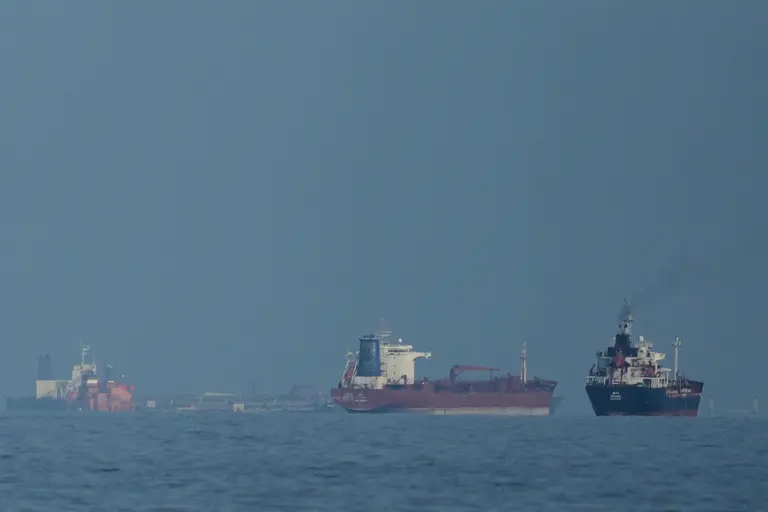
In a dramatic escalation of the ongoing conflict, President Donald Trump has ordered the United States Navy to implement a comprehensive naval blockade of all Iranian ports, a move that took effect at 10 a.m. Miami time on Monday, April 13, 2026. The directive, issued via the United States Central Command (CENTCOM), aims to stifle the flow of cash to Tehran by cutting off its energy trade, marking one of the most aggressive maritime strategies employed since the war between the United States, Israel, and Iran began on February 28 BBC News.
The blockade is not limited to the narrow waters of the Strait of Hormuz; it extends to the entirety of the Iranian coastline. According to CENTCOM, the operation covers all Iranian ports and encompasses vessels of any flag operating in the Gulf of Oman and the Arabian Sea to the east of the Strait BBC News. Any vessel attempting to enter or exit the blocked zone without official authorization is now subject to interception, diversion, or capture.
This strategic maneuver follows the collapse of high-level diplomatic negotiations in Pakistan over the weekend. President Trump stated that the talks failed because the Iranian government remained unwilling to renounce its nuclear ambitions BBC News. Even as the U.S. Administration maintains that the blockade is a necessary tool for pressure, Tehran has denounced the action as illegal, with Iranian officials describing the move as an act of piracy.
As we monitor these developments from our newsroom, the immediate concern for the global community is the stability of energy markets. The Strait of Hormuz is a critical artery for the world’s oil supply; prior to the outbreak of hostilities, approximately 130 ships transited the passage daily CNN Español. With the U.S. Navy now asserting control over these waters, the risk of direct naval engagement has reached a critical threshold.
The Scope and Mechanics of the Naval Blockade
The current naval operation is designed to maximize economic pressure on the Iranian regime by “strangling” its primary source of revenue: energy exports CNN Español. The blockade applies to all Iranian ports, whether they are located within the Strait of Hormuz or along the broader coastline. This ensures that no energy shipments can depart Iranian territory without U.S. Oversight.

Beyond the ports, President Trump has expanded the mission to target vessels in international waters. He specifically instructed the Navy to locate and intercept any ships that have paid “tolls” to Iran in exchange for safe passage CNN Español. By declaring these payments illegal, the U.S. Is effectively removing the safety guarantees Tehran previously offered to neutral shipping, signaling that no vessel paying the Iranian regime will have “safe passage on the high seas.”
Despite the severity of the restrictions, the U.S. Government has carved out a narrow exception for humanitarian aid. Shipments of food and medical supplies are permitted to pass, though they remain subject to mandatory inspections by U.S. Forces BBC News.
Clearing the Strait: The Mine Crisis
A primary objective of the U.S. Navy, alongside the blockade, is the physical securing of the Strait of Hormuz. Since the start of the war, Iran has exerted significant control over the passage, partly through the deployment of naval mines. President Trump announced on Saturday that the Navy had already begun operations to desmine the strait CNN Español.
The removal of these mines is considered an arduous but essential task to resolve the global energy crisis triggered by the conflict. The U.S. Strategy is to clear the waterway of Iranian explosives to allow non-Iranian shipping to move freely, while simultaneously ensuring that Iranian vessels remain locked in their ports CNN Español. This “selective permeability” is intended to isolate Iran economically while attempting to stabilize international oil flows.
Tehran’s Response and Regional Threats
The Iranian government has reacted with fierce condemnation. A spokesperson for the Iranian Ministry of Foreign Affairs attributed the escalation to “excessive demands and illegal requests” made by the United States during the failed negotiations BBC News.
Lieutenant Colonel Ebrahim Zolfaqari, a spokesperson for the Iranian armed forces, has explicitly warned that the blockade is illegal and “equivalent to piracy” El País. Zolfaqari further cautioned that if Iranian ports are threatened, “no port in the Persian Gulf or the Gulf of Oman would remain safe,” suggesting that Iran may target the ports of neighboring Middle Eastern nations in retaliation El País.
Adding to the tension, the Islamic Revolutionary Guard Corps (IRGC) has issued a direct warning to foreign militaries. The IRGC stated that any military vessels approaching the strait will be “severely sanctioned,” a phrasing that indicates a readiness to engage in direct combat with U.S. And allied warships BBC News.
Diplomatic Deadlock and Allied Coordination
The move toward a total blockade follows a weekend of failed diplomacy. The collapse of the talks in Pakistan has left the U.S. And Iran with few remaining channels for peaceful resolution. However, President Trump claimed on Monday that Iran “called this morning” to attempt to reach an agreement immediately after the blockade went into effect El País.
Israel has signaled its full support for the U.S. Strategy. Prime Minister Benjamin Netanyahu backed the decision to impose these maritime restrictions, highlighting the “constant coordination” between the two allies El País. Netanyahu noted that while a ceasefire in Iran could be a possibility, the situation can “change course in an instant.”
The conflict is also spilling over into regional diplomacy. In Lebanon, the militant group Hezbollah has urged the Lebanese government to cancel a meeting scheduled for Tuesday with Israel to negotiate a ceasefire El País. This suggests that the naval blockade in the Gulf is intensifying tensions across the entire Levant.
Key Summary of the Blockade Terms
| Parameter | Detail |
|---|---|
| Effective Time | 10:00 a.m. Miami time, Monday, April 13 |
| Geographic Scope | All Iranian ports, Gulf of Oman, and Arabian Sea east of Hormuz |
| Targeted Vessels | Any flag; specifically ships paying “tolls” to Iran |
| Exemptions | Humanitarian aid (food/medical), subject to inspection |
| Primary Goals | Strangle energy cash flow and clear naval mines |
The international community now watches to observe if Tehran’s reported attempt to reopen negotiations will lead to a diplomatic breakthrough or if the threat to Middle Eastern ports will trigger a wider regional maritime war. The next critical checkpoint will be the Lebanese government’s decision regarding its scheduled meeting with Israel on Tuesday, which may serve as a bellwether for the broader regional appetite for a ceasefire.
World Today Journal will continue to provide updates as this situation evolves. We invite our readers to share their perspectives in the comments below and share this report to keep others informed.