The Shifting Sands of U.S.-Saudi Relations: Strategic convergence Without Normalization in a Post-gaza Middle East
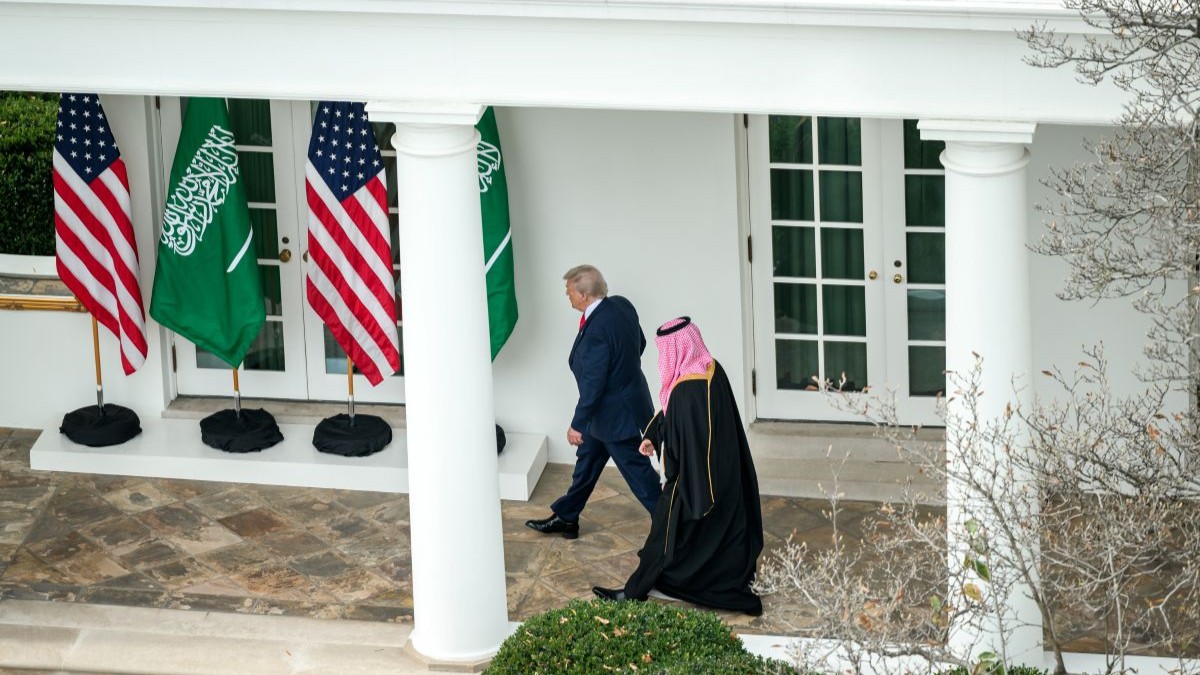
The landscape of Middle eastern geopolitics is undergoing a significant recalibration. For decades, the pursuit of Arab-Israeli normalization has been a cornerstone of U.S. policy in the region, often implicitly linked to the depth of strategic partnership with Washington. However, the recent escalation of the Israeli-Palestinian conflict, notably the devastating war in Gaza, has fundamentally altered this equation. While strategic cooperation between the U.S. and Saudi arabia remains robust, the expectation of normalization with Israel as a prerequisite for that cooperation is demonstrably fading – a shift with profound implications for regional order and American influence.
This isn’t a collapse of the U.S.-Saudi relationship, but a pragmatic reassessment. The assumption that Arab states would prioritize security ties with the U.S. over the Palestinian cause is no longer tenable. The Gaza war has elevated the Palestinian question to a critical litmus test of political legitimacy, making overt normalization politically perilous for many arab leaders. Attempts to pressure states like Lebanon and Syria into recognizing Israel, previously framed as a condition for deeper engagement, are now encountering increased resistance. The message is clear: strategic partnership with Washington can, and increasingly will, be decoupled from formally recognizing israel.
A New Era of Transactionalism
This shift represents a move towards a more transactional relationship, built on converging needs rather than a complete realignment. During the Cold War, U.S.-Saudi relations thrived despite disagreements on Arab-Israeli issues, unified by a shared threat perception – Soviet expansionism. Today, the foundation is different. Washington requires saudi capital, reliable energy cooperation, and a partner in countering China’s growing influence. Riyadh, in turn, needs access to American technology, advanced weaponry, and the security architecture that protects its interests.
crucially, neither side currently possesses the leverage to compel the other on issues falling outside this core convergence zone. Normalization with Israel hasn’t been abandoned entirely,but it’s been removed as a “gating requirement,” relegated to an indefinite timeline dependent on factors beyond Washington’s direct control.
This also necessitates a re-evaluation of U.S. diplomatic and military support for Israel. The Gaza war has starkly demonstrated that consistently shielding Israel from international scrutiny – whether at the UN Security Council or through continued military aid – carries significant strategic costs. These actions directly constrain the U.S.’s ability to build effective coalitions,stabilize the region,and ultimately,advance its own security interests.
durability and the Limits of Leverage
early signals from both Washington and Riyadh suggest a pragmatic acceptance of this new reality. Policymakers appear to judge the benefits of maintaining strategic convergence to outweigh the costs of temporarily shelving normalization as a near-term objective. This framework – strategic convergence without normalization, transactionalism without transformation, cooperation without comprehensive realignment – is likely to define U.S.-Saudi relations for the coming decade.
The key question,though,is durability. Deep strategic cooperation can persist despite political divergence, as history demonstrates. But this requires a nuanced understanding of regional dynamics and a willingness to acknowledge the limitations of leverage. Washington can no longer assume that its regional partners will passively accept policies that are perceived as detrimental to their core interests, particularly regarding the Palestinian issue.
The implications of this shift extend far beyond the bilateral relationship. It will reshape regional order, redefine American influence, and fundamentally alter the prospects for broader Arab-Israeli relations. Whether this represents a sustainable approach to statecraft, or merely a temporary accomodation before more essential choices become unavoidable, remains the defining question for U.S. Middle East policy in the years ahead.
About the Author:
H.A.Hellyer, Ph.D., is a leading expert on geopolitics and security in the Arab world and Middle East, with two decades of experience at the intersection of government policy and think tanks. He currently serves as Senior Associate Fellow at the Royal United Services Institute for defense and Security Studies (RUSI) and Senior Fellow at the Centre for American Progress. Dr. Hellyer previously served as Deputy Convenor of the U.K. government’s working group on tackling radicalization and extremism, and has held positions at the Brookings institution, the Carnegie endowment, and the U.K. Foreign Office. his extensive experience and deep understanding of the region provide a uniquely informed viewpoint on these evolving dynamics.
Keep reading