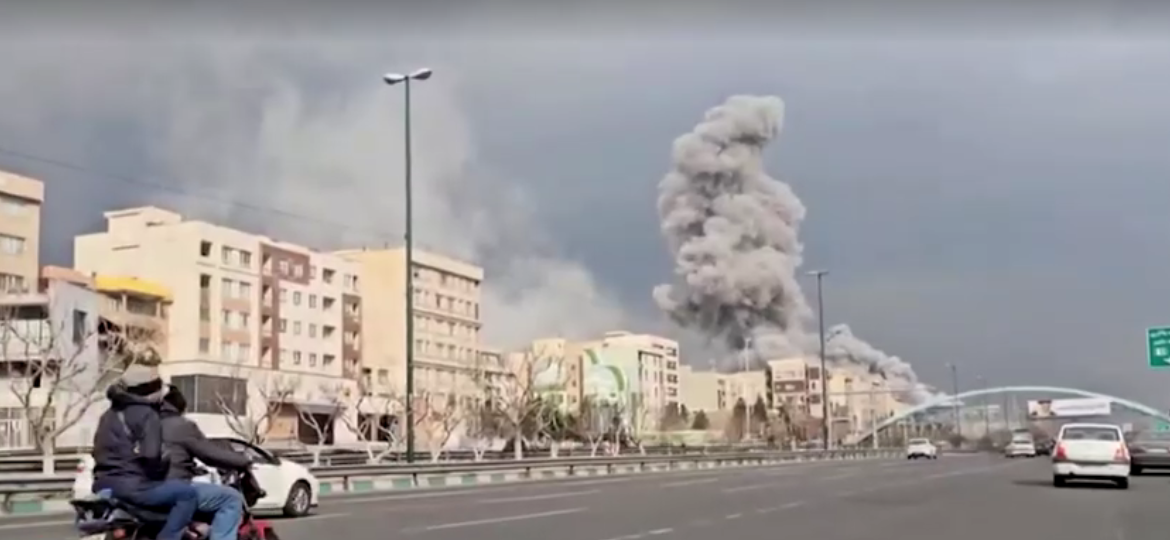
Rising Casualties and Retaliation Threats Mark Escalating Conflict Between U.S. And Iran
The conflict between the United States and Iran has entered a dangerous new phase, with the confirmed death toll of U.S. Service members rising to six as of Monday, March 2, 2026. The escalating hostilities, triggered by a coordinated series of strikes against Iranian targets over the weekend, have prompted retaliatory threats from Tehran and raised fears of a wider regional war. The latest update from U.S. Central Command (CENTCOM) confirmed the recovery of remains of two previously unaccounted for service members, bringing the total number of American military personnel killed in action to six. This grim milestone underscores the intensifying risks faced by U.S. Forces operating in the Middle East.
The initial wave of attacks, conducted in coordination with Israel, targeted Iranian military installations and leadership figures, including, according to reports, the country’s Supreme Leader, Ayatollah Ali Khamenei, and President Masoud Pezeshkian. Although Iranian state media initially announced Khamenei’s death, the claim has not been independently verified. The U.S. Military has released video footage of the strikes, aiming to demonstrate the precision and effectiveness of the operation. Eighteen additional U.S. Service members have sustained serious injuries during the operation, according to Captain Tim Hawkins, a spokesperson for CENTCOM. The situation remains fluid and highly volatile, with both sides bracing for further escalation.
CENTCOM Update
TAMPA, Fla. – As of 4 pm ET, March 2, six U.S. Service members have been killed in action. U.S. Forces recently recovered the remains of two previously unaccounted for service members from a facility that was struck during Iran’s initial attacks in the region…
— U.S. Central Command (@CENTCOM) March 2, 2026
The Context of the Attacks and Iranian Response
The U.S. And Israeli strikes were reportedly launched in response to concerns over Iran’s nuclear program and its destabilizing activities in the region. The attacks represent a significant escalation of tensions that have been simmering for years, punctuated by proxy conflicts and accusations of interference. In retaliation, Iran has initiated a series of counterattacks targeting countries in the Middle East that host U.S. Military bases, including the United Arab Emirates, Qatar, Bahrain, Kuwait, Jordan, and Iraq. This widening of the conflict raises the specter of a broader regional war, potentially drawing in other key players.
Following the reported death of Ayatollah Khamenei, Iranian President Masoud Pezeshkian vowed retribution, declaring that revenge is a “right and legitimate duty” of the country. Iran has threatened to launch what it describes as its “heaviest offensive in history,” signaling a potentially significant escalation of its response. These threats have prompted a strong warning from former U.S. President Donald Trump, who cautioned Iran against any retaliatory actions, stating that the U.S. Would respond with “a force like they’ve never seen before.” Trump also asserted that attacks against Iran would continue “uninterrupted throughout the week or for as long as necessary to achieve our goal of PEACE IN THE ENTIRE MIDDLE EAST AND, IN FACT, THE WORLD!”
The Human Cost and Regional Implications
The loss of six American service members underscores the exceptionally real human cost of this escalating conflict. While the identities of the fallen soldiers are being withheld pending notification of their families, their sacrifice highlights the dangers faced by U.S. Personnel deployed in the region. The 18 service members who sustained serious injuries further emphasize the intensity of the fighting. Beyond the immediate casualties, the conflict is already having a destabilizing effect on the wider Middle East, disrupting trade routes, exacerbating existing humanitarian crises, and fueling sectarian tensions.
The potential for miscalculation and unintended consequences is particularly high in this volatile environment. A misstep by either side could quickly spiral into a full-scale regional war, with devastating consequences for all involved. Diplomatic efforts to de-escalate the situation are urgently needed, but the deep-seated mistrust and animosity between the U.S. And Iran present significant obstacles to a peaceful resolution. The international community is watching closely, hoping to avert a catastrophic outcome.
Analyzing Iran’s Retaliatory Capabilities
Iran possesses a diverse arsenal of military capabilities, including ballistic missiles, cruise missiles, and a network of proxy forces throughout the region. Its ballistic missile program has been a major source of concern for the U.S. And its allies, as these weapons could potentially reach targets across the Middle East and even Europe. Iran also maintains a significant naval presence in the Persian Gulf, and its ability to disrupt shipping lanes poses a serious threat to global energy supplies. Iran’s support for proxy groups in countries like Lebanon, Syria, Iraq, and Yemen allows it to project its influence and exert pressure on its adversaries without directly engaging in large-scale military conflict.
The nature and scope of Iran’s retaliatory response remain uncertain. It could range from limited strikes against U.S. Military assets in the region to more ambitious attacks targeting critical infrastructure in Israel or Saudi Arabia. The employ of proxy forces is also a likely scenario, as Iran could leverage these groups to carry out attacks while maintaining a degree of plausible deniability. The U.S. Military is reportedly on high alert, preparing for a potential surge in Iranian aggression. The coming days and weeks will be critical in determining whether the conflict can be contained or whether it will escalate further.
The Role of Israel and International Diplomacy
Israel’s involvement in the initial strikes against Iran underscores the close strategic alliance between the two countries and their shared concerns about Iran’s regional ambitions. Israel has long viewed Iran as an existential threat, and it has repeatedly warned that it will not hesitate to capture military action to prevent Iran from acquiring nuclear weapons. The coordinated nature of the attacks suggests a high level of coordination and intelligence sharing between the U.S. And Israel.
International diplomatic efforts to de-escalate the crisis are underway, but their prospects for success remain uncertain. The United Nations Security Council has called for restraint and urged all parties to avoid further escalation. However, the deep divisions within the Security Council, particularly between the U.S. And Russia, create it difficult to reach a consensus on a meaningful response. Other countries, including China and the European Union, are also engaged in diplomatic efforts to mediate a ceasefire and prevent a wider war. The challenge lies in finding a way to address the underlying grievances and concerns of all parties involved while avoiding a catastrophic escalation of violence.
As of this report, the situation remains highly dynamic. The U.S. Central Command continues to monitor the situation closely and is prepared to respond to any further Iranian aggression. The world watches with bated breath, hoping for a swift de-escalation and a return to diplomatic solutions. Further updates will be provided as they become available. The next key development to watch for will be any official statement from the Iranian government regarding its planned response, and any further announcements from CENTCOM regarding troop deployments or operational changes in the region.
What are your thoughts on the escalating conflict? Share your perspectives in the comments below.
Related reading