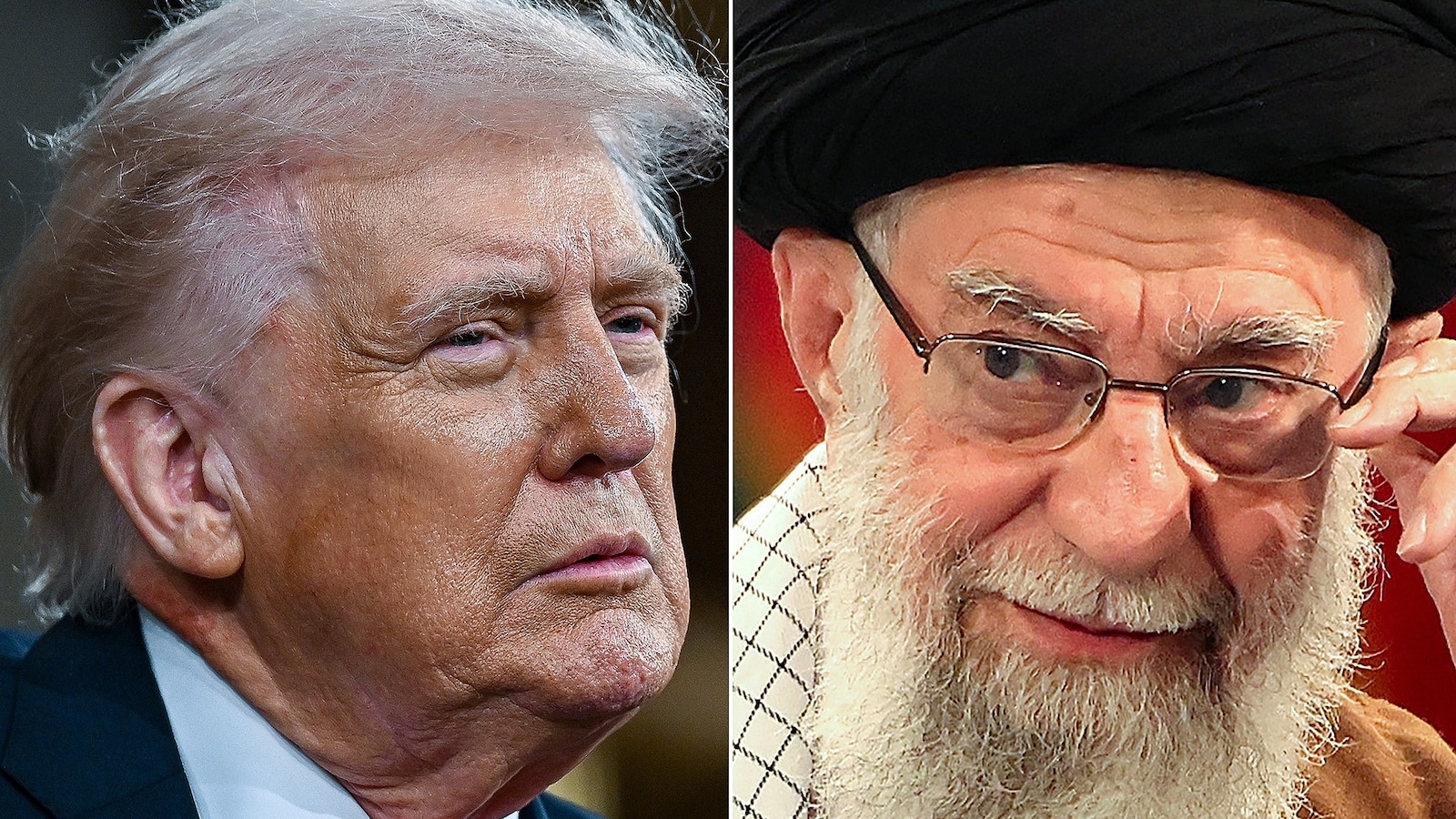
Tehran, Iran – A major military operation launched by the United States and Israel on Saturday has sent shockwaves through the Middle East, with reports emerging that Iran’s Supreme Leader, Ayatollah Ali Khamenei, has died. The attacks, confirmed by U.S. President Donald Trump, targeted military and government sites within Iran, sparking immediate threats of retaliation from Tehran and raising fears of a wider regional conflict. This unprecedented escalation marks a significant turning point in U.S. Policy toward Iran and represents the second instance in eight months of direct military action authorized by the Trump administration against the Islamic Republic.
President Trump, in a video statement released Saturday, described the operation as necessary to defend American interests and eliminate what he termed “imminent threats” posed by the Iranian regime. He urged the Iranian people to “seize control of your destiny” and rise up against the current leadership, which has been in power since 1979. The timing of the strikes comes amid heightened tensions and stalled negotiations regarding Iran’s nuclear program, with Trump expressing frustration over the lack of progress in curbing its development. The attacks also follow a period of growing dissent within Iran, fueled by economic hardship and political restrictions.
Details of the Joint U.S.-Israel Operation
The coordinated attack involved strikes against multiple targets across Iran, with initial reports focusing on a compound in downtown Tehran believed to be associated with Ayatollah Khamenei. The Associated Press reports that the first apparent strike occurred near the Supreme Leader’s offices. While the exact location of Khamenei at the time of the attack remains unconfirmed, Iranian state television and the state-run IRNA news agency reported his death hours after the strikes began. Iranian Foreign Minister Abbas Araghchi told NBC News that Khamenei and President Masoud Pezeshkian are alive “as far as I know.”
U.S. Central Command released imagery showing missiles being launched from a U.S. Navy ship in support of what they are calling “Operation Epic Fury.”
The operation reportedly targeted Iran’s military capabilities, aiming to dismantle its infrastructure and hinder its ability to develop nuclear weapons. According to reports from PBS NewsHour, What we have is a major escalation in U.S. Intervention in Iran.
In response to the attacks, Iran’s Revolutionary Guard announced it had launched counterattacks, firing drones and missiles at Israel and targeting U.S. Military installations in Bahrain, Kuwait, and Qatar. Explosions were reported in northern Israel as the country went on high alert to intercept incoming projectiles. The attacks on Iran also resulted in civilian casualties, with IRNA reporting at least 57 people killed and 45 wounded at a girls’ school in southern Iran. Shrapnel from an Iranian missile attack on the United Arab Emirates reportedly killed one person, according to state media.
Regional and International Reactions
The attacks have prompted a swift and varied response from the international community. Israel, the United Arab Emirates, and Qatar have all closed their airspace, leading to temporary flight cancellations for several airlines. The situation has raised concerns about the potential for a broader regional conflict, with neighboring countries bracing for possible escalation. The United States has urged all parties to exercise restraint and de-escalate tensions, while also reaffirming its commitment to defending its allies and interests in the region.
The international community is closely monitoring the situation, with calls for a diplomatic solution and a return to negotiations over Iran’s nuclear program. The future of the Iran nuclear deal, formally known as the Joint Comprehensive Plan of Action (JCPOA), remains uncertain, as the attacks have further complicated efforts to reach a consensus. The JCPOA, originally agreed upon in 2015 between Iran and a group of world powers, aimed to limit Iran’s nuclear program in exchange for sanctions relief. However, the deal has been in jeopardy since the United States withdrew from it in 2018 under the Trump administration.
Impact on Global Markets
The escalating tensions in the Middle East are already having a noticeable impact on global markets. Oil prices surged on Monday morning, February 28, 2026, as investors reacted to the increased risk of supply disruptions. Stock markets in the region experienced significant declines, and there was a general flight to safety, with investors seeking refuge in assets such as gold and U.S. Treasury bonds. The potential for a prolonged conflict could further destabilize the global economy, particularly if it leads to disruptions in oil supplies or increased geopolitical uncertainty. Analysts are closely watching the situation to assess the long-term implications for energy markets, trade flows, and investment sentiment.
The Fate of Iran’s Leadership
The reported death of Ayatollah Ali Khamenei, Iran’s Supreme Leader, represents a pivotal moment in the country’s history. Khamenei, who had held the position since 1989, was a powerful figure who exerted significant influence over Iran’s domestic and foreign policies. His death could create a power vacuum and potentially lead to a period of political instability. The succession process is likely to be complex and contested, with various factions vying for control.
The identity of Khamenei’s successor remains unclear. Potential candidates include members of the clergy, senior government officials, and military leaders. The selection process will be overseen by the Assembly of Experts, a body of 88 clerics responsible for choosing the Supreme Leader. The outcome of this process will have far-reaching implications for Iran’s future direction and its relationship with the rest of the world. The reported targeting of President Masoud Pezeshkian alongside Khamenei adds another layer of complexity to the succession question.
The situation remains highly fluid and unpredictable. Further developments are expected in the coming days as Iran responds to the attacks and the international community seeks to de-escalate the crisis. The world is watching closely as this unfolding situation threatens to reshape the geopolitical landscape of the Middle East and beyond.
Key Takeaways
- The U.S. And Israel launched a major military operation against Iran on Saturday, February 28, 2026.
- Reports indicate that Iran’s Supreme Leader, Ayatollah Ali Khamenei, has died as a result of the attacks, though this remains unconfirmed.
- Iran has retaliated with missile and drone attacks targeting Israel and U.S. Military installations.
- The attacks have triggered a surge in oil prices and increased geopolitical uncertainty.
- The future of Iran’s leadership and the Iran nuclear deal are now in question.
The next official update is expected from the U.S. Department of Defense within the next 24 hours regarding the scope of “Operation Epic Fury” and any further military actions. We encourage readers to share their thoughts and perspectives on this developing story in the comments below.
Keep reading
- Critical Minerals: The Geopolitics of Africa’s Resources and Europe’s Energy Strategy
- Tonight’s Weather Forecast: Clear Skies and Temperatures
- The Senate Blue Slip, Explained: The Custom Trump Wants Gone (daybreakwire.com)
- Signum Global Advisors Formula Forecasts Trump Policy Pivot on Iran (archyworldys.com)