U.S. Military Strikes Iranian Missile Sites Amidst Strait of Hormuz Tensions
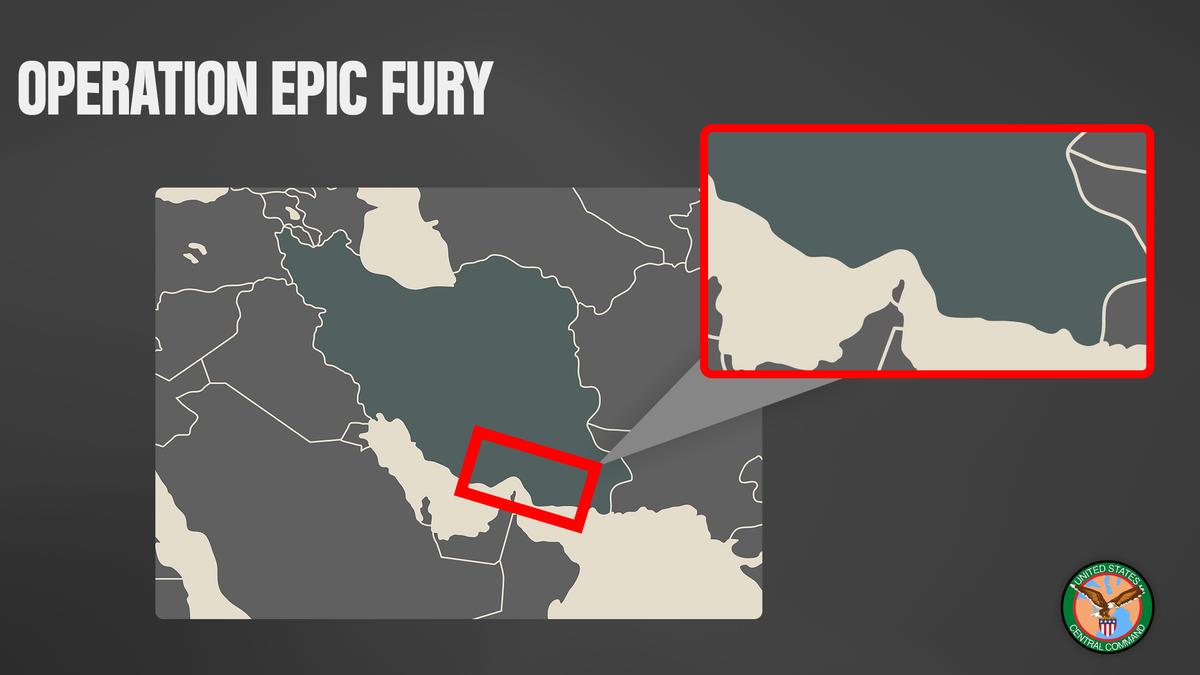
The United States military conducted strikes against what it described as Iranian anti-ship missile sites along the country’s coastline near the strategically vital Strait of Hormuz on Tuesday, March 17, 2026. The action, confirmed by U.S. Central Command (CENTCOM) via a post on X (formerly Twitter), comes as tensions escalate following a recent American-Israeli operation and Iran’s subsequent efforts to disrupt shipping lanes through the crucial waterway. The strikes utilized 5,000-pound deep penetrator munitions targeting hardened facilities, according to CENTCOM. This move underscores a deepening confrontation with Iran, raising concerns about a wider regional conflict and potential global economic repercussions.
The Strait of Hormuz, a narrow passage connecting the Persian Gulf to the Gulf of Oman and the Arabian Sea, is one of the world’s most critical oil transit routes. Approximately 20% of global oil supply passes through the strait daily, making its security paramount to the global economy. Iran’s recent actions, effectively closing the trade route in response to the American-Israeli assault last month, have already sent global oil prices surging, prompting fears of a significant international economic shock, a scenario economists had previously warned about. The U.S. Action appears to be an attempt to counter this threat and ensure freedom of navigation, but it also carries the risk of further escalation.
Hours ago, U.S. Forces successfully employed multiple 5,000-pound deep penetrator munitions on hardened Iranian missile sites along Iran’s coastline near the Strait of Hormuz. The Iranian anti-ship cruise missiles in these sites posed a risk to international shipping in the… pic.twitter.com/hgCSFH0cqO
— U.S. Central Command (@CENTCOM) March 17, 2026
Escalating Tensions and International Response
The U.S. Strikes follow a period of increasing friction between Washington and Tehran. The recent American-Israeli operation, the details of which remain largely undisclosed, prompted Iran to effectively close the Strait of Hormuz, a move that significantly disrupted global oil markets. According to a report by CNN, the Pentagon and National Security Council underestimated Iran’s willingness to close the Strait of Hormuz in response to U.S. Military strikes. This miscalculation, the report suggests, has contributed to the current crisis. The administration’s efforts to alleviate the economic fallout, including potential naval escorts for oil tankers, are currently deemed too dangerous to implement.
The international community’s response to the U.S. Action has been mixed. Several European governments have expressed reservations about providing military support to reopen the Strait of Hormuz, highlighting a reluctance to become directly involved in a potential conflict. German Defense Minister Boris Pistorius stated unequivocally on Monday, March 16, 2026, that “This is not our war, we have not started it.” This sentiment appears to be widespread among U.S. Allies, with leaders from across Europe indicating a lack of immediate plans to offer military assistance. The New York Times reported that President Trump has called on NATO allies to police the Strait of Hormuz, warning of a “very disappointing future” for the alliance if they do not comply.
Former Estonian President Toomas Hendrik Ilves criticized Trump’s demands, describing them as “a bit rich” given his past insults directed at some of those same countries. Estonian Foreign Minister Margus Tsahkna has called on Trump to clarify his “strategic goals” and provide a detailed plan for reopening the strait. This request underscores the need for greater transparency and coordination among allies in addressing the escalating crisis.
Trump’s Demands and NATO’s Hesitation
President Trump has repeatedly urged NATO allies to take a more active role in securing the Strait of Hormuz, framing it as a shared responsibility for countries that rely on oil transported through the waterway. In a post on Truth Social, he called on “countries of the world that receive oil through the Hormuz Strait” to “take care of that passage.” However, this demand has been met with resistance from many European nations, who are wary of being drawn into a conflict with Iran. The NBC News reported that many European governments expressed reservations Monday about providing military support to reopen the crucial waterway.
The reluctance of U.S. Allies stems from a variety of factors, including concerns about escalating the conflict, a lack of clear strategic objectives and a desire to avoid being perceived as complicit in a U.S.-led military intervention. The history of strained relations between Trump and some NATO members has created a climate of distrust, making it difficult to forge a unified response. The situation is complicated by the fact that Iran’s actions are seen by some as a legitimate response to the American-Israeli operation, further dividing international opinion.
Economic Implications and Potential Risks
The closure of the Strait of Hormuz poses a significant threat to the global economy. The disruption to oil supplies has already led to a surge in prices, and a prolonged closure could trigger a recession. Economists have warned that the economic consequences could be severe, particularly for countries that are heavily reliant on oil imports. The CNN report highlighted that the Trump administration failed to fully account for the potential economic consequences of the operation, and it may be weeks before efforts to alleviate the fallout take hold.
Beyond the economic impact, the escalating tensions in the region also carry significant geopolitical risks. A miscalculation or unintended escalation could lead to a wider conflict involving multiple countries, with potentially devastating consequences. The presence of U.S. And Iranian military forces in close proximity to each other increases the risk of a direct confrontation. The situation is further complicated by the involvement of other regional actors, such as Saudi Arabia and Israel, who have their own interests and agendas.
Looking Ahead
The immediate future remains uncertain. The U.S. Military’s strikes on Iranian missile sites are likely to be met with further retaliation from Tehran, potentially escalating the conflict. The international community will be closely watching to observe how the situation unfolds and whether diplomatic efforts can be successful in de-escalating tensions. The next key development to watch will be Iran’s response to the U.S. Strikes, and whether it will further disrupt shipping lanes in the Strait of Hormuz. The U.S. State Department is expected to hold a press briefing on Thursday, March 19, 2026, to provide an update on the situation and outline the administration’s next steps.
The crisis in the Strait of Hormuz underscores the fragility of global security and the importance of international cooperation. A peaceful resolution will require a willingness from all parties to engage in dialogue and compromise. The stakes are high, and the consequences of failure could be catastrophic.
What are your thoughts on the escalating tensions in the Strait of Hormuz? Share your perspectives in the comments below, and please share this article with your networks to keep the conversation going.
Related reading