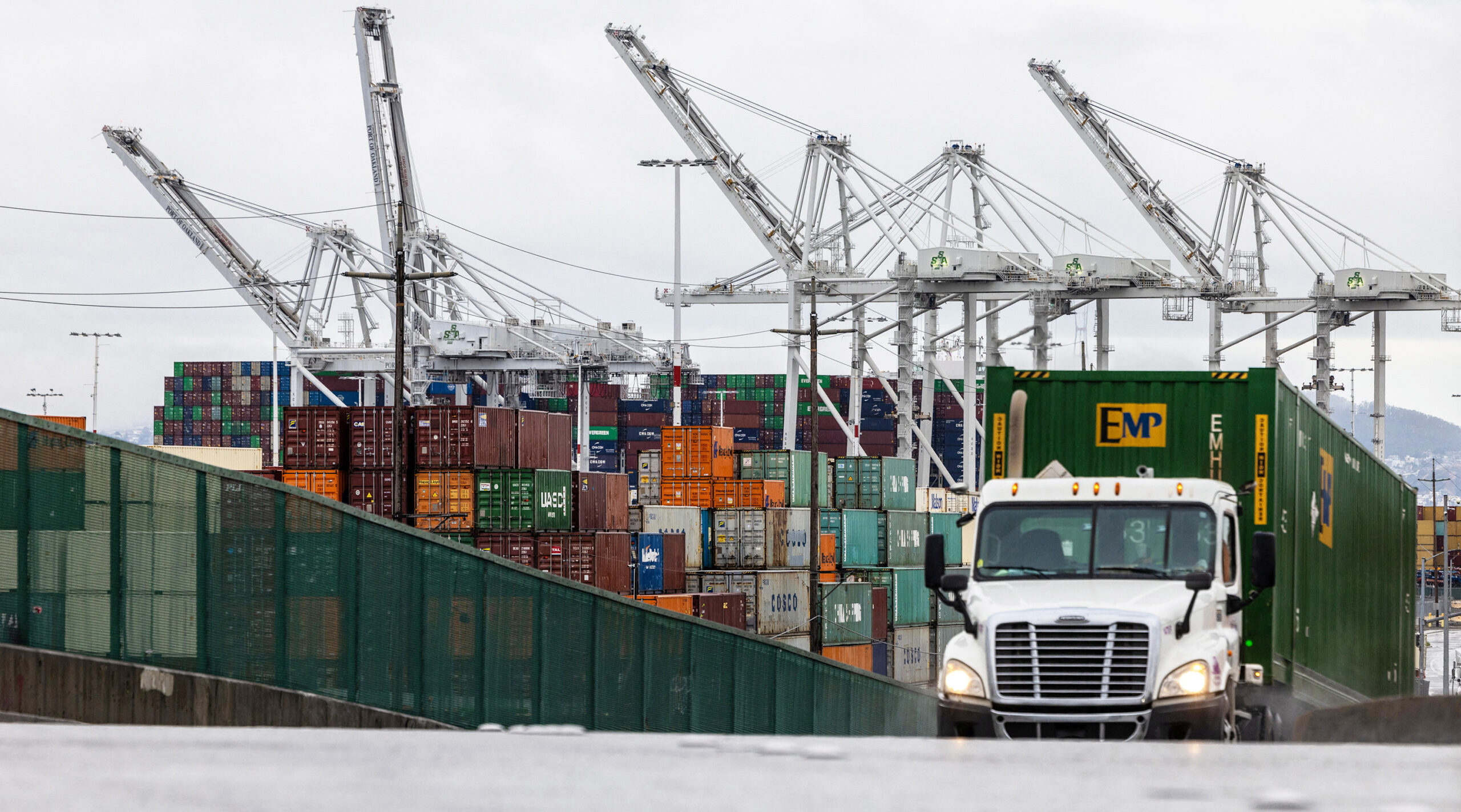
President Donald Trump’s administration has imposed sweeping new 10 percent and 12.5 percent tariffs across 60 economies, shifting its justification to alleged forced labor failures. The duties took effect Friday after previous levies expired, drawing immediate condemnation and trade friction from international partners including Australia, China, and the European Union.
The latest tariff package represents a fresh legal and diplomatic maneuver by Washington following consecutive courtroom defeats over previous trade restrictions. After the Supreme Court struck down broader measures in February 2026, and a balance-of-payments justification under Section 122 of the Trade Act of 1974 faced judicial blocks, the administration deployed Section 301(b) of the Trade Act to target 60 trading partners. Officials assert that these economies failed to adequately enforce bans on goods manufactured with forced labor, setting uniform levies of 10 percent or 12.5 percent that took effect at 12:01 a.m. Friday, according to reporting from AP News.
The United States has barred goods made with forced labor since 1930, yet has notably never ratified key international agreements such as the International Labour Organization’s 1930 Forced Labor Convention or its 2014 Protocol.
Global Trading Partners Reject Unfounded Labor Claims and Tariffs
Australian Trade Minister Don Farrell slammed the measures, telling reporters in Adelaide that his country takes modern slavery seriously and calling the higher 12.5 percent rate completely unjustified
. Australia intends to lobby the United States Trade Representative to rescind all tariffs on Australian goods.
“Tariffs are not the way — they drive up costs and uncertainty for businesses.”
Christopher Luxon, Prime Minister of New Zealand
New Zealand Prime Minister Christopher Luxon echoed those concerns, labeling the duties on his country extremely disappointing and arguing that the underlying U.S. investigation failed to provide meaningful evidence. In Europe, European Union foreign policy chief Kaja Kallas questioned the logic of the rules, noting that stringent regional labor regulations featuring paid vacations and strong worker protections make the U.S. claims untenable.
Japan expressed deep regret over the 12.5 percent levy on its exports, noting that Tokyo had previously secured assurances from Washington against additional tariffs beyond an earlier 10 percent agreement, according to Chief Cabinet Secretary Minoru Kihara. Meanwhile, China’s Ministry of Foreign Affairs condemned the unilateral action, with spokesman Lin Jian stating that trade and tariff wars serve no party’s interests.
Sector Pressures and Regional Supply Chain Shifts in Asia
The new trade barriers have triggered strategic adjustments across Asian manufacturing hubs. Indian textile and apparel exporters now face a distinct competitive disadvantage under the Section 301 duties, according to the Confederation of Indian Textile Industry (CITI).
While India’s annual textile exports to the United States near $11 billion, domestic industry leaders warn that newly enacted tariff-rate quotas grant preferential access to competitors in Bangladesh, Cambodia, Indonesia, and Malaysia. Those nations can ship specific textile goods free of the Section 301 duty provided they utilize U.S.-origin cotton and fiber.

| Export Nation | U.S. Market Volume | Tariff & Exemption Status |
|---|---|---|
| India | Nearly $11 billion annually | Subject to 10% levy; excluded from U.S. cotton quota mechanism |
| Bangladesh | About $8 billion (2024) | Eligible for textile quota exemptions using U.S. cotton |
| Indonesia & Cambodia | About $4 billion each (2024) | Eligible for textile quota exemptions using U.S. cotton |
| Thailand | Exempts ~2,120 items | Subject to 12.5% duty with broad product exemptions |
Ajay Srivastava, founder of the Global Trade Research Initiative think tank, estimates that roughly 70 percent of Indian shipments to the United States—spanning garments, machinery, chemicals, plastics, leather goods, gems, and furniture—will absorb regular duties alongside the new forced labor levy. Thailand faces a similar 12.5 percent rate, though its administration secured exemptions for approximately 2,120 product items representing more than half of its export value to the American market.
Legal Vulnerabilities and Domestic Economic Costs
Legal scholars and economic researchers suggest the administration’s latest trade strategy faces steep hurdles if challenged in court. Economists at the Federal Reserve Bank of New York calculate that Americans bear 90 percent of the cost of comprehensive import tariffs through higher prices for businesses and end consumers.
Furthermore, experts argue that the executive branch is overstepping constitutional bounds by attempting to establish independent tariff regimes without explicit congressional delegation. Former senior U.S. trade official Wendy Cutler noted that while the rates landing between 10 percent and 12.5 percent brought few surprises, the long-term viability of utilizing forced labor justifications to maintain global tariffs remains legally precarious.
Related reading