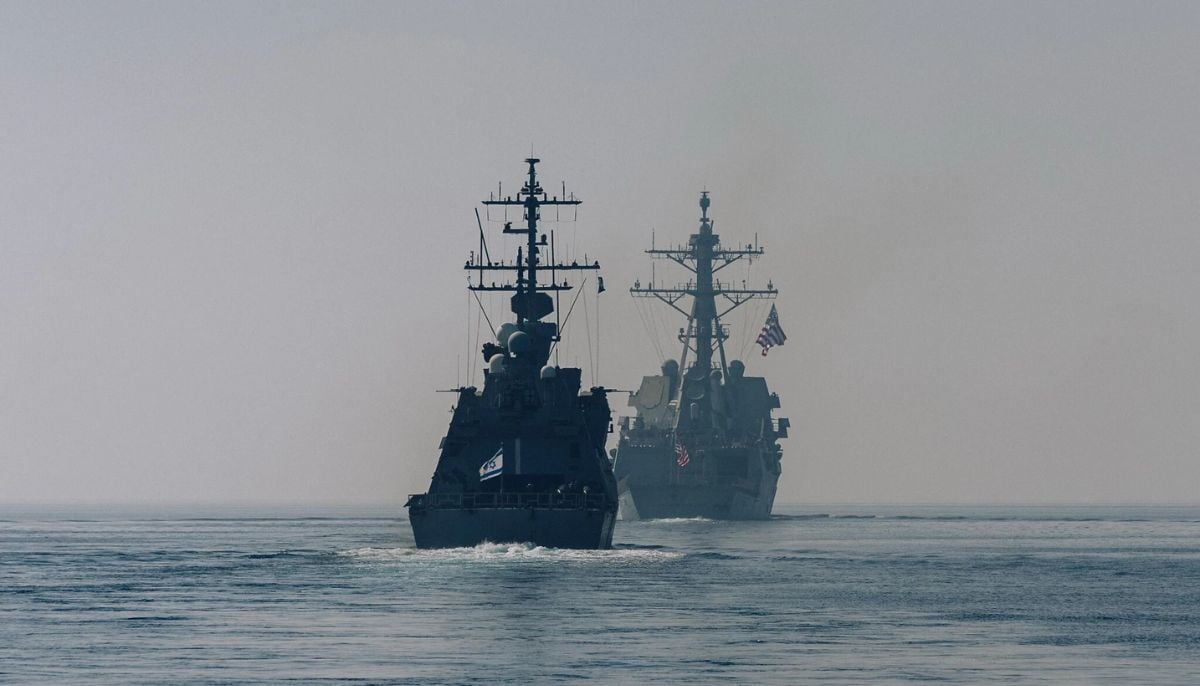
Tensions in the Persian Gulf have escalated sharply as US-Iran talks at a ‘stalemate’ over the Strait of Hormuz continue, according to negotiators and diplomatic reports. The diplomatic deadlock comes as the United States has taken a bold military step, sending two Navy guided-missile destroyers through the strategic waterway for the first time since the current conflict began.
The transit, which took place on Saturday, April 11, 2026, was not coordinated with authorities in Tehran. This move signals a shift in strategy by the Trump administration, which is now actively challenging Iran’s control over the narrow sea passage. The Strait of Hormuz remains one of the world’s most critical oil-transport chokepoints and its blockade has served as Tehran’s primary leverage throughout the war started by the US, and Israel.
While the warships passed through the strait without reported issues, the move coincides with a complex dual-track approach from Washington. While President Donald Trump maintains a hardline public stance, Vice President JD Vance and his team are simultaneously engaged in talks with Iranian officials in Islamabad, Pakistan, which is mediating the peace process.
Military Escalation and the ‘Clearing Out’ Strategy
The deployment of the two guided-missile destroyers marks a significant turning point in the naval theater of the war. According to three US officials cited by The Wall Street Journal, this was the first time American warships have transited the strait since the outbreak of hostilities.
The timing of the transit aligns with public statements from President Donald Trump, who asserted that the United States is now “starting the process of clearing out” the strategic waterway. This rhetoric suggests a move toward ensuring the free flow of maritime traffic, regardless of Iranian objections or threats of blockade.
The operational risks of the transit were highlighted by reports that at least one US warship initially made a u-turn following a warning from Iran, which threatened to strike within 30 minutes if the vessel did not retreat. Despite this initial friction, the two destroyers eventually completed their passage through the strait.
Diplomatic Deadlock in Islamabad
As the US Navy asserts its presence in the Gulf, diplomatic efforts in Islamabad have reached a critical juncture. Negotiators describe the current state of US-Iran talks as a stalemate, primarily centered on the status and security of the Strait of Hormuz.
The disconnect within the US administration is evident. While Vice President JD Vance and his team are attempting to negotiate terms with Iranians, President Trump has continued a series of critical posts on his Truth Social account. In one such post, Trump claimed that Iran is “losing big” and dismissed their leverage, stating that the only thing Tehran has going is the threat that a ship might “bunk” into one of their sea mines in the strait.
This internal friction between the White House’s public rhetoric and the Vice President’s diplomatic mission adds a layer of unpredictability to the peace talks. The blockade of the strait had previously forced a two-week truce last Wednesday, demonstrating the effectiveness of Iran’s control over the waterway as a strategic tool.
Strategic Importance of the Strait of Hormuz
The Strait of Hormuz is a narrow waterway connecting the Persian Gulf with the Gulf of Oman and the Arabian Sea. Because of its geography, it is the only route for the export of oil and gas from several major producers in the region. Any prolonged closure or conflict within the strait has immediate global economic implications, particularly regarding energy prices.
For Iran, the ability to threaten the closure of the strait is a primary deterrent against foreign military intervention. For the United States, “clearing out” the passage is a matter of national security and global economic stability. The current stalemate reflects these opposing imperatives: Iran’s desire to maintain its strategic leverage versus the US goal of neutralizing that leverage through military presence.
Key Developments Timeline
| Date | Event | Significance |
|---|---|---|
| Last Wednesday | Two-week truce enacted | Forced by Iranian blockade of the Strait of Hormuz |
| Saturday, April 11 | Two US destroyers transit Hormuz | First US warship transit since the war began |
| Saturday, April 11 | President Trump announces “clearing out” | Shift toward active removal of Iranian maritime leverage |
| Ongoing | Talks in Islamabad | Pakistan-mediated peace negotiations currently at a stalemate |
What Happens Next
The international community is now watching for Iran’s formal reaction to the unauthorized transit of the US destroyers. While the ships passed through without incident, the breach of Tehran’s perceived control over the waterway could lead to further escalations or, conversely, pressure Iran to make concessions during the Islamabad talks.
The next critical checkpoint will be the outcome of the ongoing mediation in Islamabad. Whether Vice President JD Vance can bridge the gap between the White House’s aggressive naval strategy and the requirements for a sustainable peace agreement remains the central question for global stability in the region.
World Today Journal will continue to monitor the situation in the Persian Gulf and the diplomatic proceedings in Pakistan. We invite our readers to share their perspectives on these developments in the comments section below.
Worth a look