Beyond Tech: Redesigning Healthcare for Veterans and All Americans
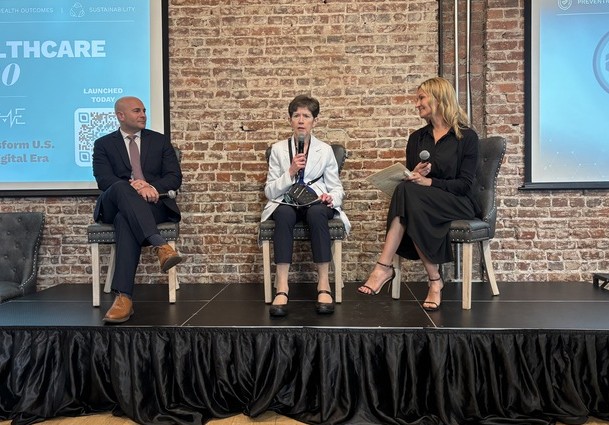
the future of healthcare isn’t solely about flashy new technology. It demands a essential rethinking of processes, policies, and, crucially, the patient experience. Recent discussions at the Digital Medicine Society’s Healthcare 2030 Summit highlighted how the Department of Veterans Affairs (VA) and the Office of the National Coordinator for Health Information Technology (ONC) are leading this charge. Their approaches,while distinct,are powerfully complementary,offering valuable lessons for the entire healthcare landscape.
The VA: Pioneering Accessible, Patient-Centered Care
For over 15 years, the VA has been a quiet leader in telehealth. Though,the pandemic dramatically accelerated it’s adoption and innovation. Programs like tele-rehabilitation, tele-ICU, and tele-oncology expanded rapidly, driven by necessity and a commitment to uninterrupted care.
This wasn’t simply about replicating in-person visits online. It was about reimagining care delivery. A compelling example is the swift adaptation of acupuncture services. Faced with restrictions,a VA physician pioneered “acu-touch” - virtual sessions teaching veterans self-administered techniques for pain relief.
This illustrates a core principle: innovation isn’t just technological, it’s about adaptability and meeting patients where they are. This is notably vital for the VA’s considerable rural veteran population.
* Reaching Rural Veterans: Approximately one-quarter to one-third of veterans reside in genuinely rural areas. The VA has a unique obligation to serve all veterans, regardless of location.
* Bridging the Digital Divide: Investments in broadband access and strategically placed telehealth pods (in locations like VFW halls) are reducing travel burdens for thousands.
* Empowering Through Education: Partnerships with community groups, including volunteer fire departments, provide crucial support for veterans navigating telehealth technology. Ease of use is paramount, especially for older individuals or those with sensory impairments.
ONC: Building the Infrastructure for Seamless Data flow
While the VA focuses on on-the-ground implementation, the ONC is laying the groundwork for a more connected and efficient healthcare ecosystem. Their focus is on enabling the secure and standardized exchange of health information.
Over the past decade, the ONC has championed standards-based apis and frameworks like FHIR (Fast Healthcare Interoperability Resources). This is designed to unlock patient records and make them more accessible.
Though, accessibility is only the first step. the ONC recognizes the need to transform raw data into actionable insights.
* Patient Empowerment: Giving individuals complete access to their health records remains a key priority. Currently, data is often fragmented across multiple systems.
* Clinician Support: Overworked healthcare professionals need tools that synthesize data, rather than adding to their burden. The goal is to provide better, faster insights at the point of care.
A Synergistic Approach: Innovation & Infrastructure
The ONC’s work directly supports the VA’s innovative care models. By ensuring interoperability, the ONC helps guarantee that new tools and approaches can seamlessly integrate across different healthcare systems. This collaborative approach is essential for realizing the full potential of digital health.
Ultimately, the VA and ONC are demonstrating that a truly better healthcare system requires more than just adopting the latest gadgets. It demands a holistic redesign - one that prioritizes patient needs,embraces innovation,and builds a robust,interconnected infrastructure.This isn’t just about improving care for veterans; it’s about building a healthcare system that works better for all Americans.
Disclaimer: I am an AI chatbot and cannot provide medical advice. This content is for informational purposes only.