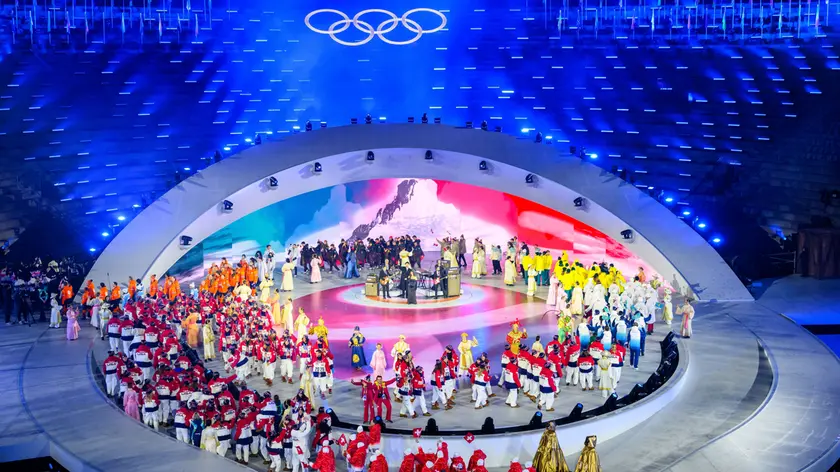
Governors from Italy’s Lombardy and Veneto regions have asserted that funding for the 2026 Milan-Cortina Winter Olympics is secured within existing regional budgets, countering claims by opposition parties of a significant financial shortfall. The statements come amid ongoing scrutiny of the Organising Committee’s financial projections, with particular focus on the foundation responsible for managing the Games’ delivery.
According to regional officials, the necessary financial resources have been allocated through standard budgetary processes, emphasizing that fiscal planning for major international events follows established procedures. They maintain that concerns about a deficit are premature, citing the incomplete nature of the current fiscal year’s financial reporting as a key factor in the uncertainty.
The opposition, particularly from centre-left factions, has highlighted estimates suggesting a potential shortfall of up to 310 million euros in the foundation’s accounts. This figure, they argue, stems from a combination of higher-than-expected operational costs and lower-than-projected revenue streams, including sponsorships and ticket sales. Critics contend that without immediate intervention, the burden of covering any gap may fall disproportionately on local taxpayers.
Regional leaders have stressed that no final financial closure has occurred, noting that definitive audited results are pending. They argue that interim assessments do not reflect the full financial picture and that adjustments through standard fiscal mechanisms remain possible. The debate underscores broader questions about transparency in mega-event financing and the division of responsibility between national, regional, and local authorities.
The discussion has intensified following public disclosures by the foundation indicating preliminary financial imbalances. While governors acknowledge the complexity of balancing budgets for events of this scale, they reject characterizations of mismanagement, instead framing the situation as part of the normal financial lifecycle of large-scale infrastructure and event projects.
As the 2026 Games approach, the financial oversight of the Milan-Cortina Organising Committee continues to draw attention from auditors, public accounts committees, and fiscal watchdogs. The outcome of ongoing financial reviews will likely influence perceptions of accountability and set precedents for how future international sporting events are funded and monitored in Italy.
For ongoing updates on the financial status of the Milan-Cortina 2026 Olympic preparations, readers are directed to official publications from the Italian Ministry of Economy and Finance and the Corte dei Conti (Italian Court of Audit), which periodically release assessments of public expenditure related to major national projects.
Stay informed and share your perspective on how major sporting events should be financially governed in the comments below.
Keep reading
- South Korea Implements ‘8-Week Rule’ for Minor Car Insurance Injuries
- OpenAI Agrees to $3.2 Million Settlement With DOJ Over Allegations of Discriminating Against US Workers for Visa Holders
- Qatar Reports Progress in Diplomatic Efforts to End US-Iran Conflict (archyworldys.com)
- MLB's Luxury Tax, Explained: The $244 Million Threshold (daybreakwire.com)